John Cage tribute show series on WREK

In early September, I did a series of shows on WREK about John Cage, in recognition of his 100th birthday. You can find the official series announcement and schedule details here. This blog is where I documented my own notes for the show.

It’s not really intended for the public, but I thought some of you who tuned in might be interested. Please do NOT share this page with others, i.e. via Facebook; if you want to share something, use the WREK link above.

Thanks to everyone for their support, including the guys who lent me their Cage material and the Tuesday performers!

Jump ahead to:

General resources

main Sunday Special show, Cage overview

late Sunday night, early Cage material

late Monday night, Cage album “Variations IV” in entirety

Tuesday night Live at WREK performances, including details of exotic instrumentation

late Tuesday night, Cage album “Indeterminancy” in entirety

General resources:

http://www.johncage.info

http://www.johncage.info/index2.html

http://www.ubu.com/sound/cage.html

http://www.discogs.com/John-Cage-John-Cage/master/26116

http://en.wikipedia.org/wiki/John_Cage

http://en.wikipedia.org/wiki/List_of_compositions_by_John_Cage

interview snippet: UBU interview MP3 CD #4, 9:54-17:10, general commentary

interview snippet: UBU interview MP3 CD #1, 0:00-4:57 early history to 1958

main Sunday Special show, Cage overview

Imaginary Landscape No. 4

composed (performed?) April 1951

24 performers at 12 radios

media: UBU mp3, burned to CD? ~5 minutes long?

http://www.johncage.info/workscage/landscape4.html

interview snippet: UBU interview MP3 CD #1, 9:23-10:00, use of I Ching

Music Of Changes

composed (performed?) May-Dec 1951

compositional indeterminancy, but fixed performance

first foray into use of I Ching (“E King”, “Yee Jing”, etc.) divination system

quartet performances involve many musicians but only four are playing at once

media: should have tracks “Book 1” “2” “3” “4”; Haller CD #7 has #3 and #4

Wikipedia / johncage.info

Williams Mix, 1952-1953

octophonic, tape splicing

named for …

media: on Haller CD #8, 5 minutes; also on UBU CD 4m25s plus applause (and boos?)

Wikipedia / johncage.info

Variations I, 1958

media: Curt Wells CD (see more below)

Wikipedia / johncage.info

Indeterminancy, 1959

excerpted during Sunday Special show, played in entirety on Tuesday night, see below

Lecture on Nothing, 1959

text is part of “Silence” collection of 1939-1961 essays

media: UBU mp3 burned to audio CD; Kaegan Sparks and Christian MArclay at Philadelphia ICA (U Penn) in 2007, 67m55s

see UBU notes

Cartridge Music, 1960

objects instead of needle cartridges inserted into phone arms, act as pickup mics

media: Curt Wells CD (see more below)

johncage.info

Atlas Eclipticalis, 1961

use of star charts

media: WREK CD

johncage.info

(I didn’t play any of this, I don’t think)

Klangexperimente, 1963

media: UBU audio CD track 5, 1m 58s

no info at all

Mureau, 1970

spoken word

interview snippet: UBU interview MP3 CD #4, 4:50 – 8:15, explanation

media: UBU interview MP3 CD #3, up to 1h09m mark, excerpt it

media: UBU audio CD track 8, 4m06s excerpt

(I didn’t play any of this)

Mushroom Haiku, from Silence, 1969/1972

media: UBU audio CD track 6, 4m46s

also UBU audio CD track 7, 2m03s, “Disconnected”

4’33”

place on hold for that length of time

late Sunday night, early Cage

Imaginary Landscape (No. 1), 1939

2 variable-speed phono turntables, frequency recordings, muted piano and cymbal

media: UBU misc audio CD, 8m50s

Wikipedia / johncage.info

Works for Prepared Piano, 1940s

media: Haller CD #3 and #4

Wikipedia

Margaret Leng Tan CD

early (1940-1953) compositions on various types of piano

media: WREK CD

Second Construction, 1940

media: Curt Wells CD (see more below)

Wikipedia / johncage.info

Sonatas and Interludes, 1946-1948

prepared piano: screws, bolts, rubber, plastic; 2-3 hours prep; mathematics, proportions, symmetry, nesting

Wikipedia / johncage.info

I also played a whole lot of excerpts from some tribute albums that came out after Cage passed in 1992. I’ll write those up here later.

late Monday night, Cage album “Variations IV” in entirety

Variations IV, 1965

scored by shapes on a clear plastic sheet then cut up and distributed around stage; this method mentioned in one of the Brown/Cage Quartet piece intros

performed in Los Angeles, August 1965; CD/LP are excerpts from 6 hour performance

media: WREK CD, 65 minutes total, 2m52s intro

media: Scott Watkins LP, 30 minutes

see Wikipedia

(I played the CD)

Tuesday night Live at WREK live performances!

I’ll provide Wikipedia / johncage.info links here later.

1. Composed Improvisation for Snare Drum (8 min): snare drum solo with timing and form subject to chance; performed by Stuart Gerber

2. A selection from 27’10.554″ (exactly 15’55.282″ long) for a percussionist; instrumentation included standard drum kit, seed rattle, shell wind chime, kalimba (aka thumb piano), dumbek, a piece of granite, a kazoo and three small gongs; performed by Caleb Herron

3. Child of Tree (8 min); composed for instruments made of natural (plant) materials; in this instance, those instruments were pod rattles, wooden water buffalo bell, beans and a wood block; performed by Stuart Gerber

4. Fontana Mix (10 min); synthesizer, iPad, digital recorder, toddler’s toy, 3 tape decks, saxophone, digital samplers, sequencers and mixers; performed by Robby Kee and Robert Cheatham

5. Inlets (10 min, shortened to 5 min by time constraints), gurgling and bubbling of the conch shells, recording of burning pine cone, one conch shell played briefly as horn; performed by Stuart Gerber, Jan Baker, and Caleb Herron

6. The Year Begins to be Ripe (Solo No. 49 from Songbooks) (2 min); voice and table top, using text from the journal of Henry David Thoreau; performed by Stuart Gerber

late Tuesday night, Cage album “Interterminancy” in entirety

Indeterminancy, 1959

both compositional and performance indeterminancy

one story per minutes, sped up or slowed down accordingly to fit

speaker and piano are physically separated, on separate stopwatches

media: WREK CD, 90 minutes; also Haller CD #5 and #6

fantastic liner notes by Richard Kostelanetz (1992) and Cage (1959) including Zen/boring/2-4-8 quote

random selections from Kostelanetz book

In 1988, Richard Kostelanetz published a book of interviews with Cage, entitled “Conversing With Cage”. I have found that Cage is endlessly fascinating, and in fact in leafing through this book recently, it seemed like anywhere I happened to land was interesting. Which gave me an idea …

Throughout the shows series I selected quotes from this book at random, using the random number generator at random.org. This isn’t exactly a divination system like the I Ching, but it’ll do. The copy I used is the second edition, published in 2003 by Routledge press.

Germany trip

Note: I drafted this post in 2012 but obviously I never finished it and I definitely never published it. In 2025, when Typepad shut down and I moved these posts to a new domain, I discovered this old post sitting here drafted. I am publishing it now as-is (backdated to 2012) to capture what I wrote, in this case just some notes about what I’d done on a relatively quick trip to Germany, intending to flesh it out. Here I go, pushing the publish button …

My grandmother Ilse “Omi” Conrad passed away last month; I wrote about her here last month. I was the closest to her of all the American children, having lived with her for a full year as a teenager, so I decided to go to Germany for the funeral and represent the US wing of the family.

Movies watched on flight over:

Ides Of March

Mystic River

Tower Heist

Louis CK: Shameless

Sun morning: Frankfurt arrival

Sun / Mon / Tue: Mainz and Hechtsheim?

Tue afternoon/evening: train to Stuttgart

Wed afternoon/evening: train to Heidelberg

Fri morning: travel with Susann et al to Annweiler

Fri evening: travel with Gisela et al back to Hechtsheim

Sat morning: Frankfurt departure

Movies watched on flight back:

Gran Torino

True Grit (first 30 minutes)

Ford Focus Electric

Ford-focus-electricI’m quite active locally with the electric vehicle (EV) community locally, in particular going to various public events (e.g. green living festivals, parades, etc.) to advocate for this technology. Along those lines, the local club of EV enthusiasts was invited to a private Ford event where they were bringing the new Ford Focus Electric (FFE) to town and making it available for test drives. No way I was going to pass that up, as it was the first time that the public could ever drive one of these new FFE’s, which are slowly making it to market this year.
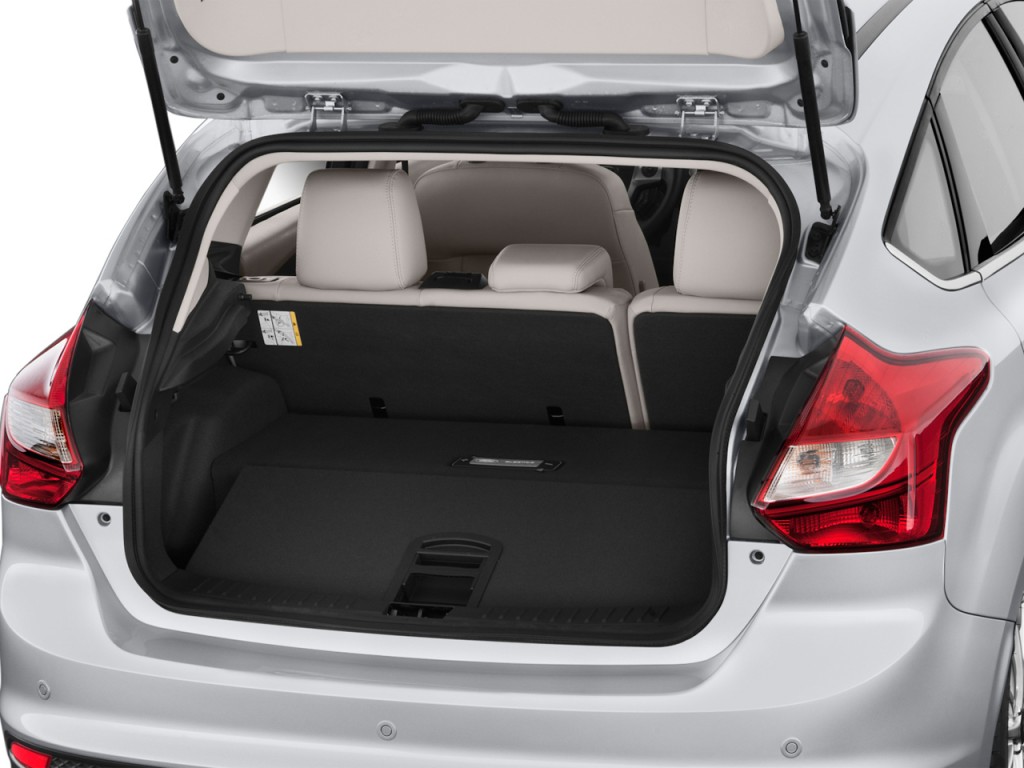
The event was held on May 16, 2012 at the Atlanta Zoo, which is kind of an odd place but apparently the event was in partnership with the city and provided a scenic neighborhood (Grant Park) for the test drive. They had some sort of presentation / panel event inside the zoo facility proper but I couldn’t get there until 1pm so my experience was limited to just looking at (and driving) the cars in the parking lot.

The Ford Focus Electric is a pure electric car, with a range of about 100 miles, like the Nissan Leaf. But that’s where the similarities end, because the car is a step up in many regards, including styling, charging speed and engine power. It’s also quite a big step up in price — $40K, compared to $35K-ish for the Nissan Leaf and $40K for a Chevy Volt which has the gas engine and thus is much more useful. Note that all of these qualify for the federal tax credit of $7500, and the pure electrics (Leaf and FFE) also qualify for a $5K state tax credit (which the Volt does not qualify for). Therefore the net purchase cost of an FFE is actually $27.5K . So please don’t whine about the $40K cost of the car, as it doesn’t actually cost you nearly that much in the end!

Ford-focus-electric-trunkBut all that aside, my purpose at this event was to get a good feel for the car, to experience how it drove, things that you can’t learn by reading about it. They had two or three FFEs there for test drives, and I actually ended up getting two opportunities to drive — the first with a Ford rep and another person in the car, and then another run all by myself (wheee!).

Observations from my test drives:

  • The car had less power than I expected; on paper this looks like a powerful car, but it seems to be tuned less for low speed acceleration and more for high speed cruising. So around town, it is way less fun than my Volt. I was really surprised by this.
  • The accelerator “tip in” was pretty awful, very jerky.
  • The braking is discontinuous. In electric cars, the same motor that accelerates the car can be used to decelerate (brake) the car. So when you press the brake pedal, it’s actually the motor that slows the car down at first; as you press harder, the car starts to blend in the disc brakes. This is far more efficient than just using the disc brakes like regular gas cars, because the motor braking “regenerates” power back into the batter. But the car needs to carefully blend the two braking modes or it feels weird, and it definitely felt weird in the FFE. It felt to me like the regen was only kicking in a full second after I started pressing on the brake, so I would get a kind of stuttered braking effect. Very disconerting.
  • The D and L transmission modes were indistinguishable to me. “L” mode in electric cars is typically used to add more regen braking upon accelerator lift (before you move your foot over to the brake pedal). People used to driving performance cars love this because it similates the effect of engine braking, and allows you to drive with just the accelerator pedal. The FFE appears to have very weak L mode regen braking.
  • The interior is very nice. The steering wheel tilts and telescopes; heated seats are standard; Ford offers optional power seats with leather. Everything on the car is standard except for the power/leather seat option and some premium colors, so Ford has followed GM and Nissan by basically throwing nearly everything into the car.
  • Due the odd battery placement I mentioned above, there’s a lot of weird, wasted space in rear. The trunk is pretty rotten, and there’s a compartment with a lid that interferes with the seats. I didn’t fold seats down to see what that looked like, but it was generally a mess back there.
  • The 110V charger cord is using 16 AWG wiring, which is pretty thin wiring. GM had 16 gauge wiring on their first generation charging cords, and a lot of people had problems with them; GM eventually replaced them for everybody, with the new one having thicker cords. Ford will probably end up having to do this too.

Taking the longer view again … There are a number of concerns one should have when considering this car.

First, it’s a conversion, meaning Ford basically takes a regular gas Focus and put an electric drivertrain into it instead of a gas drivetrain; the most noticeable manifestation of that is that big battery block plopped into the trunk and messing up the usable volume back there.

Second, Ford only plans to make the FFE in small quantities for now, which generally indicates a lack of committment to the car and the technology, as if they are doing it only because they have to (google for “compliance car”).

Third, it’s overpriced, if you compare it to the Leaf and Volt, and I think this is actually related to the second item — Ford isn’t going to make many, so they decided to price it high because they know they can probably easily find a thousand or so people that are EV fans and Ford fans.

In all, it’s a nice looking car but it’s got a lot of problems, and clearly Ford is just tiptoeing here. Hopefully future model years will improve it. Certainly it does get Ford started on the path, and positions them to be ready to react when EVs really start to take off. Which is inevitable, trust me 🙂

Ilse “Omi” Conrad, 1917-2012

After a long illness, my grandmother Omi died last week. She was 94.

1942Born in East Prussia in 1917, she managed to survive World War II with her family intact. This included a harrowing escape from Konigsberg in early 1945 with her three young daughters in tow, just barely ahead of the advancing Red Army.
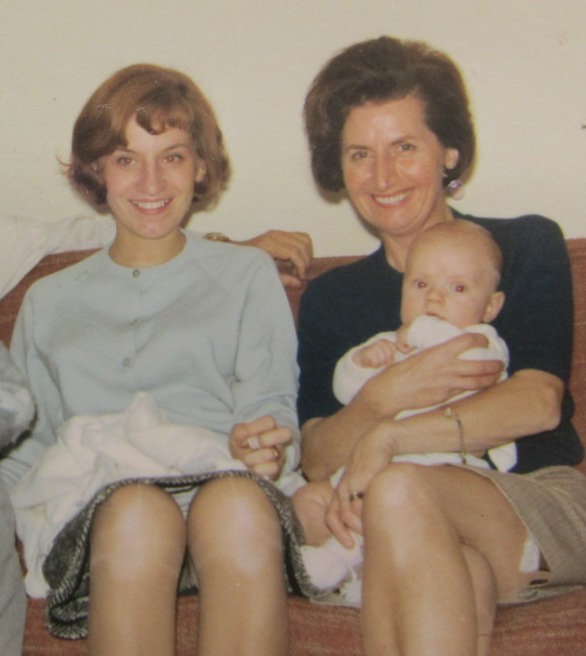
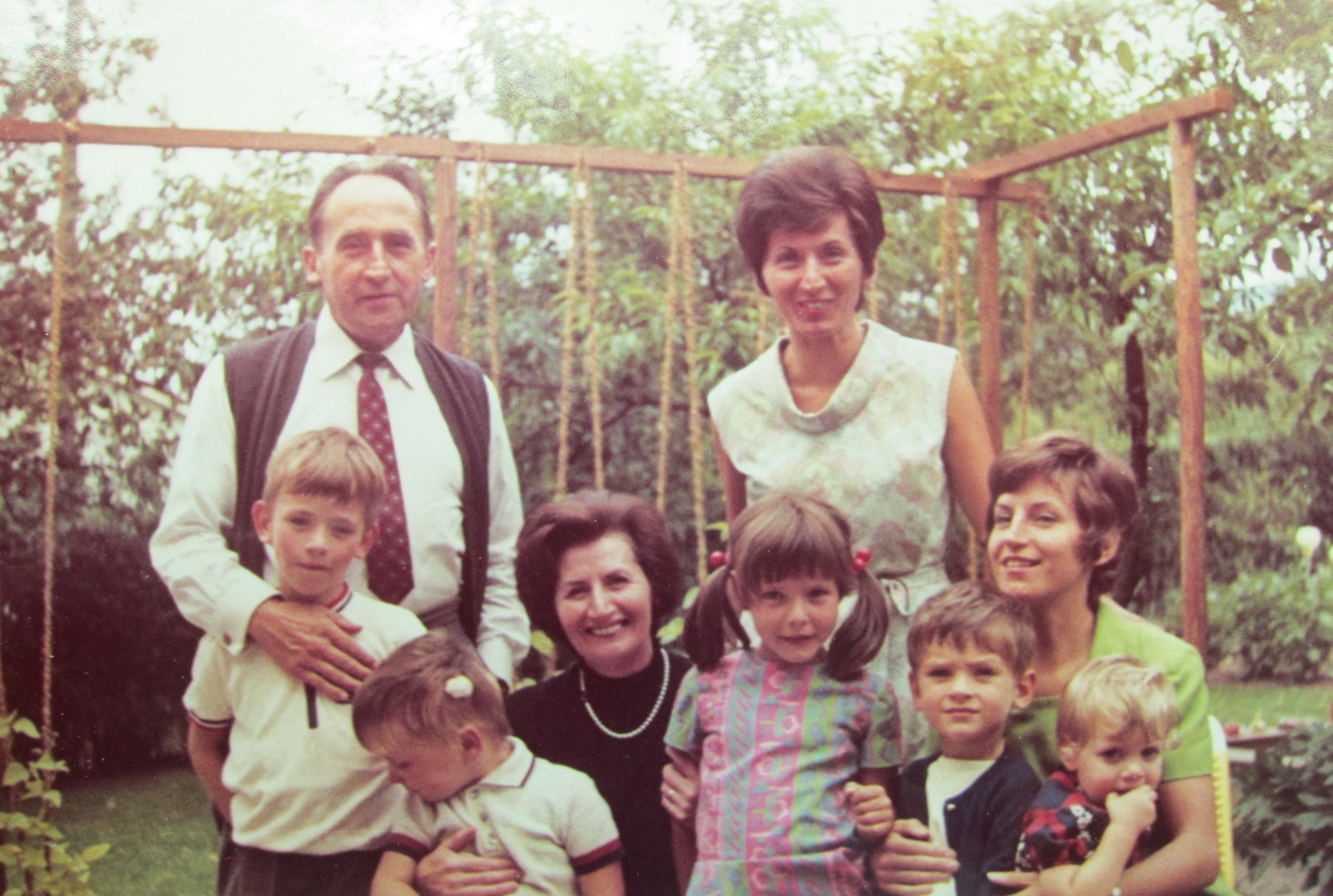
Eventually settling in the quiet town of Annweiler in the Rheinland-Pfalz, she and her husband Walter (my grandfather) rebuilt their lives and raised the three children. My grandfather was a businessman who owned and operated a metal fabrication plant in town — water tanks, cookware, etc. 1966-omi-monika-christopherBy the early 1960s the three daughters had grown up and started their lives. The eldest (Gisela) married a local lawyer and settled in the nearby city of Mainz; the other two daughters (twins) moved on to new homes farther afield, my aunt (Renate) settling in Munich and 1966-omi-stefan-christopher my mother emigrating to the USA.

My mom met my dad and they started a family. I was part of the first wave of children to hit the three German sisters, and more children soon followed. In the picture to the right you see me in her arms (I’m about 3 months old) and that’s my cousin Stefan, 3 years old and impossibly cute. Every year or two we would pull up and travel over to Germany for some big family get-together, or would host a visit from some of them coming over to the US. Germans get a lot of vacation time from work and so they’re always traveling somewhere!

1970-annweiler-familyIn 1980, we started a small “exchange program” within our extended family, where an American kid would head over to Germany for a year to live and go to school with the cousins, and conversely a German kid would come to the US for a year. 1970-omi-with-grandchildrenWe toggled back and forth like this for something like 15 years. For the 1980-1981 school year, I got to be the first one to do it, and so at the age of 14 I headed to Annweiler to live with Omi (a German term for grandmother similar to “Granny”). She was raising my cousin Stefan, a couple years older than me, so I attended his high school on the top of the hill on the edge of Annweiler.

1975-germany-christmasSo I spent the year in Annweiler with Omi and Stefan, exploring the town and utterly immersed in German culture. I knew a tiny bit of German before I arrived, but once there I absorbed the language rapidly — it is truly amazing how quickly a child brain can absorb language. I was essentially fluent within months. Well, verbally fluent, where I could slur my way through the conjugations. Masculine, feminine, neuter …

1975-germany-newyearsGrandfather Walter (“Opa”) had passed several years prior, so it was the three of us in the house (Omi, Stefan and me). Already 60+ years old by then, Omi was a dynamo, running the household and keep us two boys in line. Well, mostly me, I think Stefan could do no wrong. She had some incredible gardens all around the house and a big cherry tree in the back that you could climb and gorge on (Julienne and Teresa have a great story about those cherries). At night after dinner we’d entertain ourselves with a board game or just TV, and I remember a few thrilling evening outings with Stefan — thrilling because he was a good 2-3 years older and so all his friends and activities were sooooo exciting for this awkward, dorky teen.
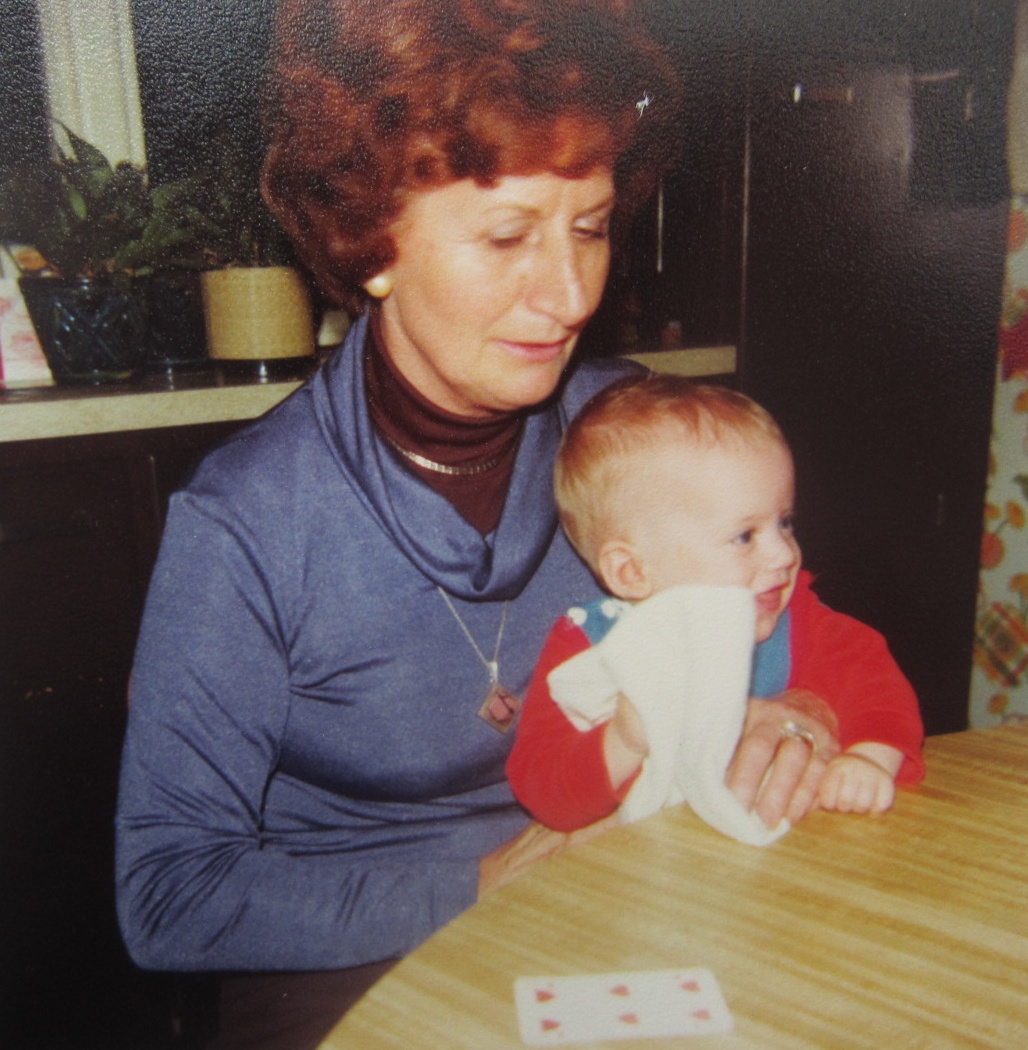
1978-omi-with-julienneTo the left is a picture of Omi with Julienne, my little sister, circa 1978.
After my year was up I returned to the US to start regular high school (having spent my freshman year overseas). Entering as a sophomore was a little jarring, and ended up somewhat disrupting my curriculum (and grades). So we all learned from that experience, and while my two younger sisters also eventually went to Germany for a year, they waited until finishing US high school and basically spent a “gap year” in Germany, a 13th year of high school. Further, by then Stefan had completed his studies at the Annweiler school, and had moved on to college, so while my two sisters followed my example in going to Germany for a year, they did so in Mainz with my aunt’s family and our cousins there.

So I was really the only one (of the US kids) to live with Omi and live in Annweiler. She ran a tight ship (and didn’t necessarily suffer uppity teenagers well) but also created a warm and loving household for us to grow up in. And when it was time for family reunions, they were held in Annweiler.

Eventually she sold the Annweiler house (after some 50 years of residence) and moved to Mainz to be close to the family there. As she aged she moved into assisted living but always with the extended family extremely close by and visiting frequently, if not daily!

We had a big family reunion in Mainz in 2008 and I got to see her one last time then (and Sharon got to meet her). I also had a chance to get out to Annweiler and see the old house (now owned by someone else) and meet up with old family friends there.

In June the family will gather in Annweiler and we’ll lay Omi to rest next to her husband. I’ll be proud to be there, representing the Monika / US branch of the family.

Rest in peace, Omi.

one year with an electric vehicle

719711SSo1B2A6BB.lg Exactly one year ago today, on December 22nd, 2010, I took delivery on my Chevrolet Volt. I was lucky enough (although you make your own luck) to get one of the first in the country — mine was in the very first batch that was released from the Detroit factory.
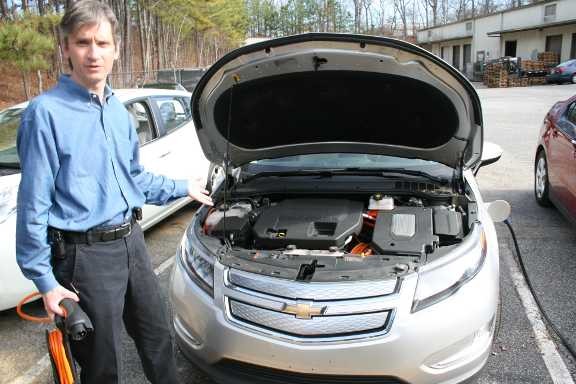
So here we are, a year later. What a year! From minor appearances on TV and in newspaper articles, to taking friends out to lunch demoing the car, to enjoying the thrill of driving the car itself, the year has been incredible! I have been looking forward to driving a real, solid, high-performance electric car for most of my adult life and it’s truly amazing to have finally reached that milestone.

The photo above is from a demo event I was at last week — taken by the reporter who wrote the story for the local paper. I’ve been to dozens of events like this, and have handed out hundreds of copies of my little fact sheet to anyone who shows interest and asks a lot of questions.

The Volt leapt out of the gate, winning dozens of awards including a sweep of all the major awards including Motor Trend’s Car of the Year, Car and Driver’s 10 Best, and so on. One group even called the 2011 Volt the “Collectible Vehicle Of The Future”.

Volt-mpgHow about the numbers?

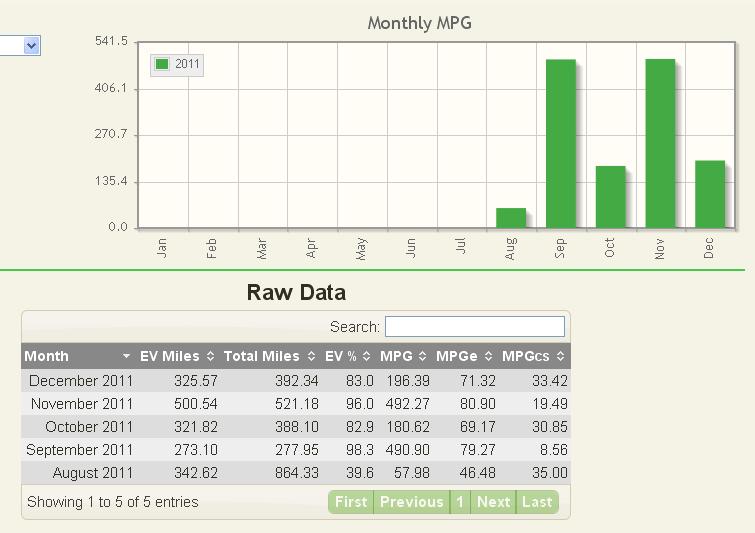
  • My average fuel consumption over the past year is 86 MPG. That represents a combination of A) nearly zero gas consumed for regular daily commuting, and B) long road trips, when the car gets 37 MPG. As you can see on this graphic, in months where we didn’t go on a roadtrip (like August) or I didn’t even need to drive to the outlying counties much, I got hundreds of miles per gallon.
  • My electrical efficiency is around 35-45 kWh per 100 miles, or 350-450 Wh/mile. Those are numbers that won’t mean anything to most people, but that’s basically the same kind of measurement as MPG in a regular gas car. It’s a measure of how efficient the car is in converting stored energy in to motion. Lower is better (opposite to MPG) and my numbers are on the high side, because I drive with a lead foot and don’t scrimp on the HVAC. But even a wasteful electric car is still far more efficient than nearly any gas car on the road.
  • I’ve driven about 5000 miles under electric power (around town in Atlanta) and about 3200 miles on gasoline (roadtrips to NJ, WV and AL). Those 5000 miles electric were practically free.
  • It costs me 25 cents of electricity to recharge the car every night. One shiny quarter. I don’t drain the battery down all the way with my every-day driving, but even if I did the cost to charge would be 60 cents.
  • I don’t spend money on gas anymore (in Atlanta) and my electric bill originally went up about $20 per month. And now that I have switched to a smarter electricity rate plan, the monthly increase is only $10 per month.
  • I have 300 foot-pounds of torque and every stoplight is an opportunity for pure joy.

I suppose I should spend a moment talking about the (now tiresome) question that many people lately ask me when I mention owning a Volt: what about those car fires they’ve heard about? Heavy sigh. The whole thing is frankly amazing as a study in how nobody actually reads news anymore, they just look at headlines, and those headlines are often written by staffers who aren’t really reading the article either! Or worse, are trying to mislead or fan flames. So to speak.

So, that said, here are a couple articles (which, uh, you should actually read) that describe the actual situation rather well:

http://blog.caranddriver.com/chevy-volt-hysteria-we%E2%80%99re-all-going-to-die-or-an-application-of-facts-and-rationality-to-flaming-batteries-and-melting-chargers/

[After describing the crash testing that resulted in some Volt batteries catching fire weeks after the crash … ] If you ask us, even just one day is plenty of time to safely exit a vehicle that’s in peril of burning. And get this: We’ve even heard of [normal gasoline] cars catching fire during a crash. … We’ll also point out that the above incidents [in a test lab] are the only two known conflagrations resulting from Volt accidents; no Volt owners have had their battery packs go up in flames from real-world events—but that didn’t prevent some bogus media reports from stating such.

http://www.plugincars.com/car-fires-recals-and-politics.html

[After listing plenty of specific fire hazards in recent gasoline cars … ] All of these fire-related recalls are just what I found from the past two years, and I’m sure there are more because I hardly looked. Most of these recalls were completely missed by the press or at the best casually mentioned in the nightly news. Why is that? Why are two Volts that had fires weeks after being crash tested so much more dangerous than all of these recalls where in some cases cars burst into flames while people were driving them? I didn’t even mention the famous Ford recall in 2009 when Ford recalled 14 million vehicles because over 550 of them caught on fire, many of which while people were driving them and in some instances even burned down some homes.

No Volt owners have had any problems with battery fires, there hasn’t been a recall, and the NHTSA is still giving the Volt a 5-star crash rating.

I have been pushing to show this technology, one to one and in person, to as many people as possible, for a full year now. BeltlineThe fundamental reason why I have been pushing it like this is because I knew that sooner or later the inevitable success of EVs would start to really threaten the bottom of line of the current vested interests (e.g. the oil giants, companies that profit from endless oil wars, etc.) and that’s when the misinformation campaigns would begin in earnest. Let me be clear: they are lying to you, and you should simply ignore them.
You’ve probably heard of the documentary “Who Killed The Electric Car, a 2006 review of what happened to the first wave of EVs that came out in the mid to late 1990s. This year the sequel came out, called “Revenge Of The Electric Car”, and it came to Atlanta a couple weeks ago. I’m biased of course, but it really is a great movie, and you should see it. Here’s a great quote from the movie from automotive journalist Dan Neil:

“There comes a point when you know too much. For me, knowing what I know, and having been where I’ve been, gasoline-powered cars have started to become very, very bittersweet for me. And I’ve been saying goodbye, in my head, for about a year now. What I want is a car that I can live with, that goes fast and is fun and is clean. Because that’s where the imagination is, that’s where the inspiration is at, that’s the future. “

Any regrets? Not a one. The car has been fantastic, GM delivered on their promise, and I am more committed to electric vehicles than ever. After years of driving only imports (Volkswagen, Honda, Audi) I’m as surprised as anyone to be this satisfied with an American car.

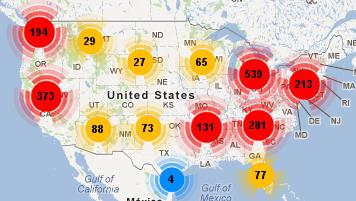
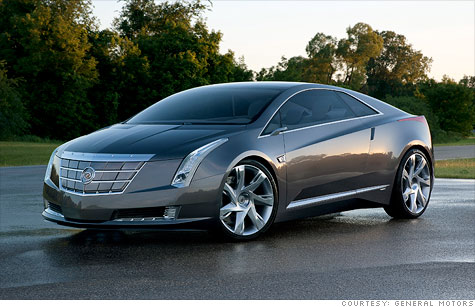
When my Volt lease ends in December 2013, I plan to move on to my next car (which will likely be a regular purchase again) and it will certainly be an electric. CarstationsThe big decision I have to make by then is whether it will be a pure electric, or a “range extended” electric like the Volt I have now. Cadillac-elr.top_ It’s nice having the gas engine there as a backup, but it adds significant cost, weight and maintenance complexity to the car. I may decide that a 100-mile range pure electric car is good enough for me, even for “suburb days”, and I’ll just rent a car for the one or two times a year we go on a big road trip. And I might not even need to do that rare rental for roadtrips, because in the last year thousands of public charging stations have popped up all over the country (the map here is from the excellent carstations.com ) and that’s a trend that is accelerating. Or I may stick with GM and get the new Cadillac with the Volt drivetrain! Yeah, you heard me, Cadillac.
These are strange and exciting times!

Europe trip epilogue

Now back in Atlanta, I (Chris) have processed the panorama photos. I’ve inserted them into the appropriate posts here, so please go back (e.g. start at the beginning) and look for the super-wide photos — most days have one or two of the panorama shots.

They really need to be viewed large to be appreciated. However, even after clicking to enlarge them they’re not that big, so if you happen to be using the Firefox browser, try the Ctrl-+ (control plus) key combo to tell your browser to enlarge the photo (and text and everything). Use Ctrl- (control minus) to reduce back down.

Or come visit us in Atlanta and we’ll show you the pictures 🙂

The weather was absolutely fantastic for the entirety of the trip in four different regions, most of which are not necessarily known for sunny weather! However that unseasonably warm weather meant we were over dressed, and the heavy coats we had packed took up room we could have used for more lighter cothing options. Oh well, better too warm than too cold.

Losses / wasted money:

  • $50 in wasted museum fares in Paris due to poor communications with ticket agent
  • $45 on surly Aix cab because we missed $10 bus ride to train station
  • $100 sunglasses left in same cab
  • $10 and unnecessary grief thanks to Metro ticket machines never working; damn you Paris RER train system!

We’re glad to be back home, where we can resume our usual activities (lately) — working on our new house …

Europe day 13: Paris to Home

IMG_0762 And now the long trek back home.

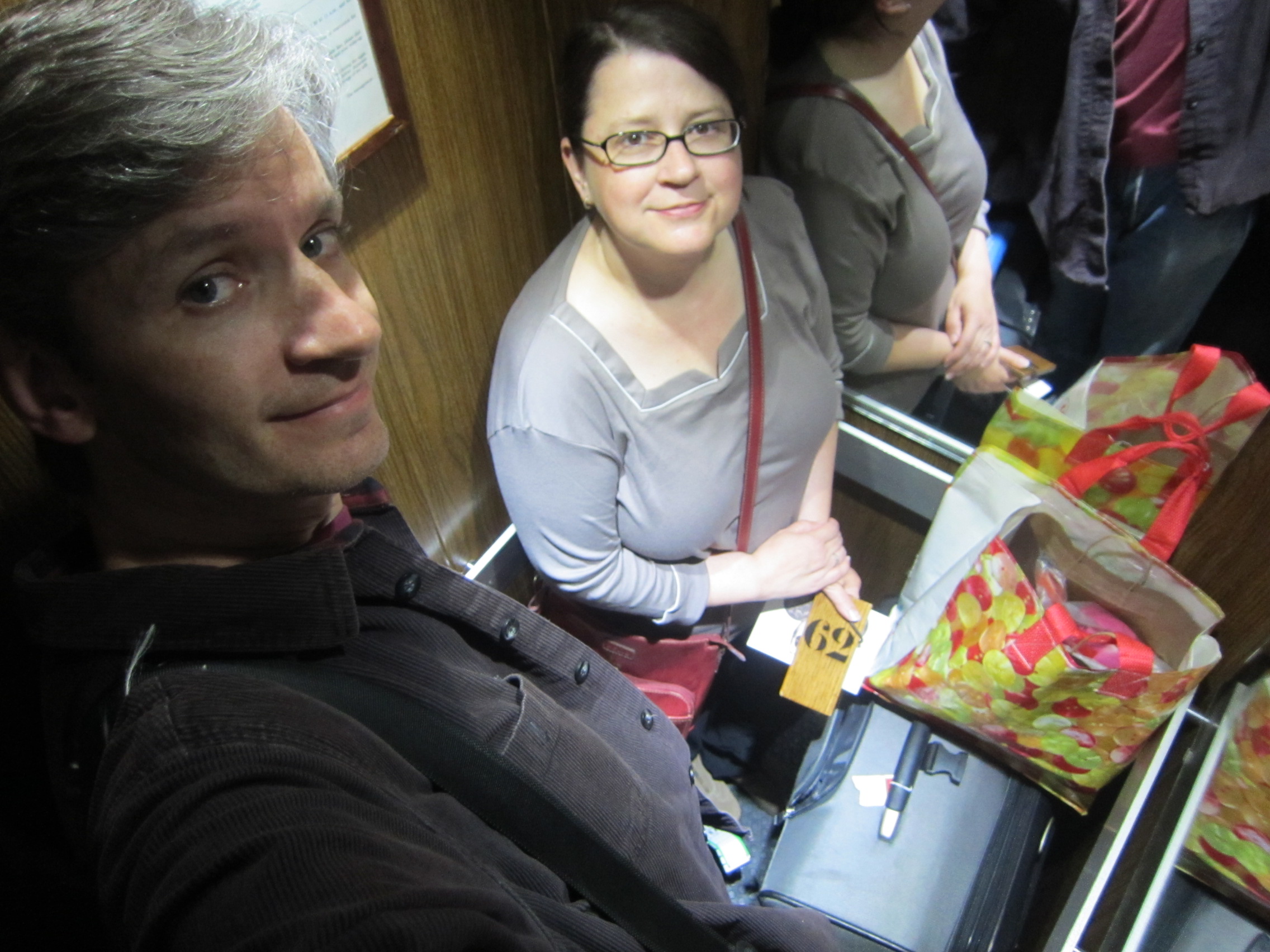
Checked out of the hotel (taking our final trip in the tiny elevator), dragged over to the Metro station. The ticket machine wouldn’t take any of our credit cards, nor would it take cash. Plan B: back up to street level to get a taxi. Finally one picked us up, and the ride to where we needed to go didn’t cost an arm and a leg like the surly Aix taxi.

Alas, just like last time in 2007, the Gare du Nord did not disappoint in its display of stunning French ineptitude in running a train station. Hundreds of dreary tourists, butting their heads against ticket machines that never work, or standing in line at ticket counters with dreary rail workers. We budgeted at least an extra hour for this due to our 2007 experience and once again the RATP soaked it right up. Got to the airport, checked in, and were told we didn’t actually have seats on the flight since they’d oversold it (and probably had picked us to get kicked off since we’d purchased months ago and were worth the least money to them, or something). The ticket agent threatrically offered us a thousand dollars to stay one more day and let them book us on Sunday’s flight, which we declined, leading to more theatrics from the agent. Sharon freaked out but Chris knew it would settle out, and by the time we got to the gate itself, we’d already been cleared onto the flight. Guess someone else took the grand. The flight itself went fine. There was no in-seat on-demand movie system which with Chris could spoil himself, so he settled on watching the crap they were showing on the main screens. Which were:

1. Mr. Popper’s Penguins (just kidding, didn’t watch it, but ask Sharon …)

2. Midnight in Paris ( WP / IMDB ) — pretty good! Basically a cinematic romp through many of the early 20th century authors and art world figures you might encounter in high school English or college freshman art history class. Owen Wilson plays a depressed Hollywood screenwriter hack who inexplicably finds himself in 1920s Paris and manages to endear himself to various luminaries of the Golden Age. As usual in a Woody Allen film, the women characters are all one-dimensional muses to the Woody Allen stand-in. A great film to watch coming from a visit in Paris.

3. Arthur ( WP / IMDB ) — Russell Brand and Helen Mirren liven up this remake in what is otherwise generic Hollywood effluent, perhaps written by the Owen Wilson character above.

4. some pathetic Reese Witherspoon rom com — see commentary below for title

That last movie — I tried to ignore it, but I kept going back because I couldn’t figure it out. It is in the running for literally the worst movie I’ve ever seen. The primary actors (RW, Paul Judd and Owen Wilson, again) seemed to be dazed and working without any script. We didn’t get the movie’s title on the plane, so I was interested in looking it up when we got to the internet again, for no other reason than to see if it even had a writers credit (perhaps one Alan Smithee). So I was stunned when I found that not only had the movie, How Do You Know ( WP / IMDB ), been directed by James L. Brooks, he had written it too! Brooks being famously one of the creators of The Simpsons (alas also now one of those responsible for the continuance of The Simpsons). Maybe the writer begged off the onscreen credit and Brooks took it. Oh and they spent $120M making it! Anyway, too much ink already spilled over a vacuous piece of dreck and a terrible stain on the resumes of all involved. Well, except for Reese Witherspoon, for whom it was just par for the course. I maintain that RW hasn’t been tolerable to watch in anything since Election, and yes, I saw Walk The Line. And in between all those movies, and looking out the window, Chris drafted these last two incredibly long blog entries. It was a 10 hour flight, he had a lot of time on his hands.

Europe day 12: Paris

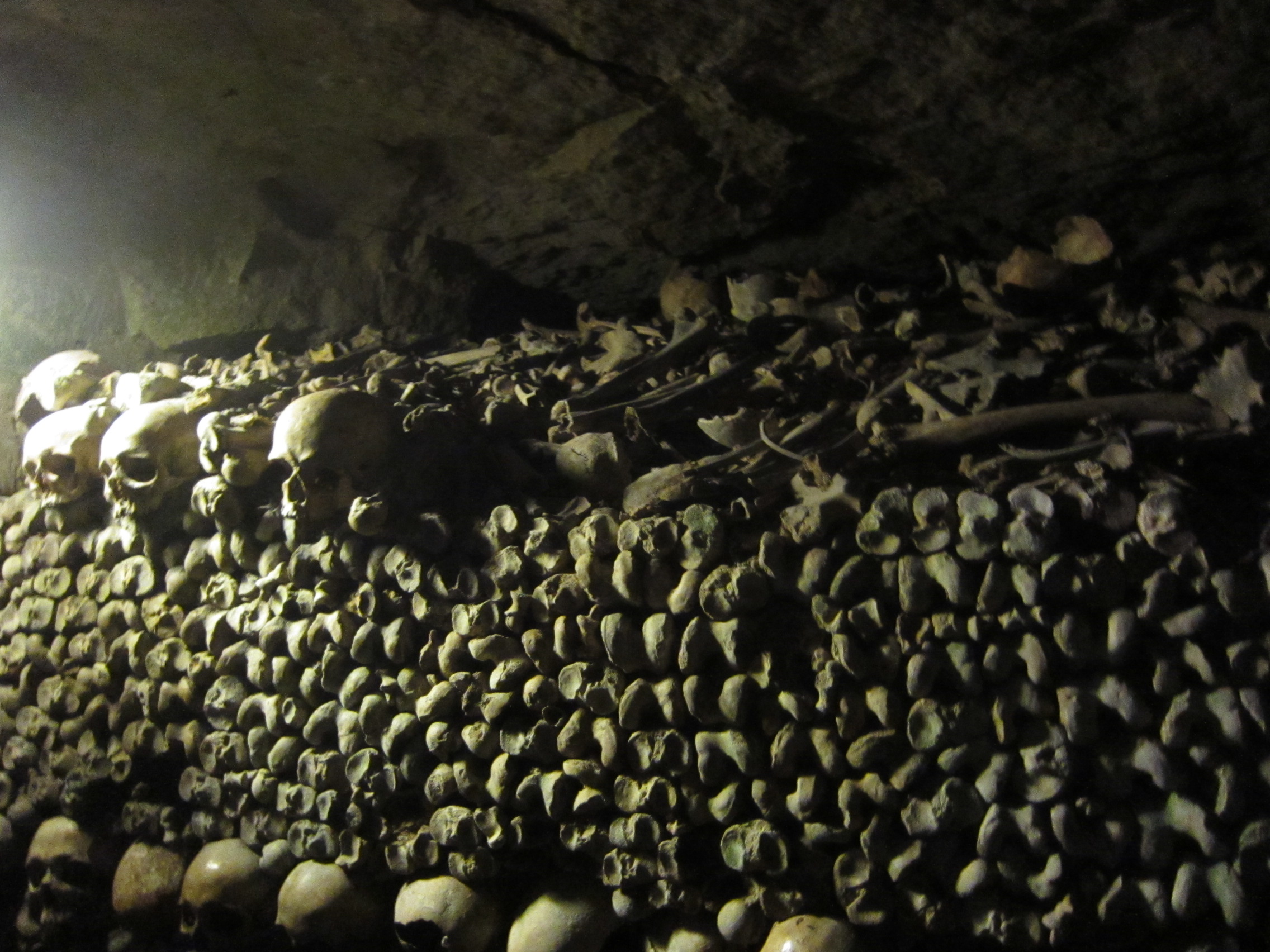
OK, here we go, our one full day in Paris. We’d basically be getting to the half dozen places that we’d failed to get to during our first visit in 2008. And yes, we were in Paris for Fashion Week. IMG_0691First, the Catacombes. Last time, we arrived in mid afternoon to find a line around the block. This time, we showed up before they opened (just) and the line was only a few minutes long. And once we were in, the few people with us quickly thinned out and we basically had the place to ourselves to wander through. We’ve been to ossuaries before (most notably the incredible one at Kutna Hora church in Sedlec, Czech Republic) and this would be the granddaddy. It didn’t have the artistic frivolity of the Czech ossuary, but it certainly did well in sheer scale and monumental solemnity. IMG_0717 Next, over to the Deyrolle shop, first opened in 1831 by Emile Deyrolle. Well, not shop so much as showcase of taxidermy oddities. A simple gardening shop on the ground floor leads upstairs to an astonishing array of stuffed mammals, reptiles, birds, insects and creatures of all kinds, great and small, spread among a half dozen huge rooms. Literally, they went from entire full-grown bears down to the tiniest of insects, all mounted and on display (don’t touch in French, and no pictures allowed). Sharon bought an expensive bug which will have a special place in our new home. (We were later surprised to see Deyrolle appear briefly in a scene in the Woody Allen movie, Midnight in Paris, that they played on the plane on our way home!)

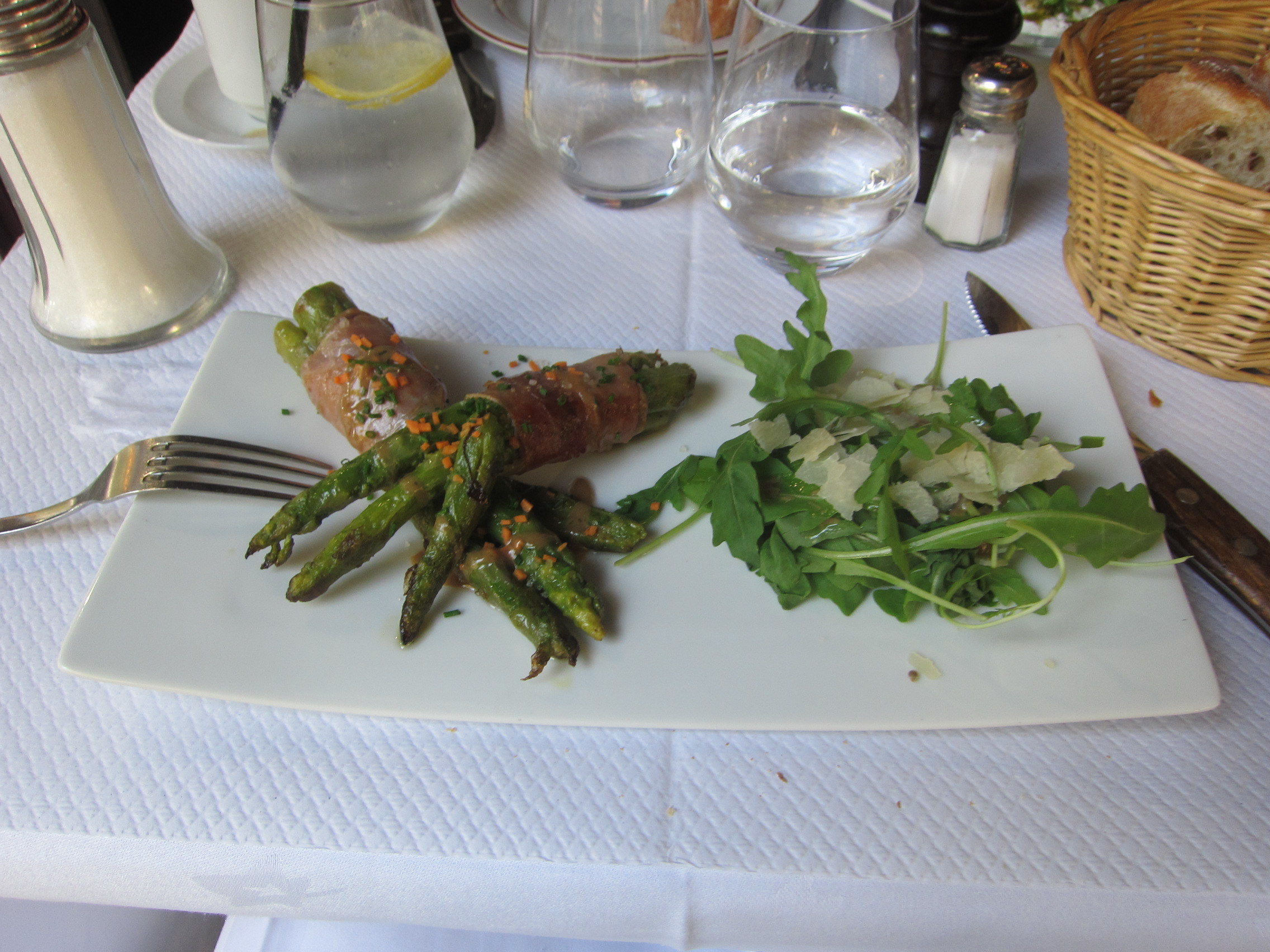
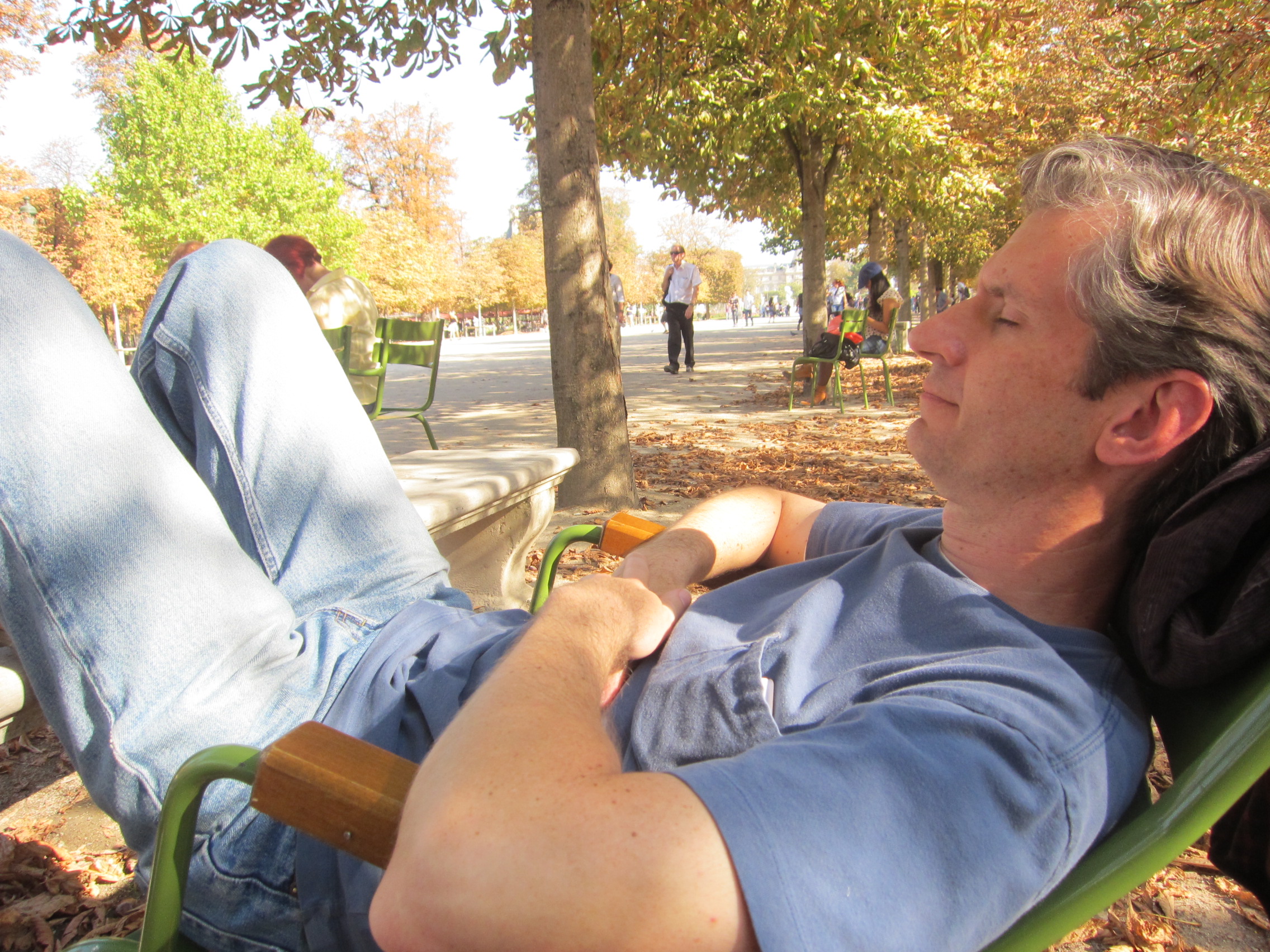
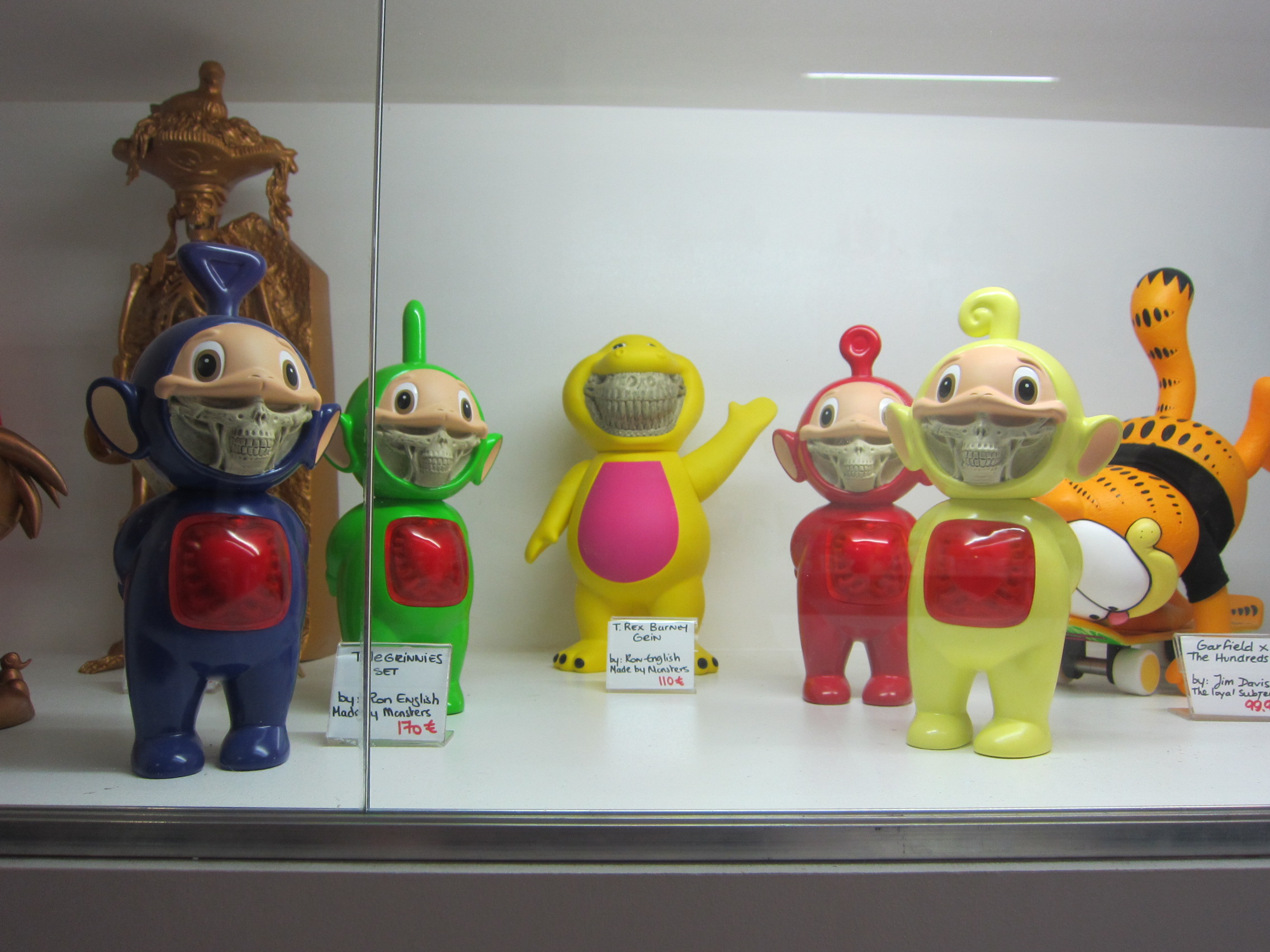
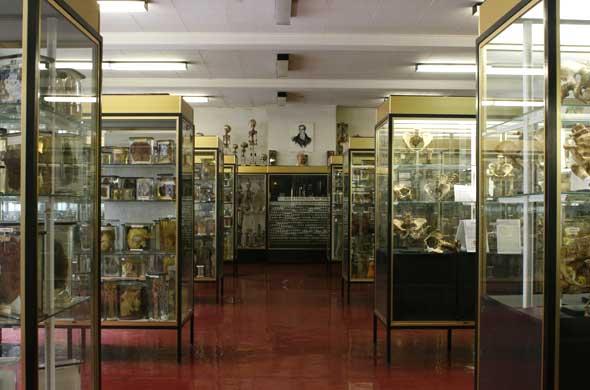
IMG_0722 Lunchtime! Found a very nice restaurant, balked at the prices a bit and settled for a delicious lunch of two appetizers (shown is asparagus wrapped in proscuitto). Next door was a random toy shop that also separated us from more money. Sharon continues to be fixated on Barbapapa, a French children’s television show, which is an obsession that started during our last trip here four years ago! 785d515f833fb12cc4ff711d0dbeb546 Next, the Musée Dupuytren. This is a medical museum (tucked inside the grand l’Ecole de Médecine, part of the Sorbonne) that, like everything on today’s itinerary, we’d tried to visit during our last trip but which had been closed for the school holidays at the time. It took us a bit of wandering in the l’Ecole complex to find it (including walking through a Paris Fashion Week event) but we did and it didn’t disappoint. Like Philadelphia’s Mütter Museum or the Josephinum in Vienna, both of which we’ve been to, this collection of medical oddities had been assembled over two centuries to educate medical students on the human body. More specifically, the medical abnormalities of the human body. Mostly preserved in jars of fluid but occasionally represented as wax figures, absolutely every awful disease or abnormality you’ve ever heard of was well represented here, often in triplicate. Sharon gasped at her discovery of some preserved examples of Harlequin babies, to which two other young American medical students who were in the museum responded by rushing over to see them as well. In total, the entire museum was held in one large room, but it was completely packed with specimens and probably exceeded the American museums in scale. And the curator, who is also a physician, was there and showed us around! He uses the museum to teach anatomy and pathology courses. Here’s a bunch of great photos from the Morbid Anatomy website. IMG_0724Moving on! At this point we were making good time, so we headed for the Musée de l’Orangerie, an entire building dedicated to Monet’s dreamlike “Water Lilies” mural series. Chris was underwhelmed and glad that we hadn’t paid extra for the 10 minutes we spent in there (we got in via our museum pass). Up next was a shop on the other side of the Louvre, and then the Louvre itself, so we had a nice long (and slow) walk down through the Tuiliries gardens. Midway we sat in some extremely comfortable chairs and did some primo people watching.
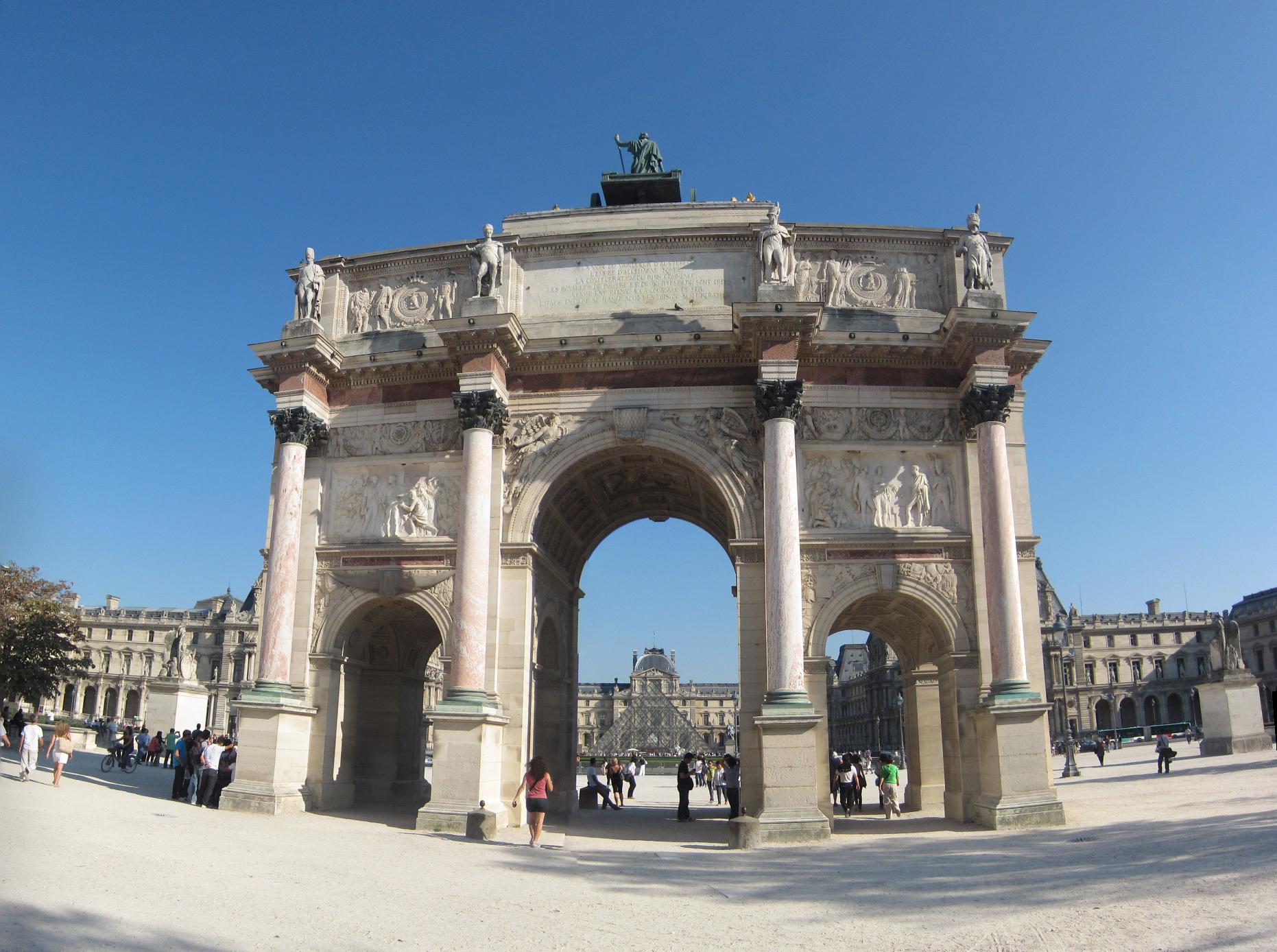
We walked towards and then basically through the Louvre gates, past the Arc de Triomphe du Carrousel, pictured here. Note this is not the more famous Arc de Triomphe de l’Étoile, which is about two miles away at the far end of the Champs-Élysées. In this photo, looking east, you can see the iconic Louvre Pyramid framed inside the arch.

STA_0726-STD_0729

Through the Louvre plaza to the other side, we reached the Artoyz shop. This tiny shop specializes in otaku, which is basically hipster toys usually inspired by Japanese culture. In other words, crack for Sharon. IMG_0730

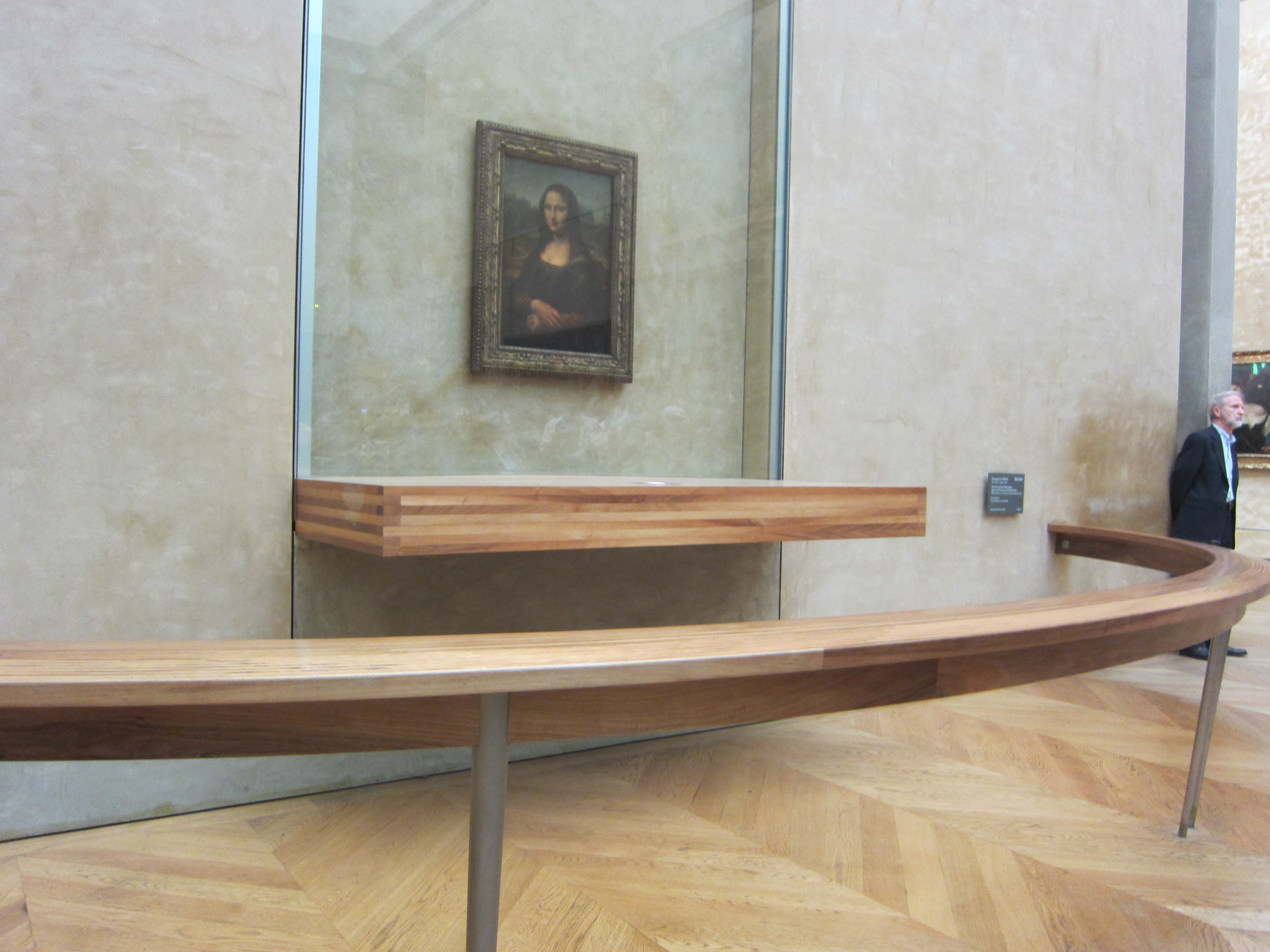
And finally, our last official destination of our Paris trip — the Louvre. As we did last time, many people just avoid the Louvre because it is so daunting, and you could spend months here and still not see everything. This time we did tackle it — we spent 3 hours simply wandering the halls IMG_0743(independently), seeking out various obvious highlights — a Mona Lisa here, a Venus de Milo there, et cetera. Chris was most stunned by the entire medieval fortress (that the Louvre was eventually built over) that had been excavated out under one of the wings. The Louvre is a museum without peer — it is an entire city of artwork, the entirety of human artistic endeavor under one roof, from the Code of Hammurabi to Napoleanic decorative riches. At some point in the Louvre we caught a bite to eat at a cafe, so afterwards it was straight back to the hotel to collapse.

Dupuytren

Europe day 11: Port Camargue to Paris

Today was to be mostly about getting to Paris and other logistics, but we’d have one bit of Paris sightseeing at the end.

We packed up, cleaned up the condo, and drove the two hours back to the Marseilles airport where Uncle Andreas keeps the car (he’ll be coming down from Munich himself next week). We just missed the shuttle bus to the train station, so got a taxi. This taxi driver was particularly surly, even by French standards. He didn’t even grunt when Chris gave him a tip on top of the exhorbitant fare; later Chris discovered that he’d left his sunglasses in the cab, so that bastard got those too.

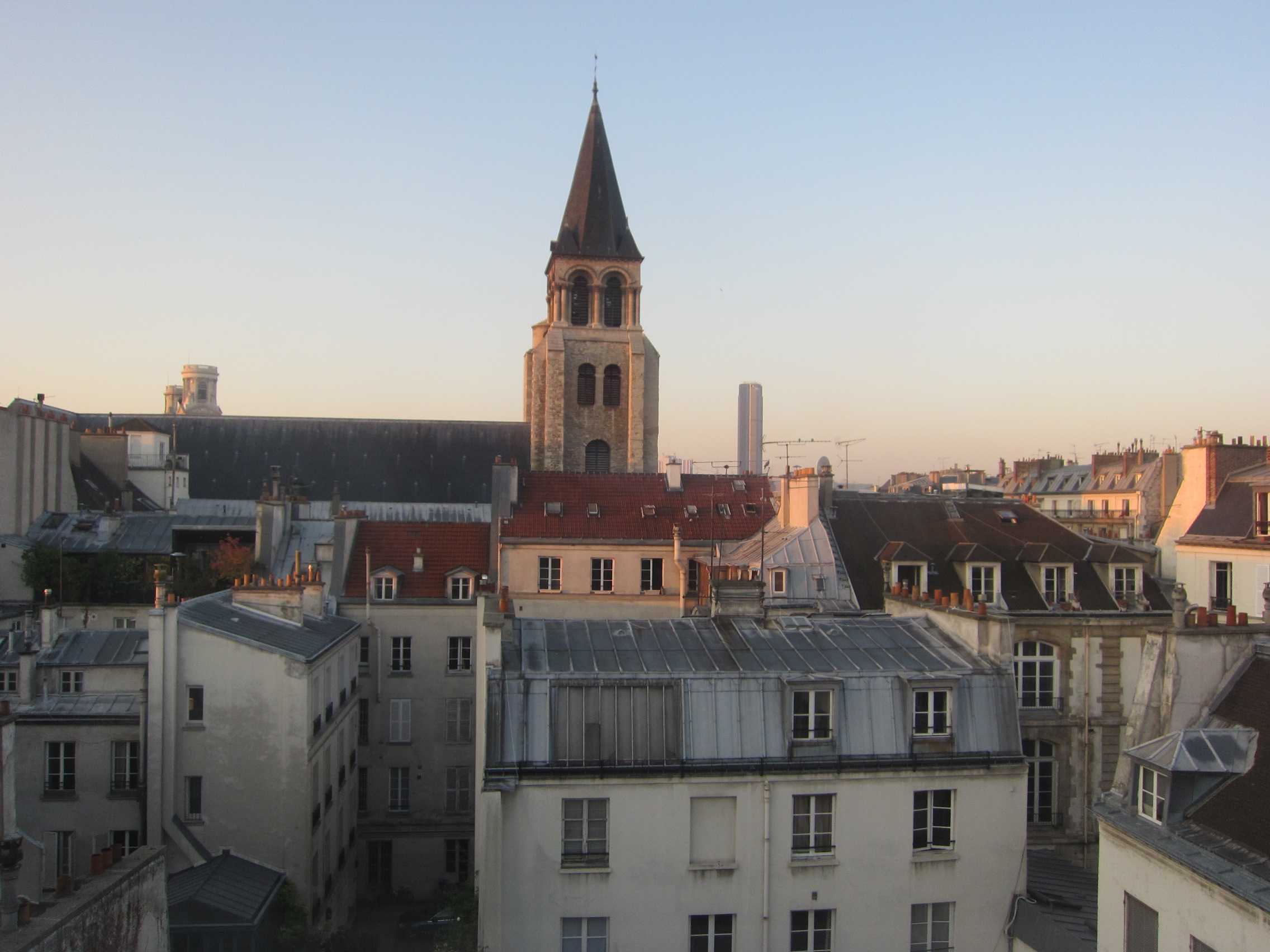
IMG_0668Thankfully the TGV ride to Paris was just about perfect. TGV stands for Train Grand Vitesse, or simply high speed train. The station was easy to navigate, the train was right on time, and we quickly found our seats. Chris had sprung for first class fares, which meant assigned seats, big ones, quiet car (cell phones banned), big windows. Chris watched the countryside go by — and with a trip from Provence to Paris, you are watching a large part of France go by indeed. The Massif Central (the “massive” mountainous region in central France, sparsely populated) loomed to our west as we coursed up the Rhone valley at speeds of around 180 MPH. We arrived in Paris in the Gare du Lyon train station, and from there we caught a couple Metro (subway) connections. The weather for our entire European trip has been unseasonably warm and Paris would be no exception. The Metro is not air conditioned, and with our 5pm arrival in the city we were right in the middle of the sweltering rush hour crowds. Dragging heavy suitcases. Not knowing exactly where we were going. Oppressive heat aside, the Metro whisked us to our hotel’s neighborhood (Saint-Germain-des-Prés), within two blocks of the station we had finally reached our hotel for the next two nights. Tucked into a courtyard off the quiet Rue Jacob, the Hotel Marronniers is your typical Parisian hotel, with tiny everything — tiny lobby, tiny elevator, ludicrously tiny shower … but a great location. And we lucked out (well, Chris had asked for it a month ago) and got one of the few rooms at the top of the hotel (at the hotel’s attic level, basically) that overlooked the courtyard, with a view to the Saint Germaine church (and beyond, the controversial Montparnasse tower). IMG_0677 Paris-musee-d-orsay-museeAfter a respite and a quick wash to remove the Paris Metro slime, we were back out on the streets. Tonight’s one destination would be the Musée d’Orsay, which we had only had a chance to literally speed through (in 15 minutes) during our first trip to Paris in December 2008. This time we had 2-3 hours to soak it in. The building is an 1890’s train station, a gargantuan open hall, that was converted in the 1980s into this museum. The Louvre has all of the French national art treasures from antiquity through about 1848, and that’s where the Musée d’Orsay picks up, with paintings and sculpture and everything else from the second half of the 1800’s and on into the 1900’s. IMG_0676As we would also see later in the Louvre, the scale of the building allows them to put on display truly huge artwork, such as the scenes by Courbet, but there were also plenty of small spaces for more intimate works (such as, ~cough~, some paintings by Courbet).
At 9:30pm they started kicking everyone out, so it was finally time for our late dinner. After a few misfires, we found a restaurant still open and had a simple but fantastic meal — a french onion soup appetizer, veal scallopine, a “salad” with everything (shown here), wine and beer.

Europe day 10: Port Camargue / Provence

Chris got sick last night, and so today we just stayed in and focused on relaxation and getting better.

Things we were going to do today:

Pont du Gard roman aqueduct

Avignon and papal palace

Saint Remy

Luberon: Gordes and Rouuuillulililiooon

By evening Chris was feeling better, so we’d be back at full speed in the morning!