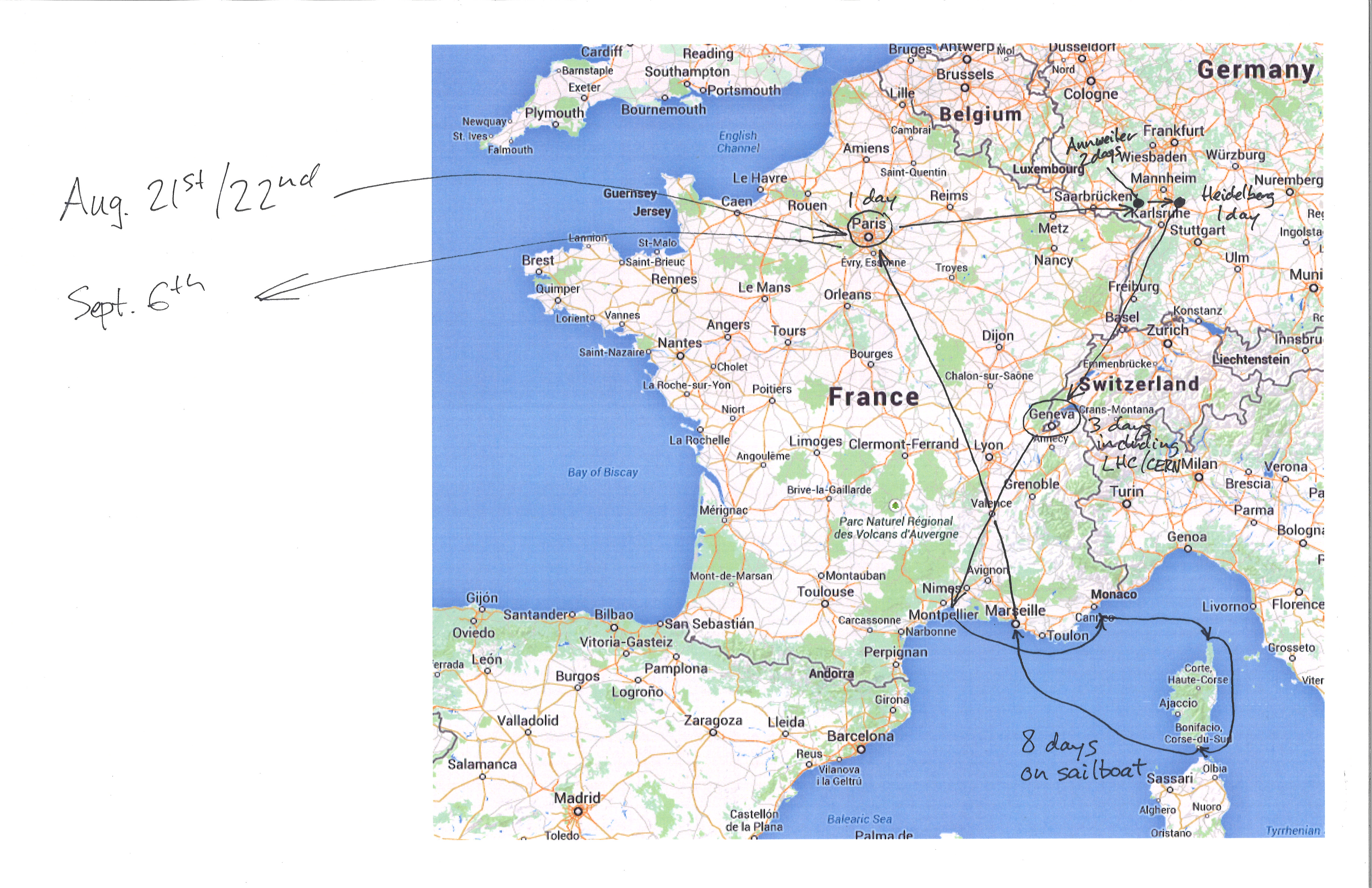
I’m going to Europe! I’ll be on my own this time, as Sharon just could not get away from work, and the trip’s timing is pinned down per the explanations below. The map above sketches out the general plan, taking place over a total of 16 days. I’ll be in Paris for a day, seeing things that I haven’t yet in our previous two visits (Dec 2008 and Sep-Oct 2011). I arrive at 6am, and so will have about 12 hours to do stuff before I collapse right after dinner time. I can’t sleep on airplanes, so this is how I deal with the jet lag — pushing through that first day. The current plan is to see Pompidou Center, Musee de Cluny, Notre Dame and Pantheon, and if time allows I will check out the Luxembourg gardens and Ile Saint-Louis.
The next morning, I get on a train, well a series of trains, that will deposit me in Annweiler, Germany. This is the small town that my family hails from (on my mother’s side), and we are having a family reunion to celebrate the 50th birthday of my cousin Stefan. During my entire freshman year of high school, I lived in this town, going to the local high school with Stefan, so I’m obviously familar with it.
After the festivities, I’m hitching a ride with another cousin and her family back to their home in Heidelberg, overnighting with them and then catching a train the next morning to Geneva.
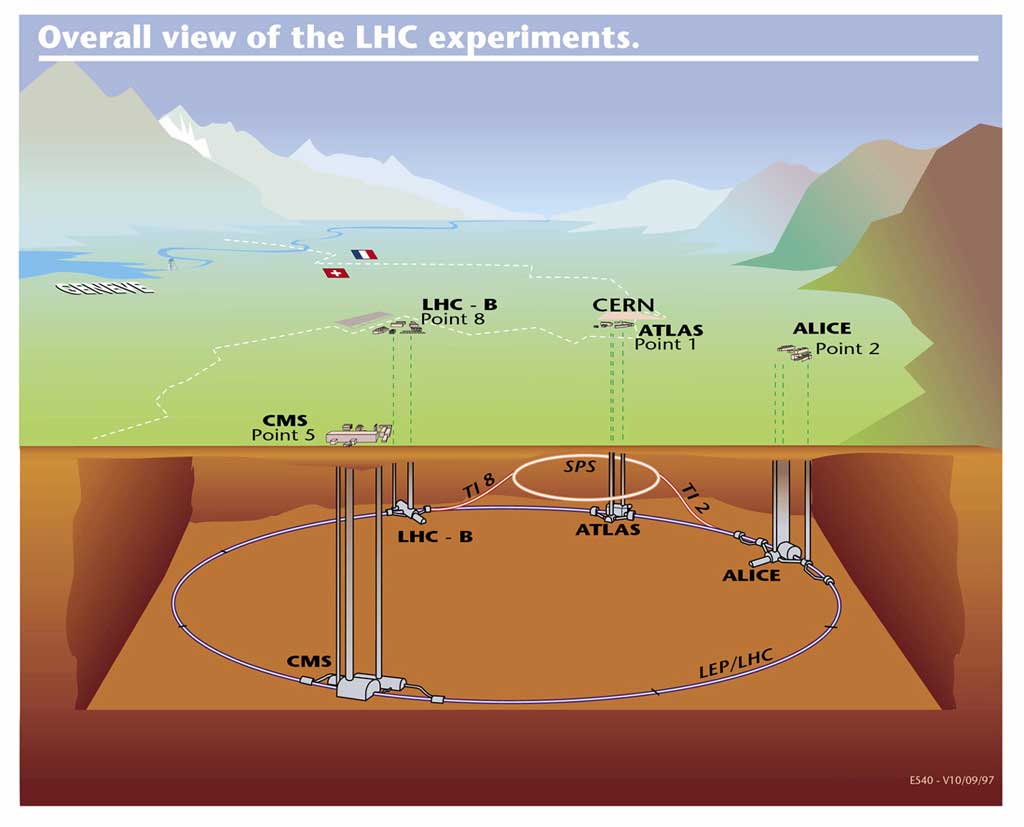 The main reason for this trip is the sailing, discussed below. The timing is dictated by the family reunion event. However, when planning this I saw that I would obviously need to travel between point A and point B, across the Alps. Looking for an opportunity to do soemthing along the way, I spotted Geneva …
Hmmm, what do I know that’s in Geneva? CERN! The world’s premier particle physics (read: atom smashing) research facility is located just outside Geneva, in a campus that sprawls across the countryside, actually straddling the French and Swiss border. I have been a close follower of the Large Hadron Collider (LHC) for years, including keeping up with the construction, the initial “beam on” of Sep 2008, the subsequent shutdown due to failure, startup again, and then most notably the triumphant declaration in July 2012 that they had confirmed the existence of the Higgs Boson. These little particles are all rather abstract of course, but think of it this way — the LHC is the simply largest machine humans have ever built.
Anyway, I’m going there. They have public tours, however I don’t know that those tours actually get you down into the underground tunnel or any of the four colossal test chambers. So I’m trying to see if anyone I know knows a guy who knows a guy who can maybe get me in … While I’m there I’ll tool around Geneva for 2-3 days, seeing what there is to see — I haven’t actually planned that out yet! I’m leaving the exact departure day and time up in the air, to be flexible in case someone can get me into the LHC tunnel.
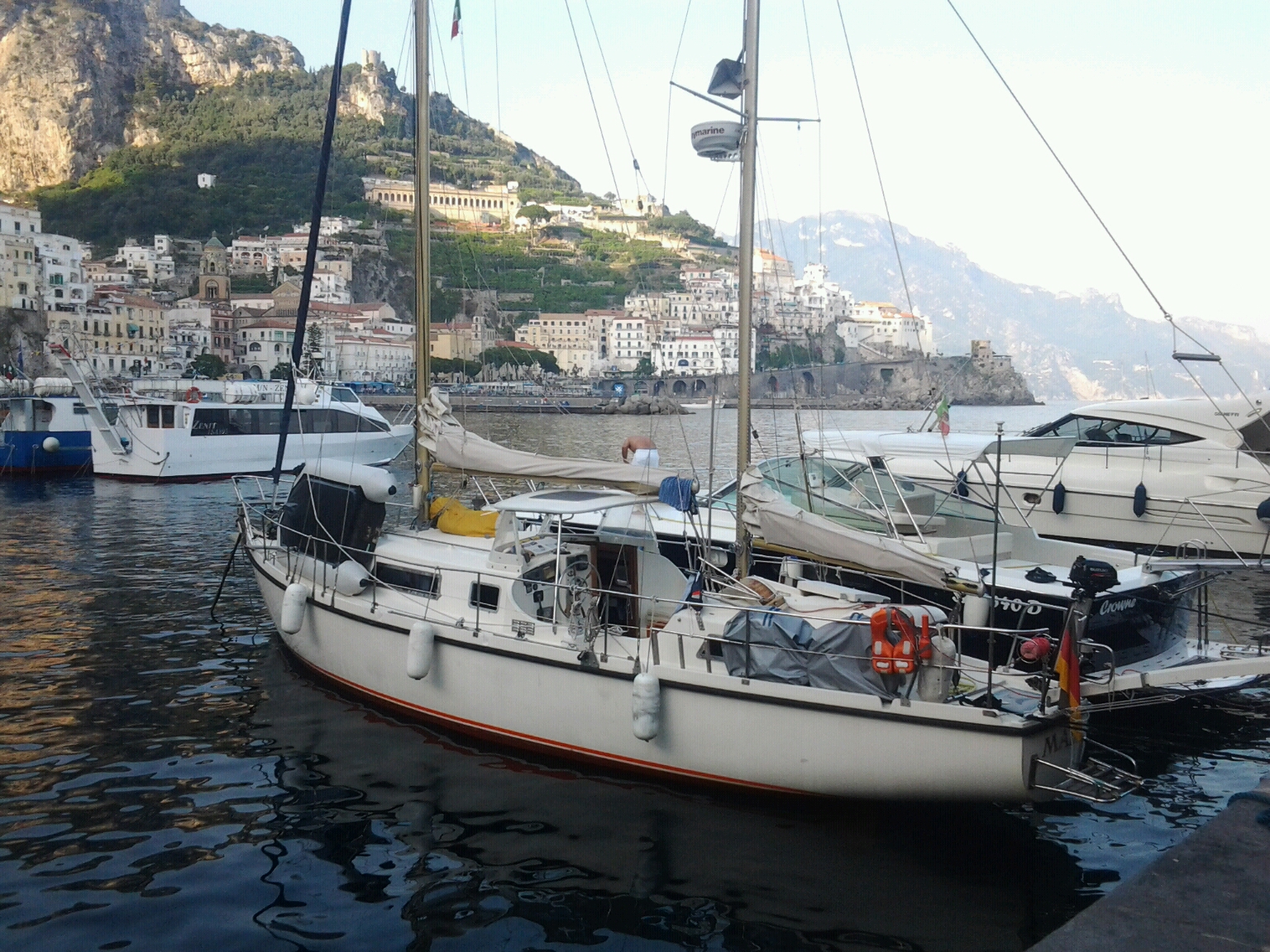 Next, back on a train to the French coast of the Mediterranean and some sailing! As I wrote about last summer, my uncle Andreas is a (mostly) retired German businessman who has a condo on the French coast and does quit a bit of sailing. His biggest boat is a 41-foot Euros, built in the 1970s by the French shipwright firm Amel. My uncle has had the boat for years and has gone on many sailing voyages with it (these pictures are from earlier trips).
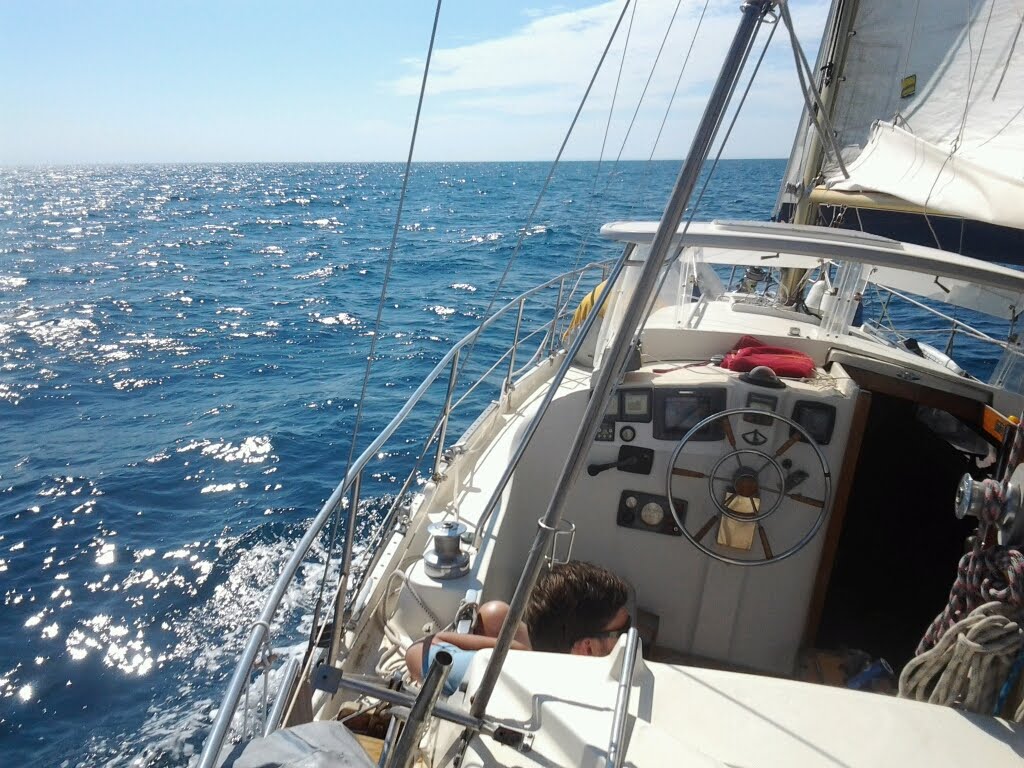 I have been planning this sailing trip for about two years. Two summers ago, Andreas went on two-month trip around the Mediterranean, and was joined by friends and family at various times during the trip. I heard about this and declared my intent to join him someday, and we quickly made plans to target this summer for the trip (2013 was already off the table, I forget why).
Now, I really don’t know how to sail. I mean, I understand the physics of it, but that’s not worth much. So last summer I spent a month of Saturdays driving up to Acworth (Atlanta exurb) to take sailing lessons on Lake Allatoona at the Atlanta Yacht Club. They teach you the basics — what are the parts of a typical small sailboat, how does the wind work with the sails, what is the lingo used to communicate between the people operating the boat. They shoved us out on the lake in little “420” sailboats, each manned by two people, and we learned on the go. By the end I was pretty comfortable with it, although most days we had very little wind.
A few weeks ago, I had a refresher session with a friend who has a boat on that lake. We didn’t have much wind, but he and I are both into electric cars so we managed to pass the time 🙂
Sailing is quite a visceral experience, especially if the wind has kicked up. 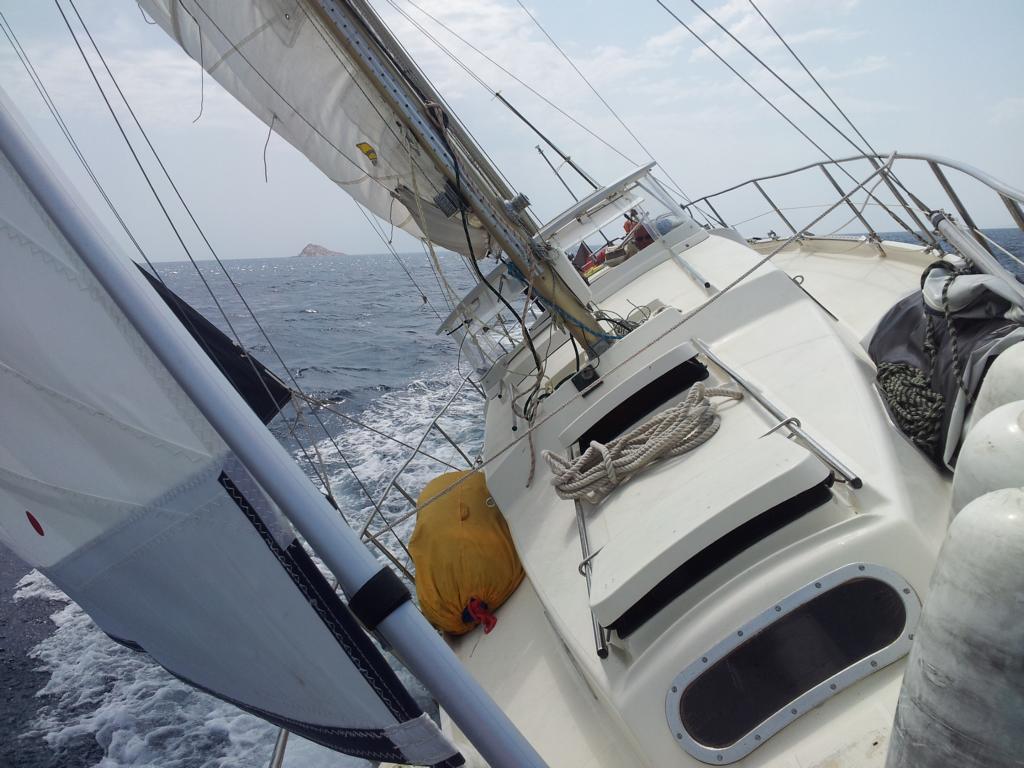 And with that in mind, I really do hope that we get some serious wind. I mean, I’m looking forward to lazing around in the sun, but also to some bare-knuckled tacks and jibes. I don’t think I’m suspectible to seasickness, but I guess I’m going to find out.
I’m not sure I want to captain the boat — I think I’ll be happy to just take orders and move the sails as I’m told. There will be three other people on the boat with Andreas and me — a friend of his, his young son (my cousin) and his son’s girlfriend. I know for a fact that they are all quite experienced at sailing, and so I hope they’ll let me do something besides run the radio.
 The tentative plan, shown in this last image, will be to disembark from the home port (Port Camargue) and spend eight days workong our way around towards Corsica and back. I really don’t know much about the plan beyond this map, and am leaving myself at the mercy of Andreas and the others.
At the end of the sailing voyage (or at least my part of it) we will arrive in Marseilles, where I will catch a train back to Paris, straight to the airport and back to Atlanta.
 My mother passed away suddenly in October 2006. In a small ceremony in April 2007, we took her cremated remains and set them in the ground around the base of a newly planted magnolia tree in the backyard of her house.
 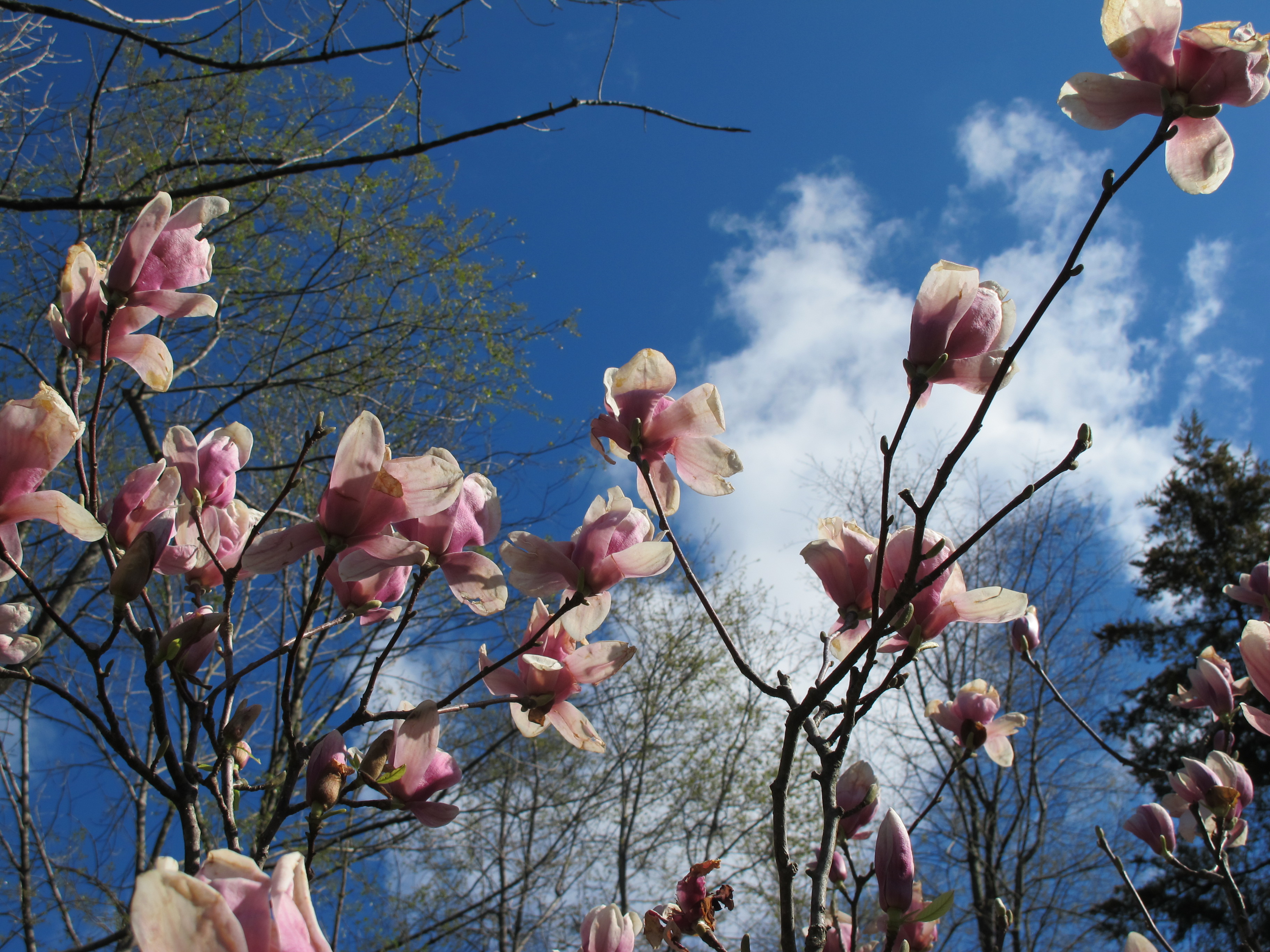 The tree produced a single, full bloom the following spring. The next year it burst forth with over forty blooms, and has flourished since then.
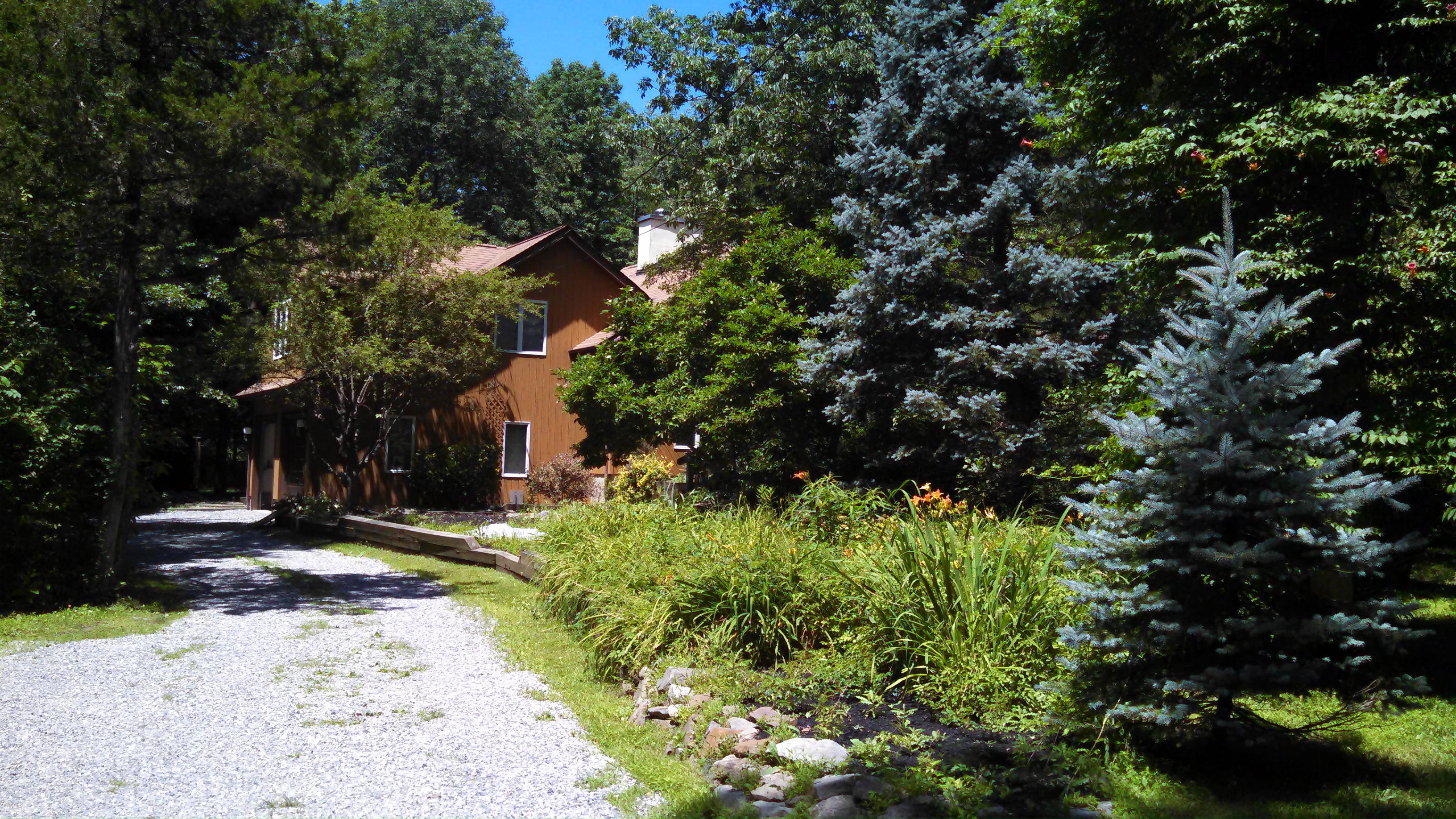
 the house is finally going on the market after nearly 30 years in family hands. My mother actually built this house to her specifications in the mid 80’s, after getting divorced from Dad and shipping my and my older sister off to college. It really is an incredibly unique and well-built house, with lush landscaping.
 Somebody suggested the idea of doing cuttings of the tree, taking small branch tips and rooting them into new pots. Hmmm, that’s interesting. We talked to professionals and it did indeed seem doable; in fact, my research showed that summer is the ideal time to attempt this. I could take multiple cuttings, to improve the odds of getting at least one to take, and the original tree would still be there.
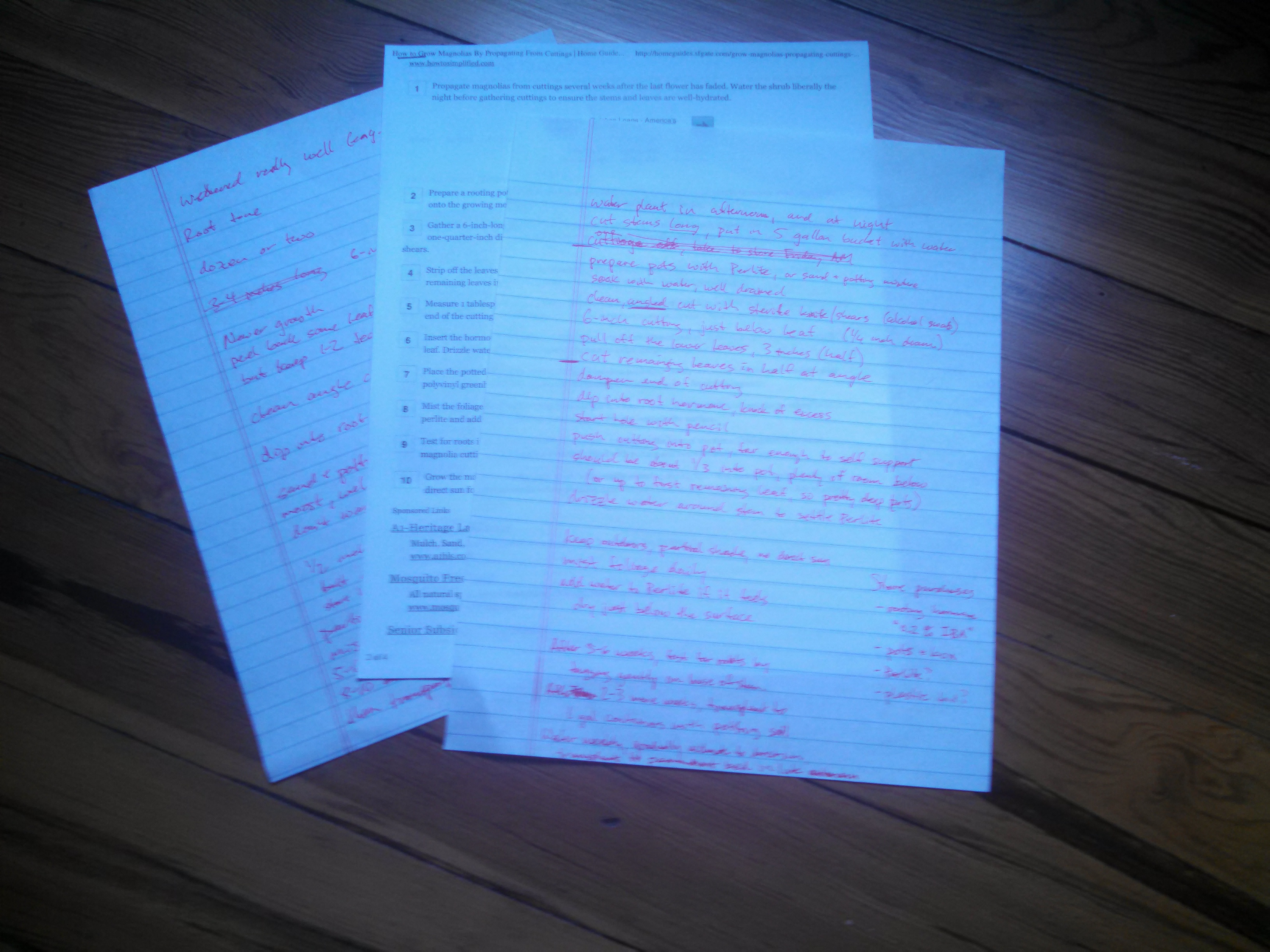 And so I commenced with research on exactly what I needed to do to get tree cuttings to root. Besides the obvious method of searching the internet, I got on the phone with plant expert up in that area and he walked me through the process. Actually I had originally wanted to hire them to do it for me, back before I realized that I really needed to do it myself.
 On the designated weekend, I flew up and got a good look at the tree — it looked perfectly healthy, if growing a bit oddly. I took one cutting and headed to the local nursery and talked to that expert again (thanks Jeff at Rutgers Nursery!) My original plan had been to to all the potting work in NJ before the drive, but he advised that it would probably be better to just keep the cuttings in water and then do the potting upon arrival.
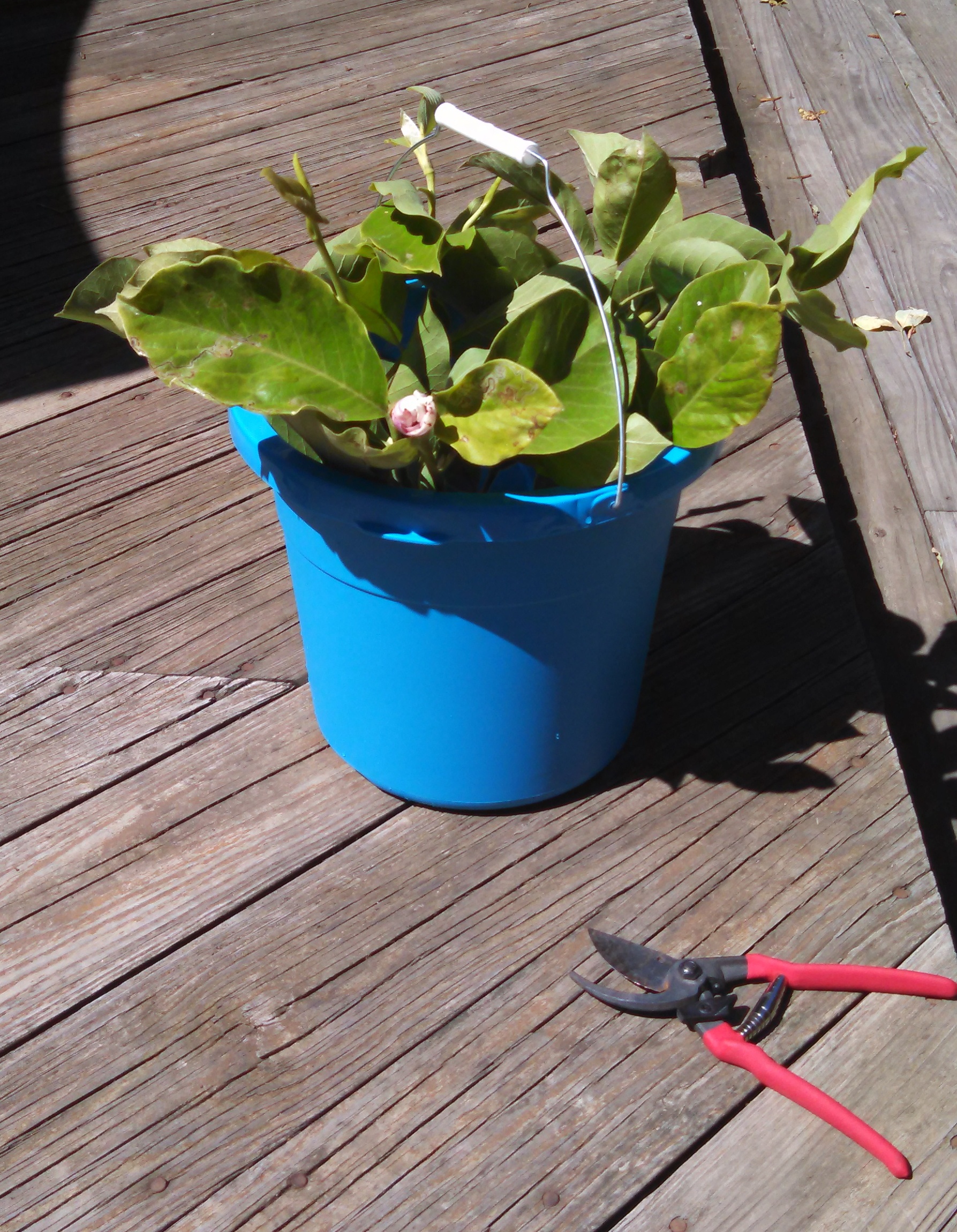 So on the day of departure, I went out with a ladder to claim some cuttings. I decided to take 12 cuttings, loosely filling a bucket with them, and put a few inches of water in the bucket. I had brought an old plastic spray bottle with me and filled that up with water to mist the leaves during the drive.
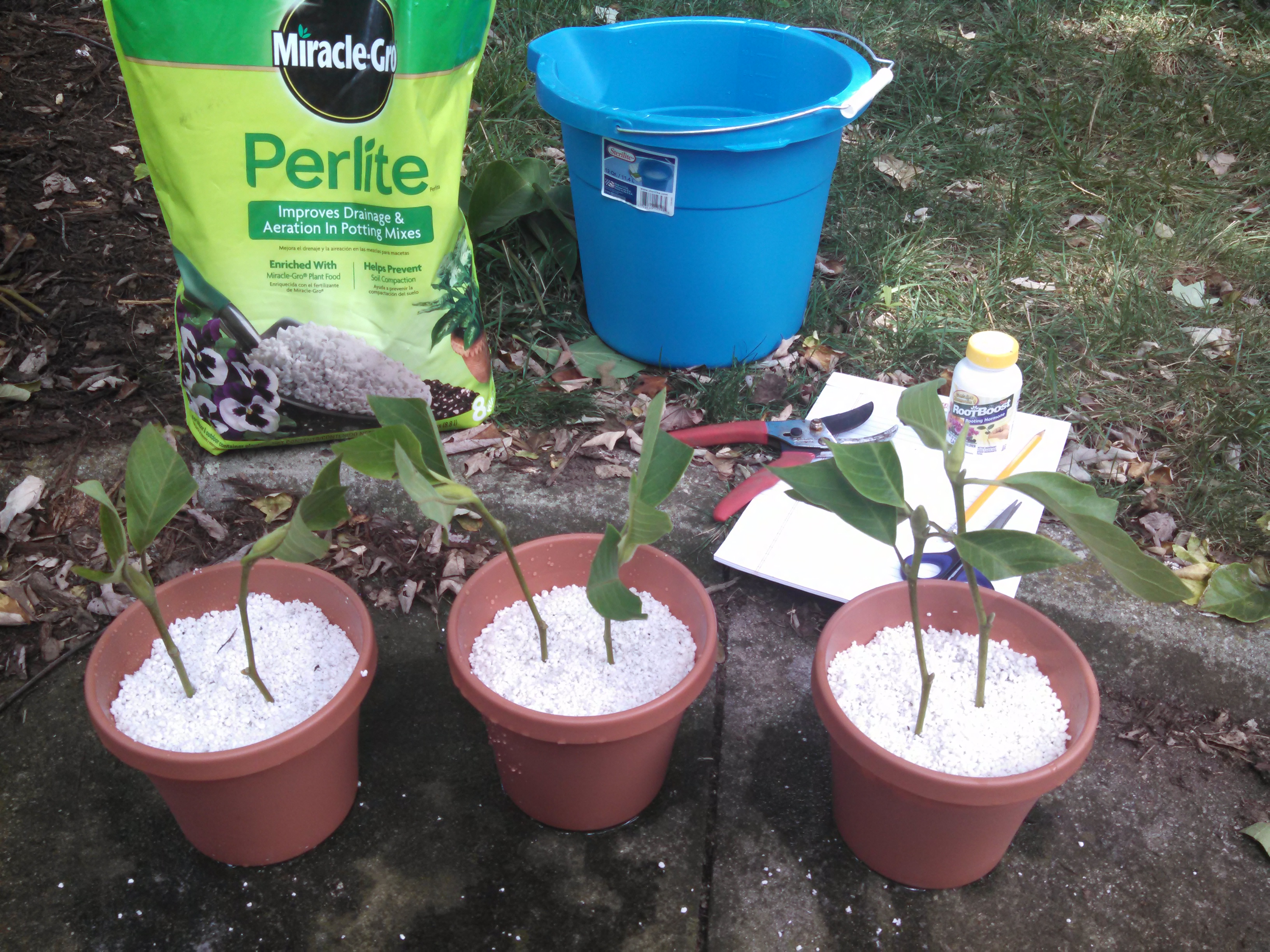 Onwards! I continued to mist the plants at every stop during the drive, and when I arrived at home late that night. The next day I went out and got some Perlite, rooting hormone and pots, and followed the sequence per all my research and notes. Cut just below the node, peel off all but the top two leaves, cut those two remaining leaves in half (to reduce moisture loss), apply rooting hormone to stem tip, place in pots via pencil starter holes, and then water via misting. Of the original twelve cuttings to come down in the bucket, I picked the six most healthy looking.
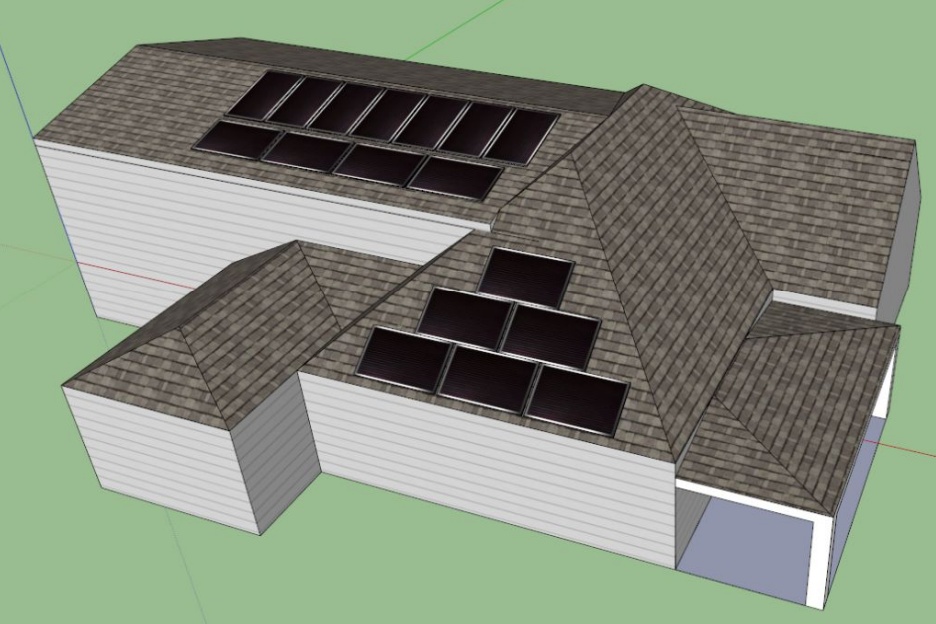 Three years ago we moved to a new house, and it has great southern exposure, thanks to the location on a southeast corner lot. There are three roof segments facing south, with the biggest “upper” segment getting blasted by sunlight all day long — almost no shade whatsoever. The second biggest roof segment had a gigantic oak tree shading it. The third and smallest roof segment had few shading concerns, but the panels would have been visible from the front of the house. I really wanted to keep the front of the house “clean”, and I wasn’t going to be able to fit more than 3 or 4 panels on that little segment. So I was debating whether to use that front roof, but the upper segment would definitely host the lion’s share of the solar system.
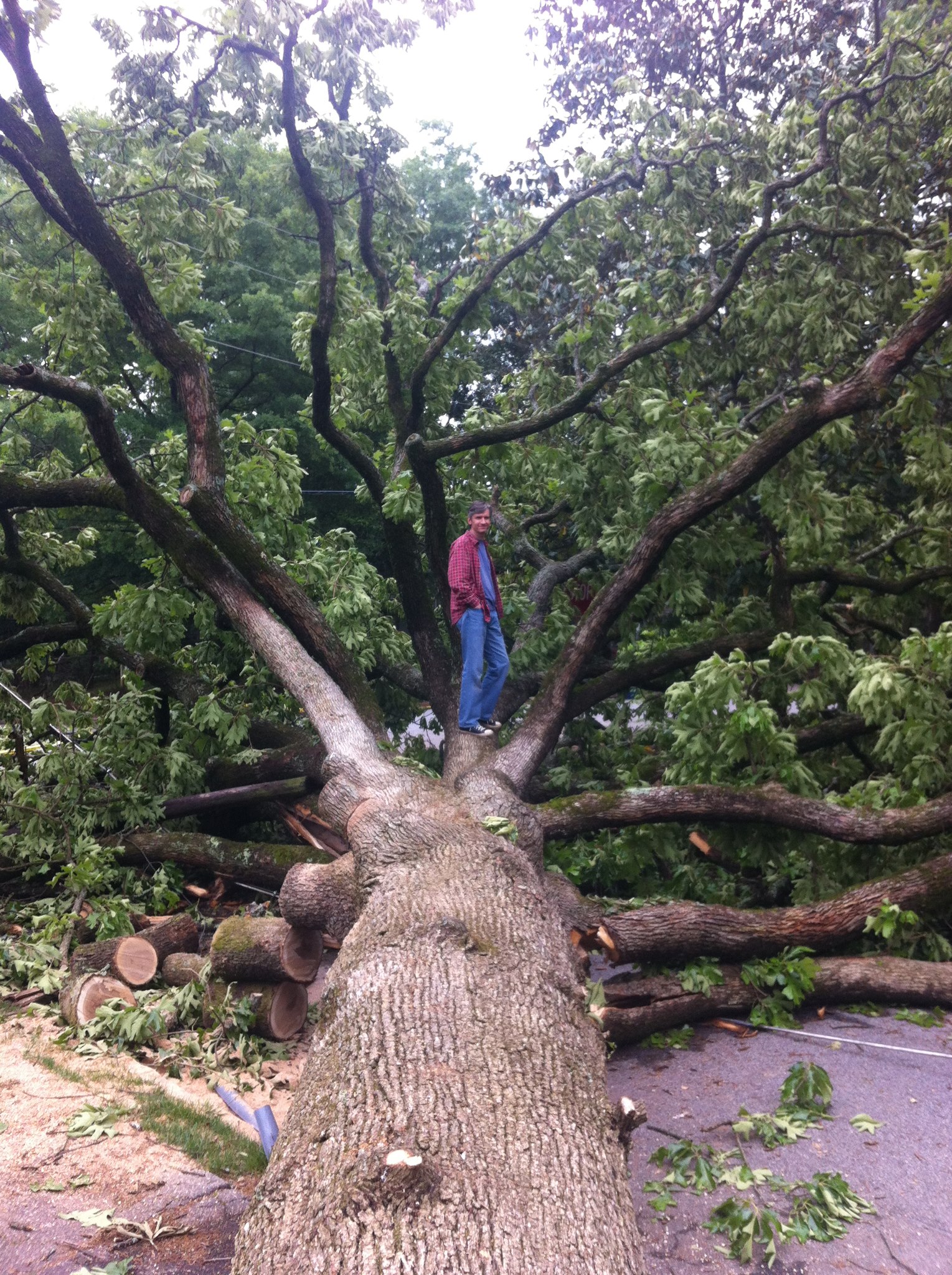 Then last spring the gigantic oak fell. Ouch. It took us a full three months to deal with that, but afterwards we now had a newly sunlit roof segment. That pretty much settled it — I wouldn’t have to bother with the little front roof segment, and so came up with a solar panel layout that fit 17 panels on the roof. And it would be pretty much maxed out with those 17 panels — any more panels would have to be located in places that got either morning or afternoon shade.
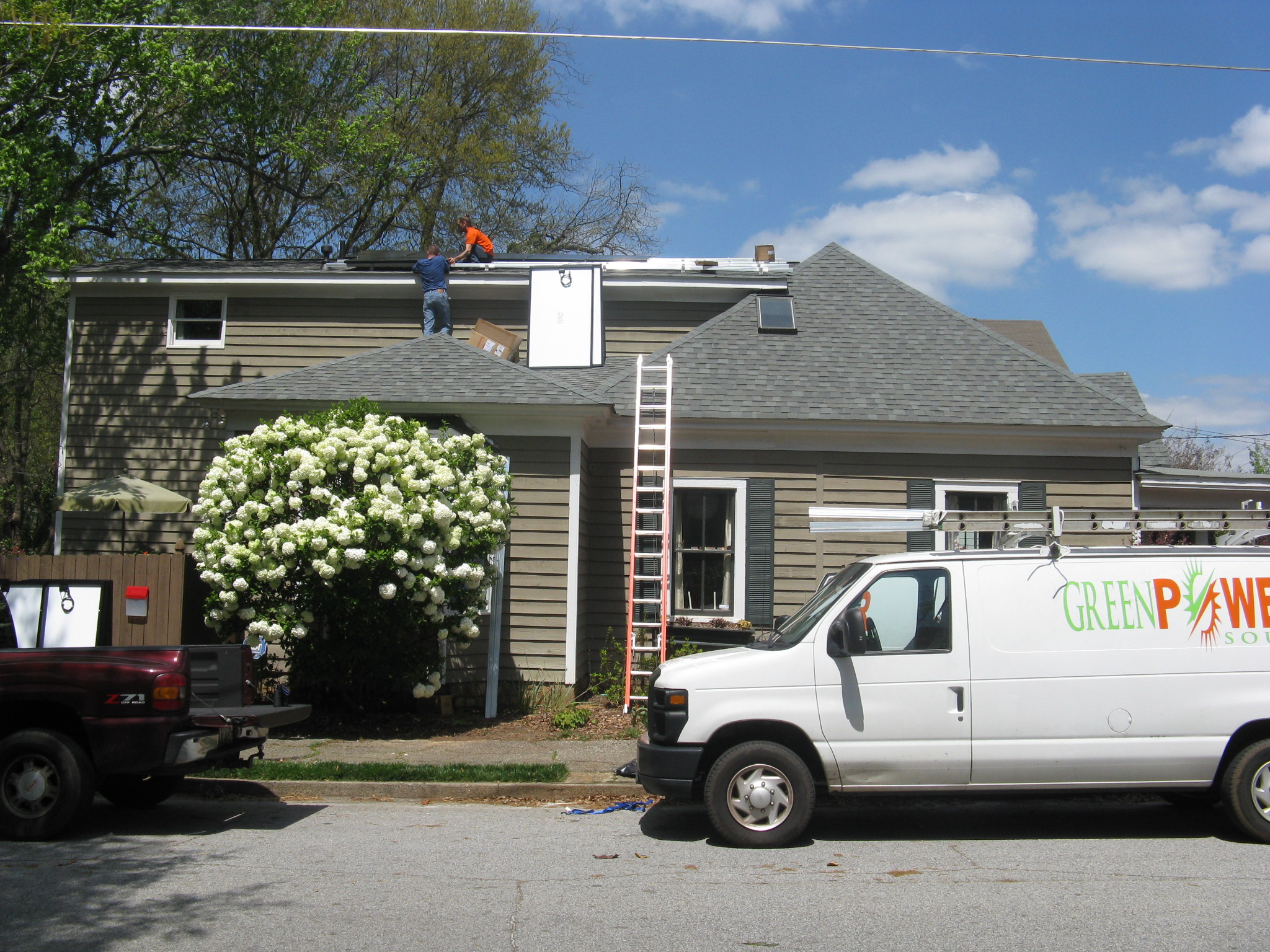 Finally, in February I was able to finish analyzing the competing bids from contractors and sign on the dotted line for the solar system install. Then it just became a waiting game, waiting for the panels and other parts to arrive from the manufacturers, and waiting for the weather and the installers’ schedule to line up.
 On April 8th, the install finally started. The installers first tackled the “upper” array — I was having them put 11 panels on the roof of the house addition. This roof is high up and at a shallow angle, so actually not really visible from the ground, unless you stand way back (e.g. on the neighbor’s property). It ended up taking them most of the day to do that array.
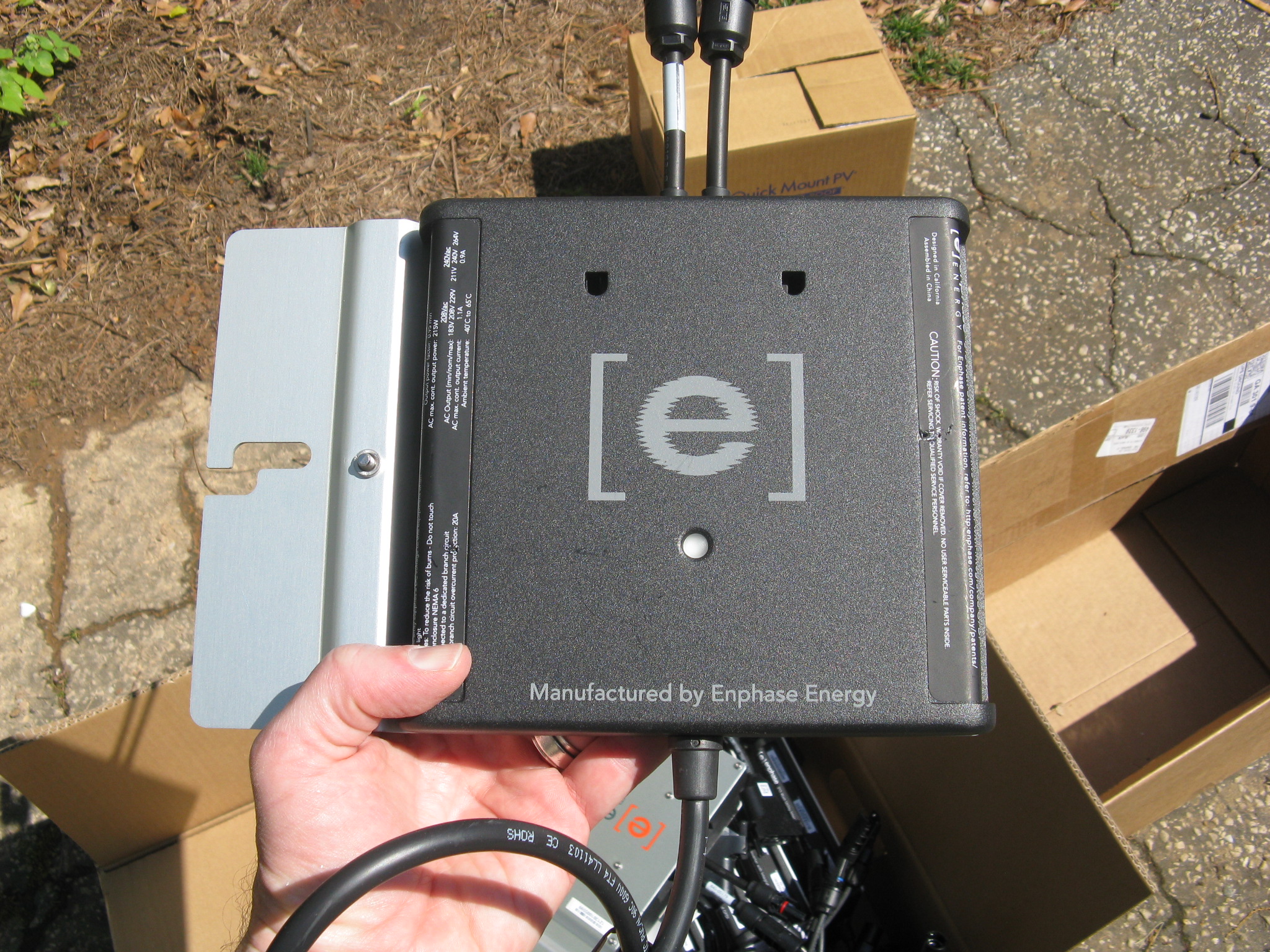 Each solar panel is about the size of a large coffee table (smaller than a sheet of plywood), and has a small “microinverter” mounted to the back to integrate the DC power coming out of the solar panel into the AC power system of the house.
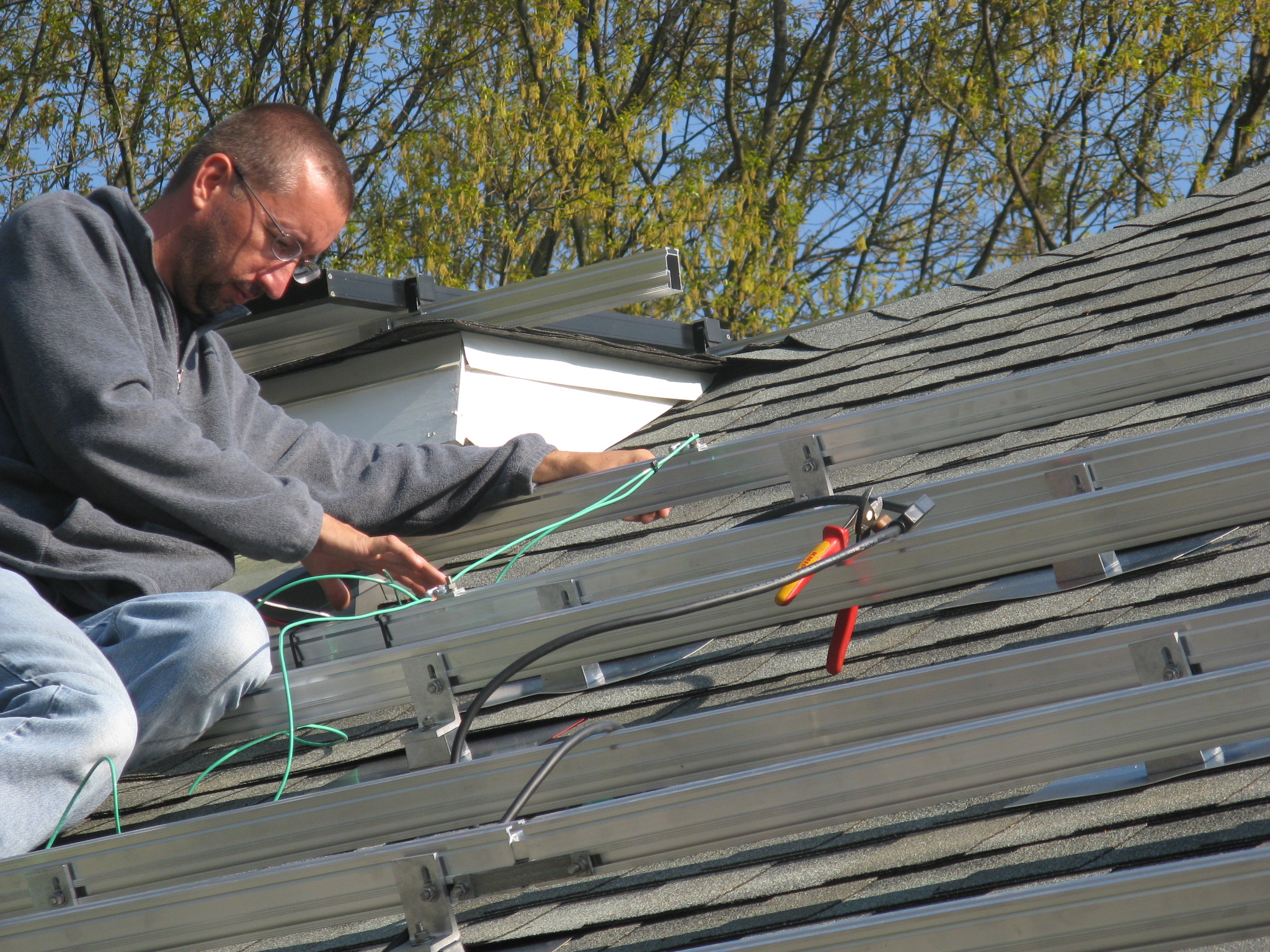 The next day they resumed the construction of the side array. After that got completed, they worked on getting the wiring from the arrays over to the far side of the house.
  For safety purposes, the wiring from solar power systems has to first go to a safety disconnect device mounted on the outside of the house, next to the power meter. From there the wiring then feeds into the breaker panel, typically inside the house. The power connects into the breaker panel just like any other circuit (e.g. to your clothes dryer), except the power is flowing backwards,
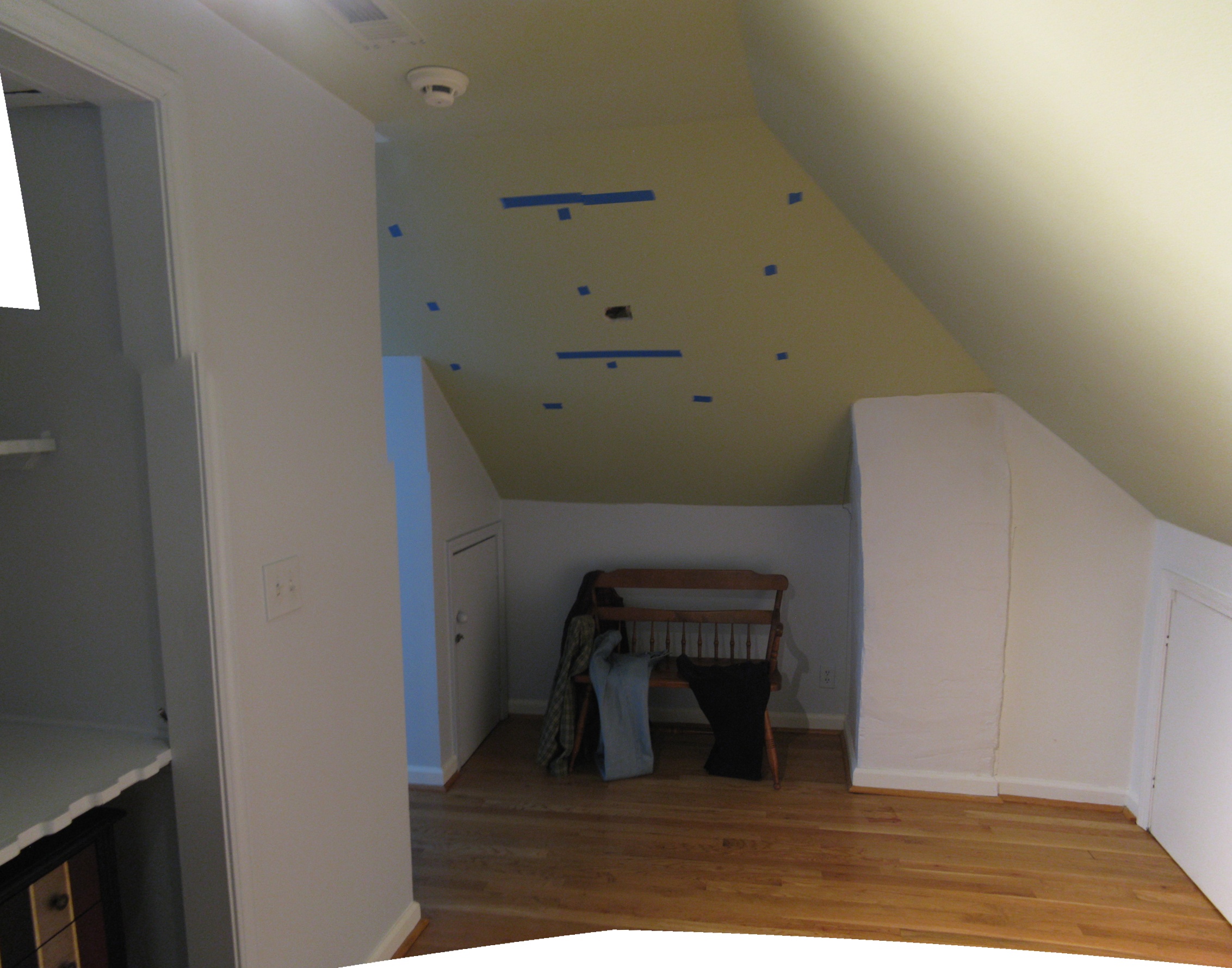
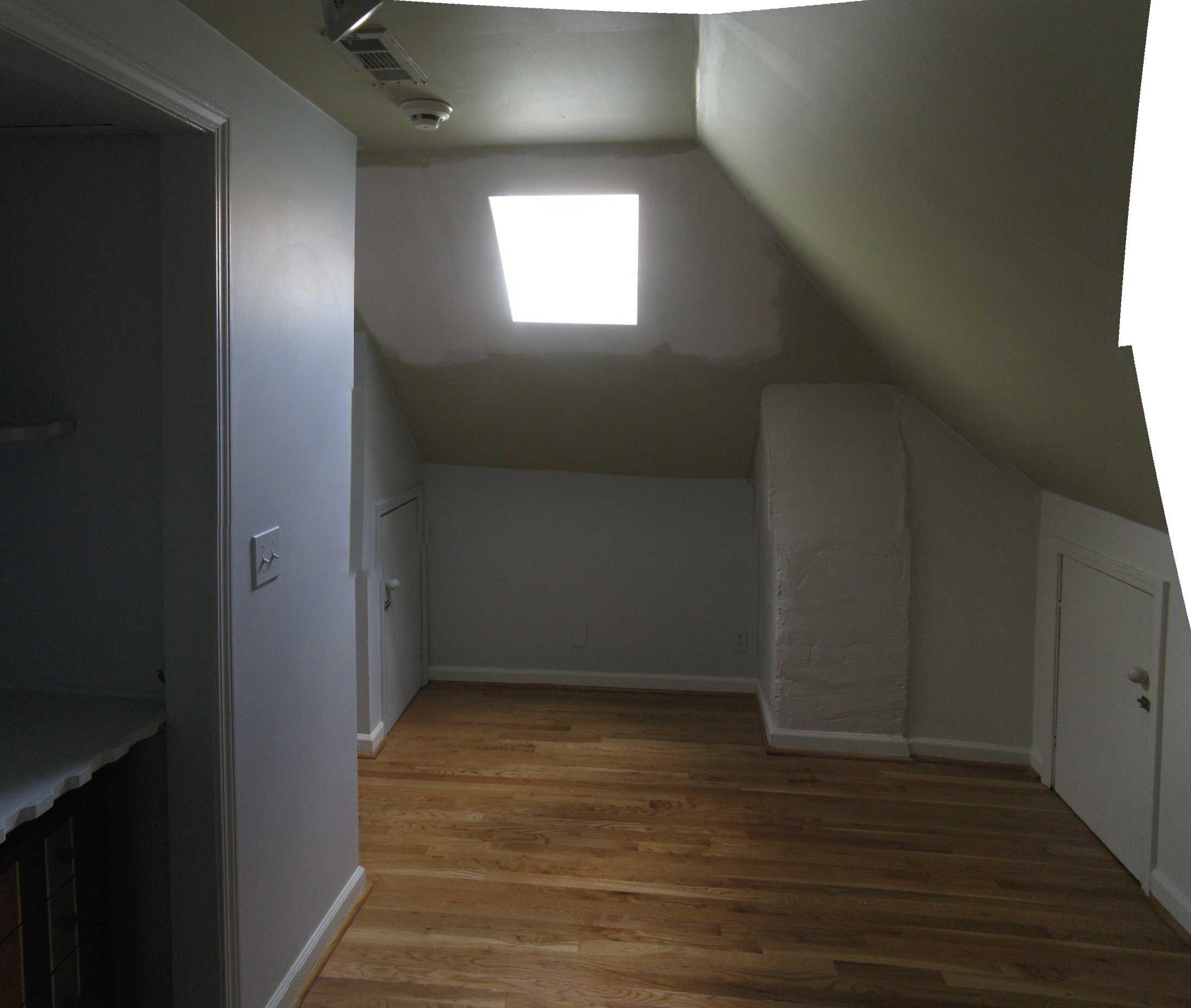
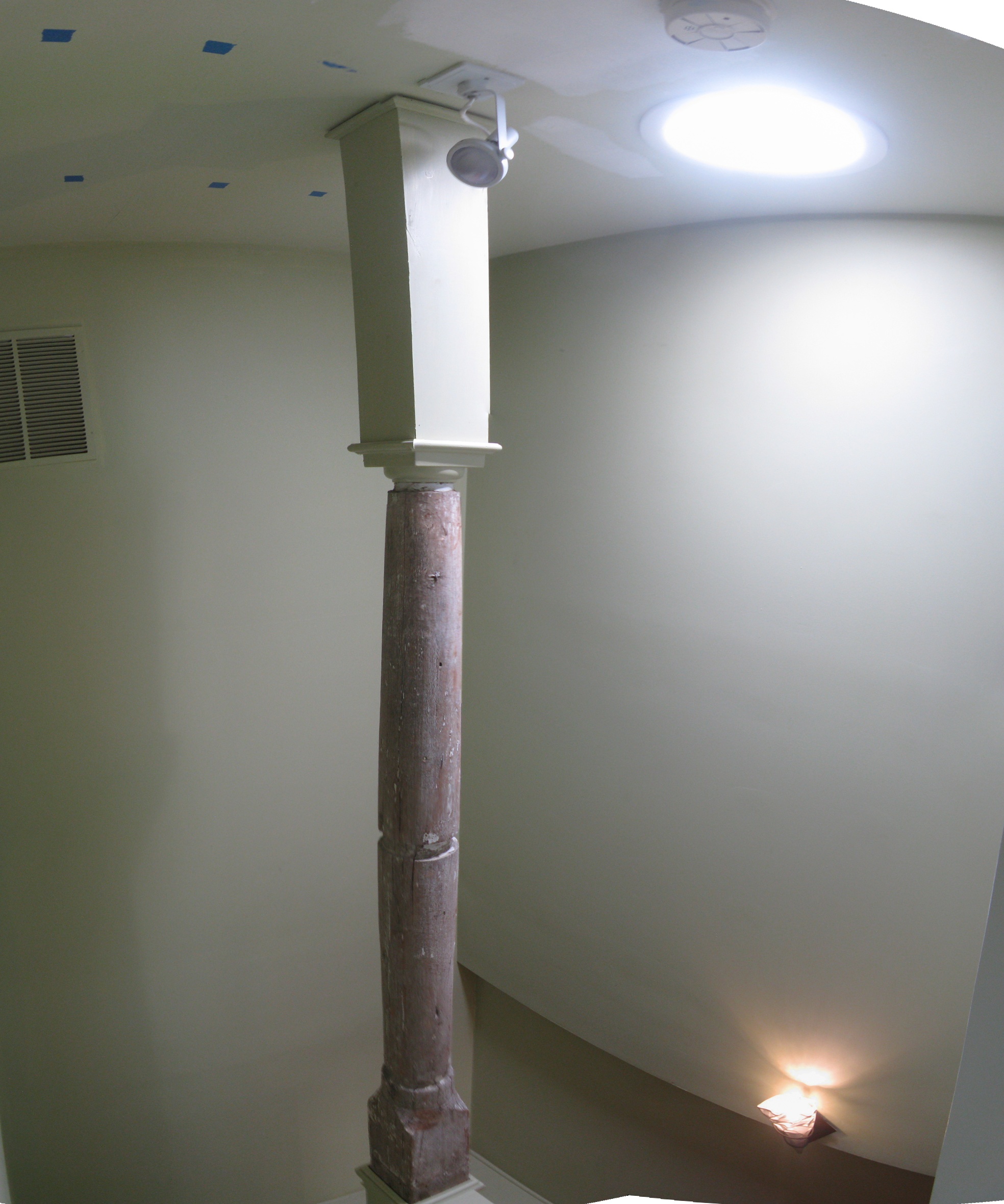
 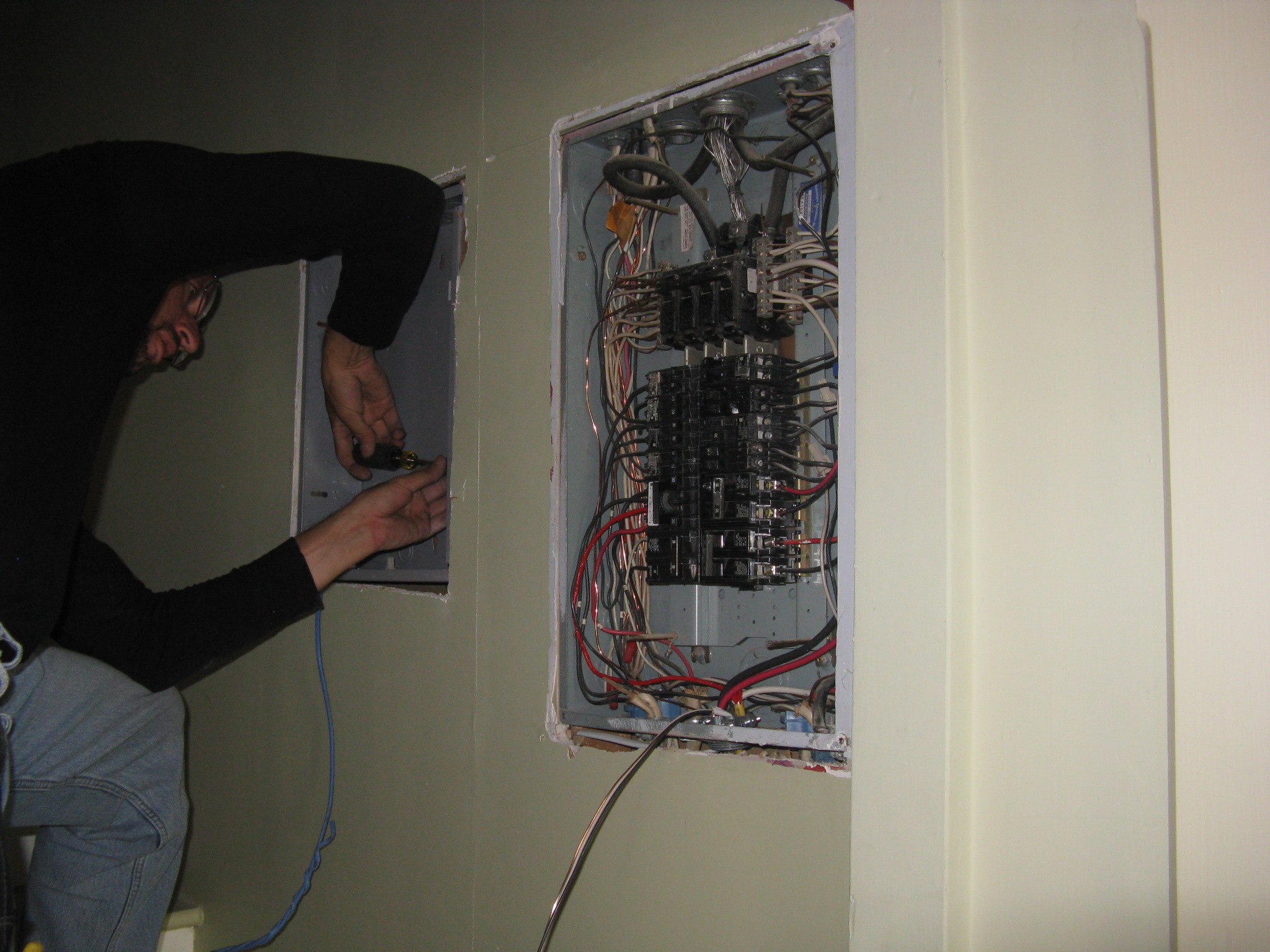 Finally, they installed the indoor controller electronics. This is just a little wall-mounted device, like a big thermostat, that provides status on the solar system. The indoor controller is not necessary for the system to function, rather it’s just a device that keeps track of the equipment, and provides a very cool web page for purposes of seeing more. However I didn’t want them to mount it on the wall, rather in the wall, inside a new box, because that stairwell was already cramped and I didn’t want this new thing crowding it further.
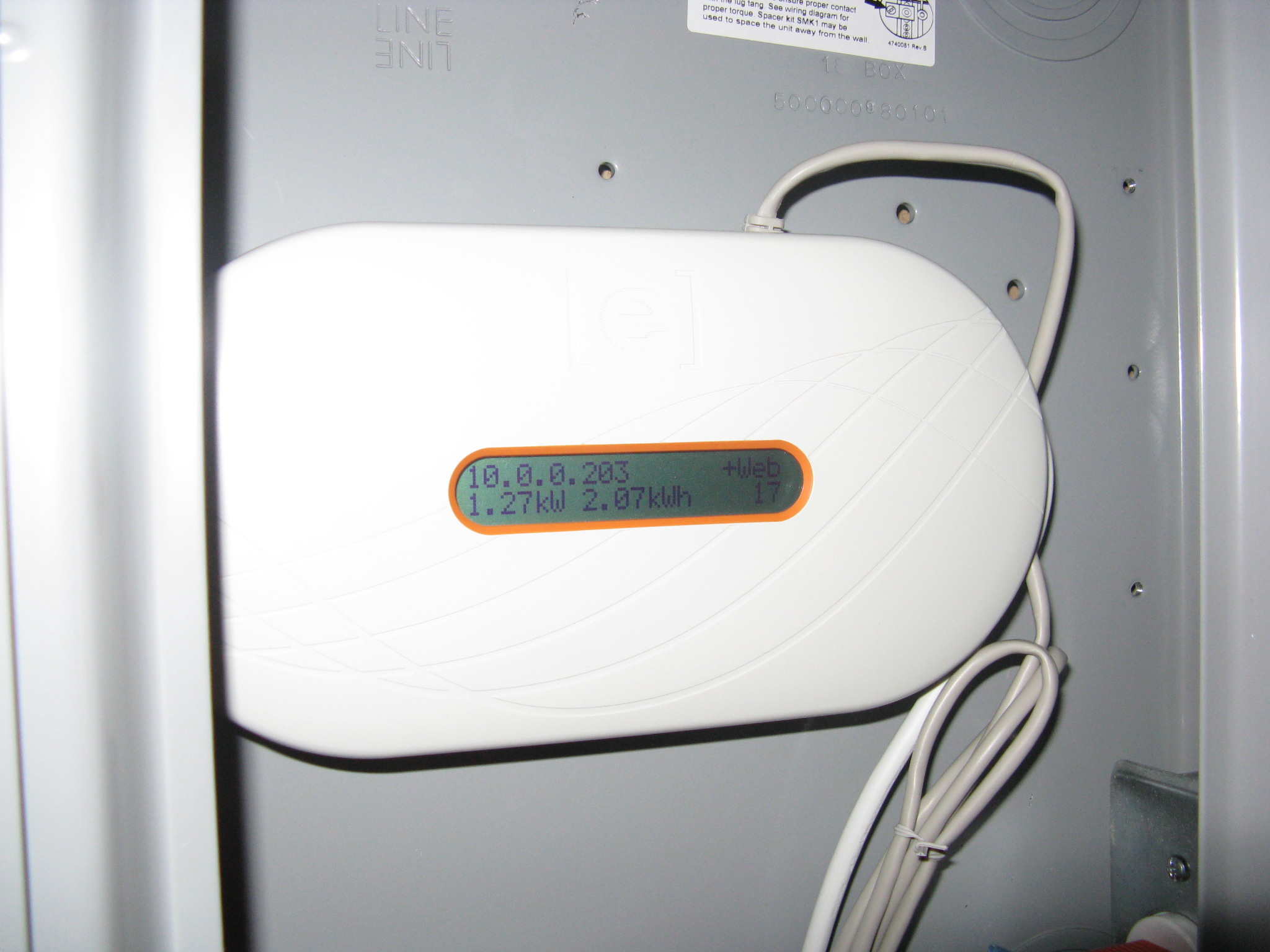 And with that, at around 5:00pm that Wednesday afternoon, we flipped the switches on the system! One by one, the 17 panels came to life and started generating power. Within 15 minutes the system was generating about 1200 Watts, limited only by the fact that the sun was already setting.
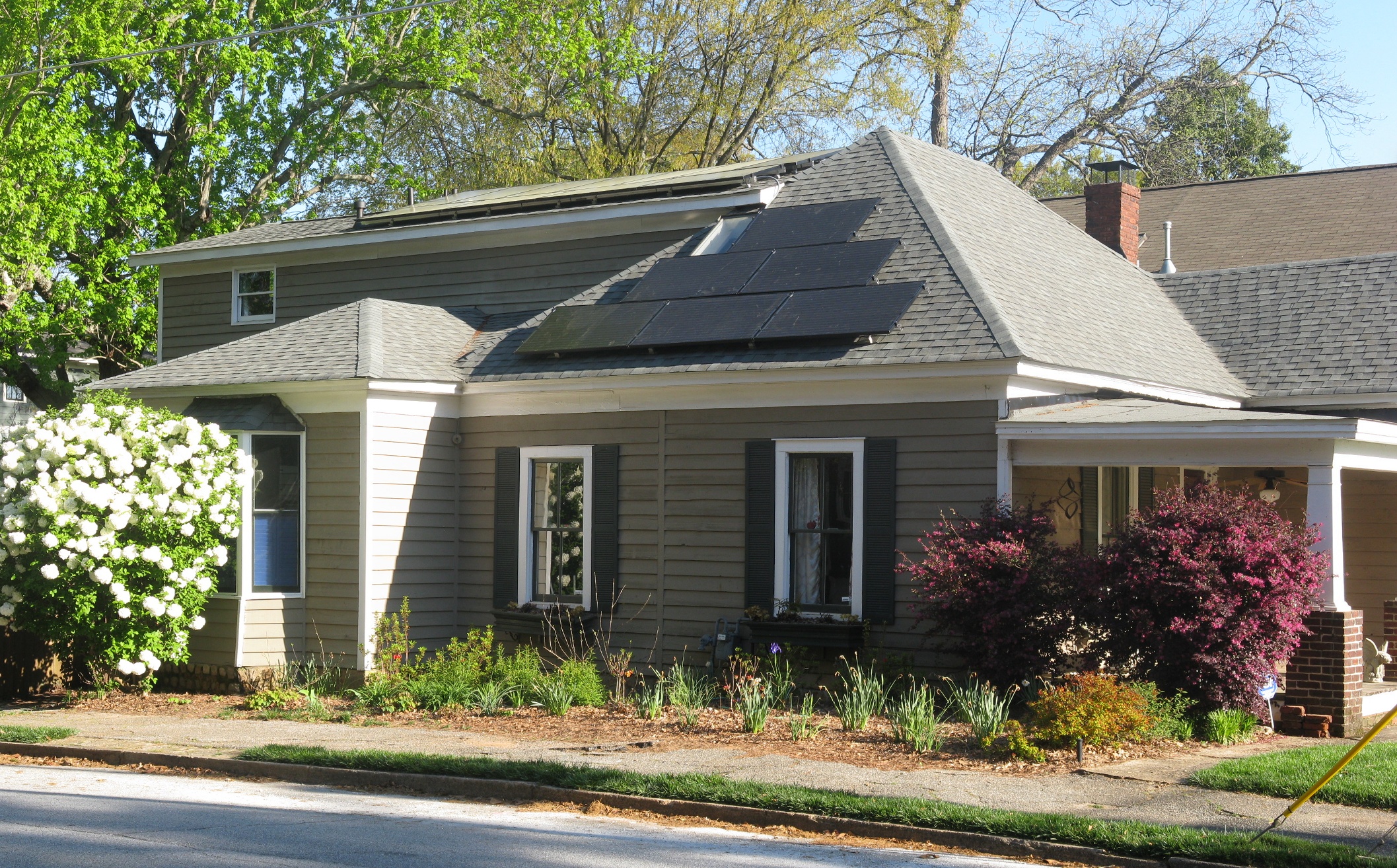 I like to say that as an electrical engineer, I live three years in the future. Engineers tend to be working very hard on things that are about to become mainstream. In 2010, I got serious about electric cars and bought one of the first production cars in the country, becoming a local advocate for that technology. Since then, hundreds of thousands of EVs have sold and the cars have become as mainstream as hybrids were a decade ago. So now I am moving on to the next thing, which is solar power. The financials aren’t a slam dunk, yet. But I believe that within three years they will be.


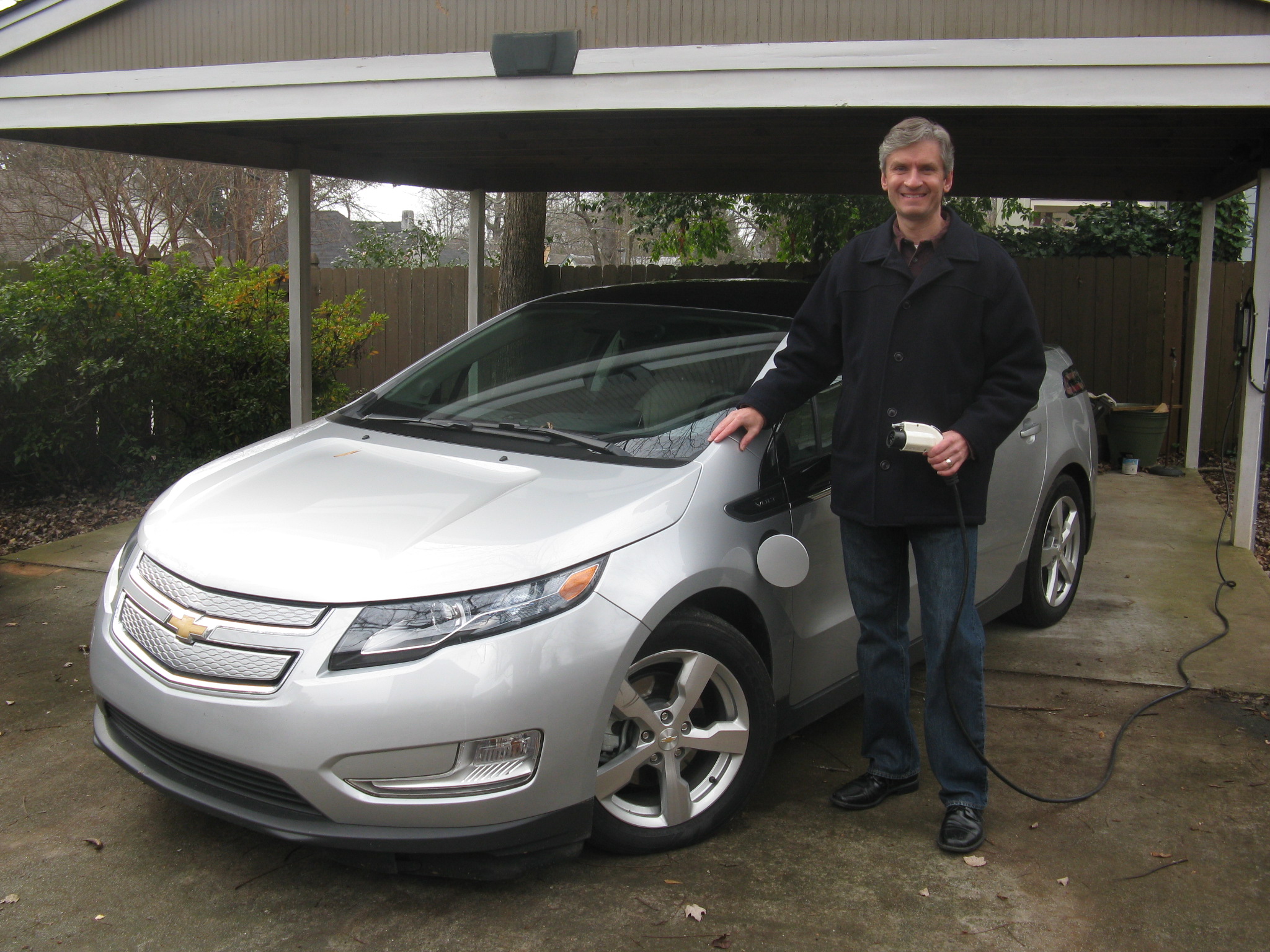 Three years ago today, I took delivery of my Chevy Volt. I had ordered it sight unseen, based only on research, and I ended up being the first Volt owner in the state of Georgia.


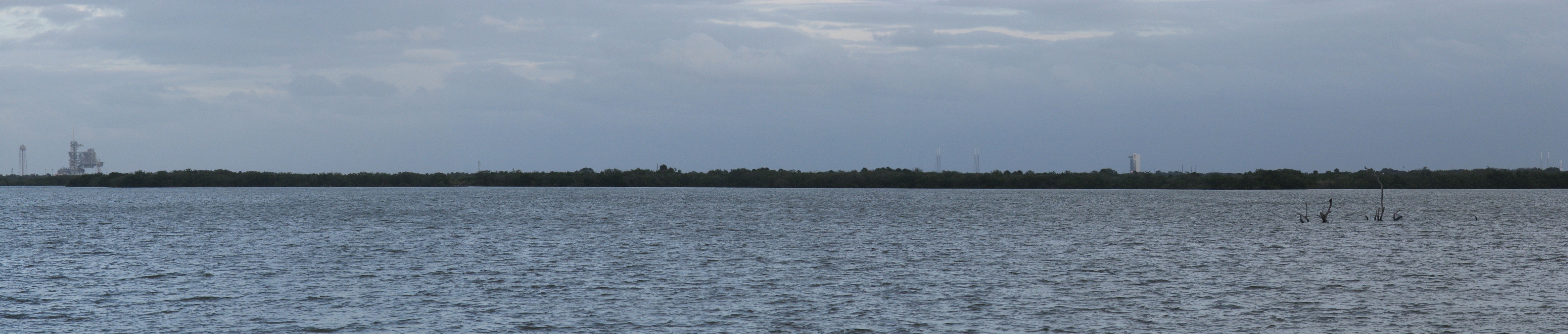
 Sharon had a professional seminar to attend in Pittsburgh, and once again I tagged along as the idle spouse.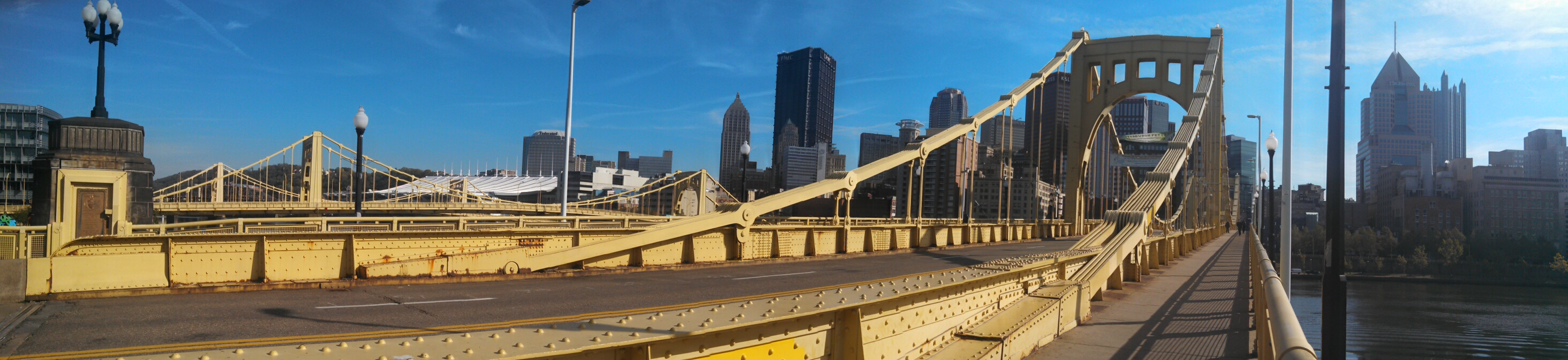

 The next morning was going to be mostly about the Carnegie Museum of Art. One of my memories of Pittsburgh from 20 years ago was of the brief time I spent in the CMOA, and so I knew I needed to set aside some time for it. But first I had to go check out a couple nearby electric vehicle (EV) charging station, including one run by a CMU group. The Electric Garage is a CMU-affiliated operation that supports EV interests, both by offering help with DIY conversions and by simply providing charging stations outside. The parking lot was jammed when I was there, and I pressed my nose up against the garage windows.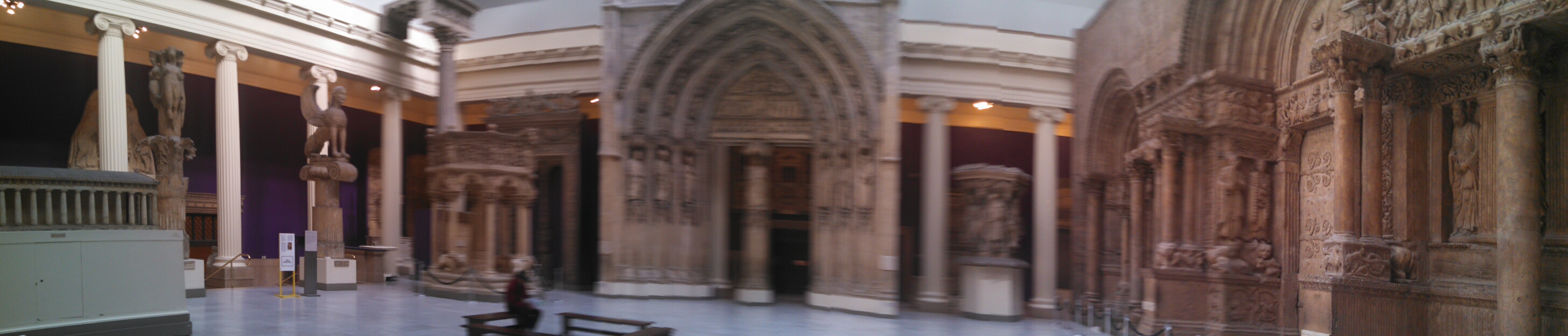
 But I had to move on, as I had a date. I’m not sure how I came across it, but there exists a tour of downtown Pittsburgh that is conducted on Segways! Atlanta has one of these tourist operations as well, and I’ve had it on my todo list for a couple years, never seeming to get around to it. No time like the present! I bused and hoofed it to Station Square (south of downtown across the river), got the Segway operation training, and we were off! Our tour tour guide was fitted with a headset with mic, and the rest of with one-ear headphones, so she could lead the way talking in a normal voice and we could all hear her. She led us on what ended up being a 5-6 miles trek all over downtown, focusing mostly on the architecture of the city, which is pretty amazing because of the enormous amount of money that flowed through the city for over a century starting in the 1850s. We went across the Allegheny to the North Shore neighborhood (wish I’d planned for that the day earlier!), through the Gateway Park, and back south through downtown and Market Square to cross the Monongahela back to Station Square. Riding (driving, really) a Segway is certainly fun, but it is still somewhat tiring — your feet never really move off the platform so they start to hurt after a while. But we certainly were able to cover a lot of distance quickly when called for.
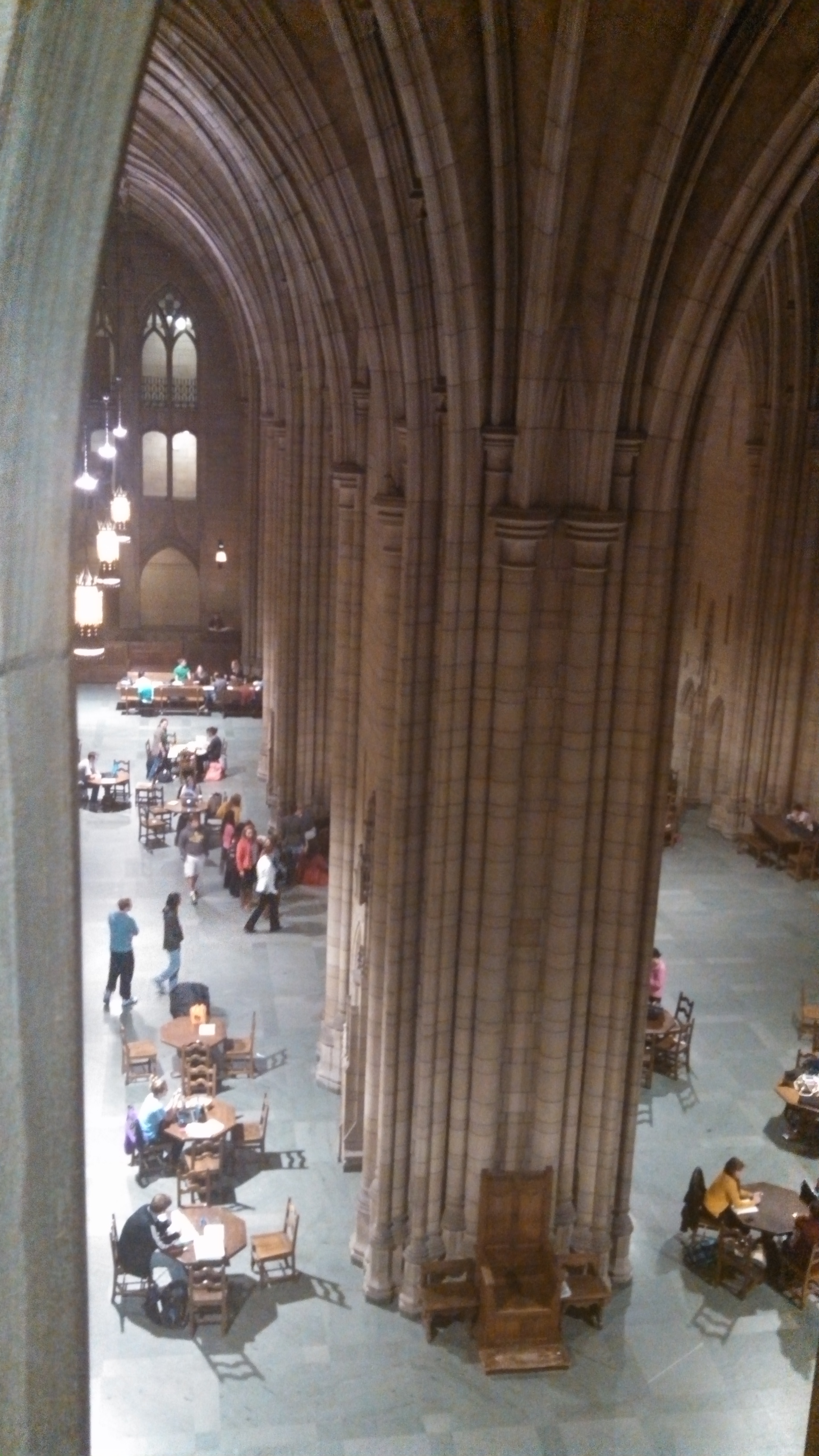 And back to the hotel to meetup with Sharon, but not before checking out a couple more EV charging stations for the
 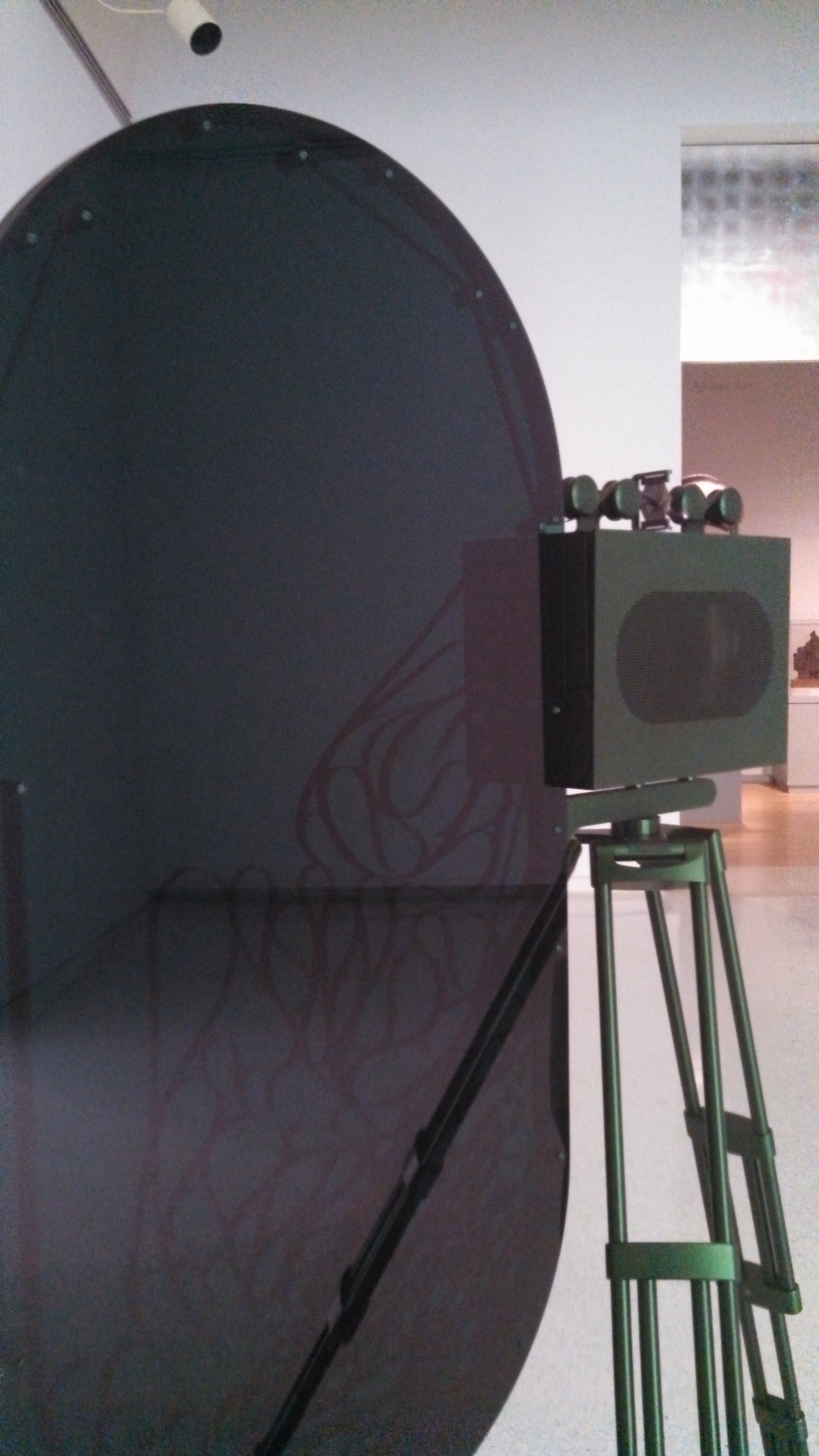 After she finished her seminar, Sharon joined me at the Carnegie Museum Of Art, where we had a good 90 minutes to do some more exploring. Sharon pretty much stuck to the Museum of Naturl History side, and I finished off the biennial. Memorable pieces included Rodney Graham’ projection.