Retiring the Space Shuttle

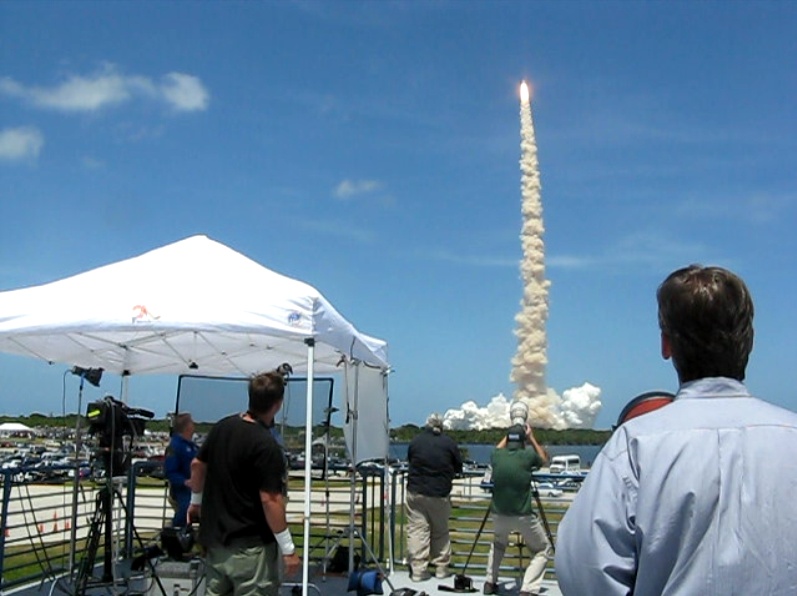
MVI_2689_still Anyone who knows me knows that I have a deep interest in space exploration. Over the past year or so, as the end of the Space Shuttle program (SSP) has approached and more and more people have become aware of it, I have found myself explaining why this is happening.

I often hear things like “it’s such a shame that we’re shutting down the SSP”. But the more you know, the more the SSP shutdown makes sense and is actually a positive move for space exploration.

Here’s why.

1. It’s done. The space shuttle was designed to carry really big payloads to low earth orbit — up to 50,000 pounds. It was intended to be used for all kinds of payloads — scientific, commercial and even defense. Over the years various developments (including the two accidents) have caused that mission to get pared back to just science, and even just a subset of that. So having now officially completed the International Space Station (just this year), there is literally nothing major left to do.

2. It can’t leave low earth orbit. The space shuttle was designed to get heavy loads up to low earth orbit, and that’s it. It can’t go to geosynchronous orbit (where most communication satellites reside), can’t go to the moon, can’t go beyond. If we want to go beyond Earth, to an asteroid or even to Mars, we will have to develop another spacecraft to do it. And the past decade or so of history has shown that as long as the shuttle keeps operating, it’s going to suck all the air (funding) out of the room and starve everything else.
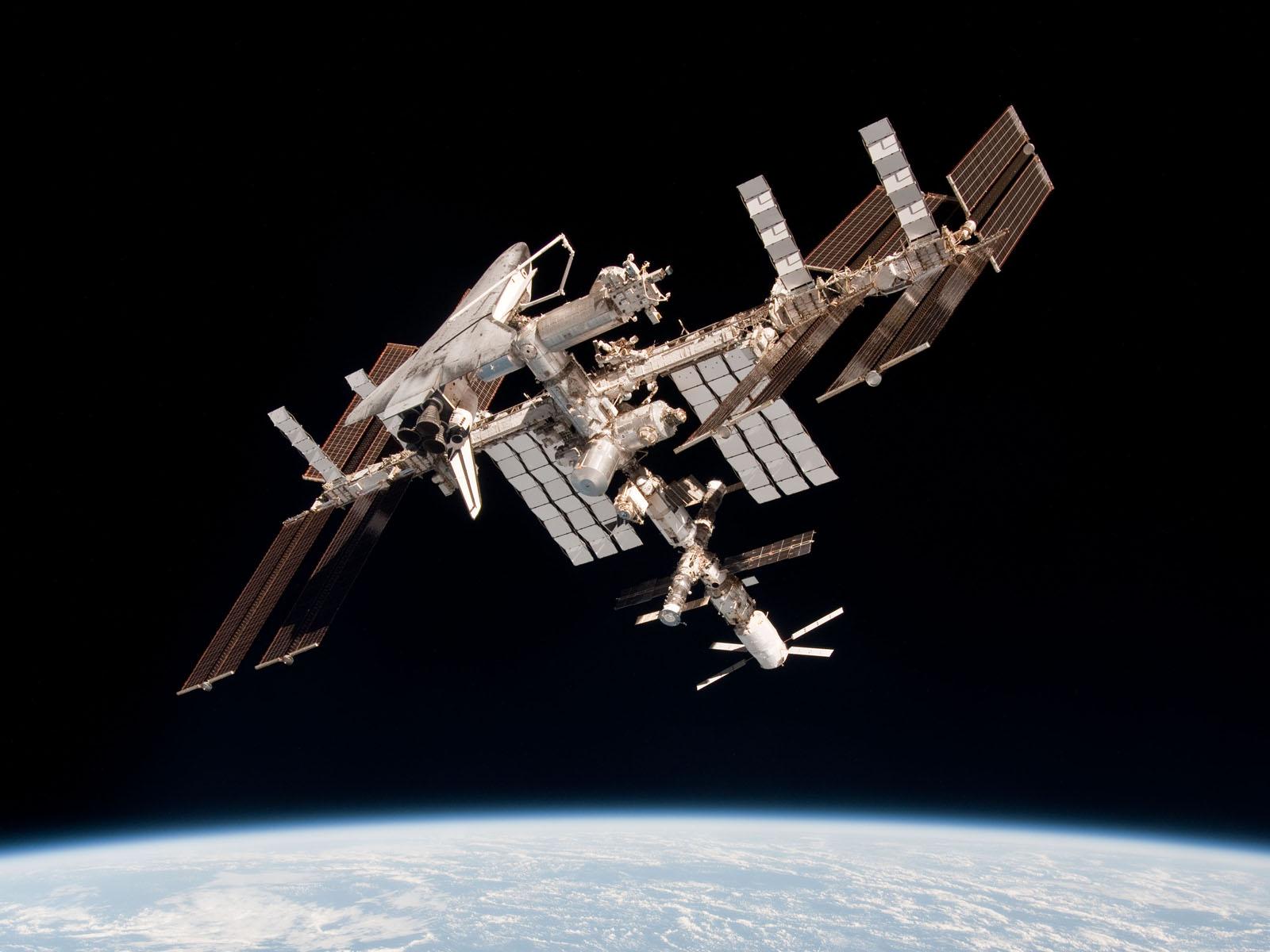
557282main_iss027e036673_1600_1600-12003. The space shuttle, while beautiful and fantastic and amazing, is colossally expensive to operate. Certainly it’s far too expensive to keep operating just to bring astronauts and ISS supplies into space 2-3 times a year, now that it’s done with the heavy lifting work of assembling the ISS. Thanks to various political actions over the last decade, the US federal budget simply can not support that kind of inefficiency. The SSP went on as long as it did only on the basis of political support from the regions that got a lot of the funding — pork barrel spending, essentially.

4. The replacement system, proposed in 2004 in President Bush’s “Vision for Space Exploration” plan (VSE), got its funding from Congress and then proceded to march to nowhere. An astronomical amount of money was spent on a new program (Constellation, aka Ares plus Orion) that just chewed through that money without much to show for it. Some observed that money kept flying out the window but the goalposts kept moving out on the calendar. Obama did a brave thing when he killed it. I should add that there is a lot of debate and disagreement on this.

In fact, as I type this, Congress is about to mandate that the replacement launch system, currently called the Space Launch system (SLS), be funded at higher levels and be built with certain components, counter to what NASA’s engineers have recommended. These are politicians dictating engineering decisions! If you look at the early history of the space shuttle, back in the early 1970s, the same thing happened to the shuttle design — Congress mandated certain design features and ultimately created the conditions that made the shuttle vulnerable to accidents. Those design mandates created the situation we’re now in where we have to shut the program down! Sadly, it’s not likely that this will change.
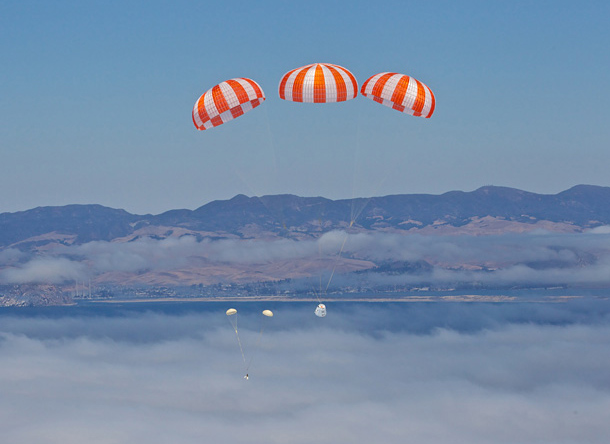
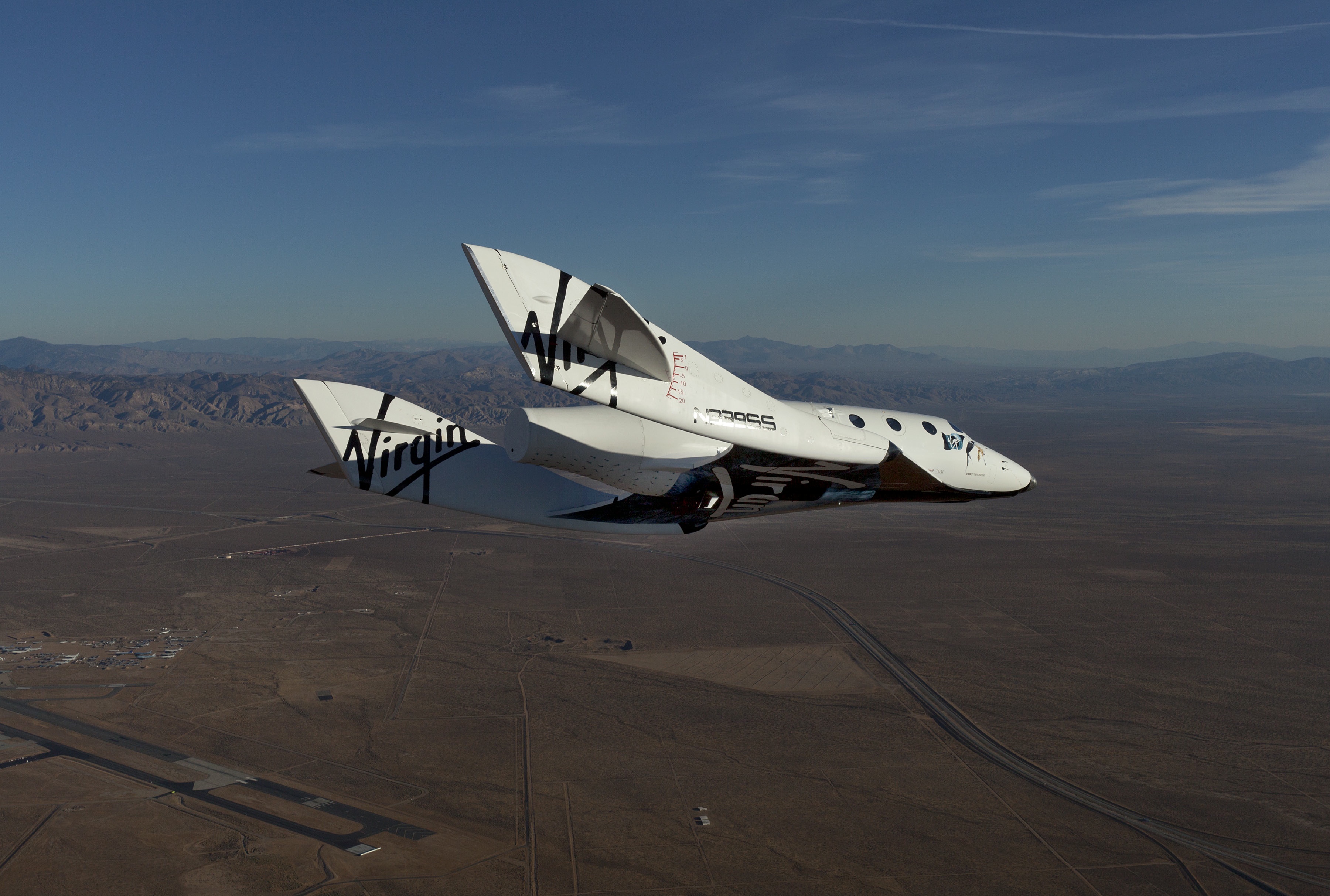
SpaceX_dragondroptest 5. Commercial space launch is really starting to take off. By “commercial”, we mean companies that are building their own launch systems. NASA is still involved, dicating safety requirements for example, but fundamentally this is work being done not by the government but by private enterprise. And THAT is going to truly drive costs down and finally give us the cheap access to space that we’ve dreamed of for 50 years. The funny thing is, most folks eyes glaze over when I say “commercial space launch”, but it’s really happening! SpaceX has had great success with their orbital test launches over the past 2 years — the parachute photo here shows a descent test of their Dragon capsule. Virgin Galactic is busy testing their system (shown here is the spacecraft lining up on the runway during a landing test) and will soon be starting their suborbital tourist flights from New Mexico.
5075050106_37d6b24f3f_o 6. We now have lots of cargo launch capabilities. In the US, we have the Atlas V, the Delta IV, SpaceX’s Falcon 1 and Falcon 9 rockets, Orbital’s Pegasus and Taurus, and so on. Europe has their Ariane rocket, the Russians have the Proton, Japan and China have their launchers. We now even have multiple vehicles that can carry cargo all the way to ISS and dock/berth with it — Europe’s ATV, Japan’s HTV, the Russian Progress. The next step now is to refine some of those launch systems enough that they can be safety-rated for carrying crew.

I’ll leave you with a great quote from John Shannon, manager of the SSP, at a news briefing on June 30th, where he said:

“The bottom line is, there’s not enough money. Would I like to fly shuttle two times a year to go insure that ISS was in the best possible shape, or maybe go back up to Hubble again, or maybe do who knows what? Sure! I think it’s a national capability that we are losing, but again you weigh that against — you’ve done what you set out to do with the shuttle. You’ve got Hubble in extremely good shape, you’ve got ISS in extremely good shape. Now we have other areas coming up to take over the LEO functions that the shuttle did. We can take that money, and just as importantly take that workforce, and apply it to the next leading edge and expand the sphere of operations that we do in human spaceflight. I think that is extremely important. What we’re doing is we’re sacrificing the shuttle to enable us to take that next step. If we were going to retire the shuttle, this is the time to do it. The ISS couldn’t be in better shape than it is right now, it’s pretty much out of volume, we’re going to pack it full before we’re done. While we can always come up with other missions, it’s an OK time and I think that we’re going to expand the breadth of things that we do as a nation and as an international partner. That’s how I came to peace with all of the decisions that we made.”

Now, enjoy the last mission of the Space Shuttle. Here’s a reference I put together a couple years ago on all of the resources available online to follow a mission.

Los Angeles

I went to Los Angeles in late June, mostly for work but I got some fun in on evenings.. I wanted to document what I did there, but just haven’t had time to do it right, what with the new house and all. But I wanted to go ahead and get this published, and I’ll come back to it later and flesh it out some more. So … I’ve backdated this entry, and issue apologies to those of you seeing this in your RSS feed and wondering why I’m posted such a lame travelogue!

Los Angeles

Monday:

Mann’s Chinese Theater and 1920s / 1930s celebrities

Tuesday:

Carl’s Jr

La Brea driveby

Globecast driveby

Giant Robot 1, 2, 3

New Villager art event at Human Resources gallery

Wednesday:

JPL driveby

Planetary Society driveby

Hugh Masakela and Wynton Marsalis at Hollywood Bowl

Thursday:

Warner Brothers tour

Griffith Observatory

MOCA Geffen: Art In The Streets

Tiki Ti

Minneapolis

We went to Minneapolis in early May. I wanted to document what we saw there, but just haven’t had time to do it right, what with the new house and all. But I wanted to go ahead and get this published, and I’ll come back to it later and flesh it out some more. So … I’ve backdated this entry, and issue apologies to those of you seeing this in your RSS feed and wondering why I’m posted such a lame travelogue!

Minneapolis, May 2011

Sharon at a conference, Chris as idle spouse. Stayed at nice downtown hotel one block off Nicollet Mall. Watch librarians partying down in hotel ballroom with cover band, ridiculous buffet decorations.

Beautiful manhole covers, a la Japan.

Public library

Main falls downtown; click to enlarge this panoramic photo:

STA_3715-STF_3720

Made good use of the “Nice Ride” system, where you can rent a bike by the hour from automated sidewalk kiosks located all over town — well, not too far from downtown. The bikes are lime green so you have to overcome looking like a dork, but it’s a good way to cover far more ground than you would walking, and the biking is easy since MPLS is so flat. Well, it’s flat until you get to the river, which is kind of a gorge and thus can present some serious hills as you climb in and out.

Walker Art Center, with huge sculpture garden outside, all sorts of freaky art inside.

Ukranian sausage joint. Nye Polonaise.

Electric Fetus record store near Stevens Square, 1 mile from Walker Center – look for Lifter Puller book “Lifter Puller Vs. the End Of” I-35W bridge Minnihaha Falls

Dashed through Mall Of America on our way to airport.

Places that I didn’t get to:

old Milwaukee train station on First Street The Lakewood cemetery between lake Harriet and Calhoun Art Deco cement water tower at Washburn Park near 51st street Near the airport there will be a road named Post Road after Wiley Post, who flew his airplane out this airport.

word: pharaoh

pharaoh: a title used in many modern discussions of the ancient Egyptian rulers of all periods. The title originates in the term “pr-aa” which means “great house” and describes the royal palace. The title of Pharaoh started being used for the king during the New Kingdom, specifically during the middle of the eighteenth dynasty. (from Wikipedia)

Last Saturday was the annual Atlanta Open Orthographic Meet (aka spelling bee), held at Manuel’s Tavern every year on the first Saturday after Valentine’s Day. This year’s first round was a bit easier — you could make a couple mistakes and still advance, but I made my annual stupid mistake with “pharaoh”.

Here’s a sampling of this year’s words:

Round 1: bulwark, apropos, apiary

Round 2: uxorious, involucre, coccygodynia

Round 3: smaragd, mirliton, zugzwang

Round 4: rijsttafel, mbaquanga, tchick

I’ve written about this annual event before — click to see the 2010, 2009, 2008 and 2007 writeups.

Eyedrum

Note: I drafted this post in 2011 but I guess I never finished it and I definitely never published it. In 2025, when Typepad shut down and I moved these posts to a new domain, I discovered this old post sitting here drafted. I am publishing it now as-is (backdated to 2011) to capture my thoughts, but please be aware that it is unpolished, both in the writing itself (e.g. grammar) and in the tone (e.g. maybe I said something offensive that I would have edited out later). It looks like I only got through writing up my first three years at Eyedrum, when I was actually there for nearly a decade; being from 2011, this was meant to be a retrospective, as I’d officially left in December 2010. My later years at Eyedrum got more and more “interesting”, so perhaps it’s for the best that they aren’t documented, lest I say something regrettable. Ha, everything in this blog is regrettable 🙂 That said, here I go, pushing the publish button …

I got involved with Eyedrum in late 2001. Hormuz Minina, an old friend from Georgia Tech and WREK, was on the board of directors at Eyedrum and had been his usual extremely active self in getting things done at Eyedrum. They needed a bigger and better space, for art and performances, and Hormuz had found an old warehouse off Memorial Drive. They moved in in September 2001, and quickly found that the acoustics were pretty rotten for performances. Hormuz knew I was still pretty involved with WREK (that’s another long story), which naturally involves a lot of sound system engineering, and so he asked me if I knew anything about controlling room acoustics.

I started looking into acoustics and ended up getting pretty deep into it. I talked to a consultant, who provided some guidance, and within a couple months I had a proposed design for 16 panels that would hang from the ceiling as sound absorbing baffles. I built one of these panels and presented it at a board meeting, and everyone seemed happy with the idea, although they had no budget for doing it. Literally, zero dollars. So I scraped together the money and assembled and hung the 16 panels in the space in January 2002.

Hormuz invited me to join the board, but I was just about to start a new job, and told him I’d consider it after a few months. By May 2002 I was feeling comfortable with the new job and so decided to start putting some time into Eyedrum.

Starting with simply attending monthly board meetings and working events. Art shows and performance events are the core of Eyedrum activities, and everyone on the board needs to show up and “work” those events. That means opening up the place, stocking the bar, setting up the stage, collecting money at the door, cleaing up afterwards (well, sometimes) and locking up the place.

I found that nothing had been documented about how to do any of this. Coming from WREK and the long tradition there of documented procedures and references for future staff, I saw this as a huge hole that needed filling.

Shortly after I joined the board, Sunni McGarrity moved away from Atlanta. She had been the one person who had been taking care of keeping Eyedrum stocked with drinks and other supplies, and from my long experience at WREK I knew that when someone was leaving an organization, you needed to interview them and document what they knew about doing whatever job they had been responsible for. So I literally sat down with Sunni after a board meeting one day and interviewed her about how to stock Eyedrum. Where to go to buy bottled water (cheap!), where to get cups (cheap!), how much of each kind of drink to get, and on and on. There are always subtle things to be learned about any job, and I needed to write them down. That document became the very first procedure that I wrote for Eyedrum.

With my experience at WREK, I knew that this kind of information needed to be online — not just on paper, and certainly not in MS Word files that get emailed around. The internet was increasingly ubiquitous and I needed to get an Eyedrum documentation system going online somehow. The public website ( www.eyedrum.org ) wasn’t the right place for it, and anyway that site wouldn’t have allowed for easy remote editing (like a wiki, but this was before wikis existed). I did some research and found that “Zope” was a popular software system for doing this kind of online documentation, and then found a free Zope serving site called … FreeZope!

Now, understand that documenting processes is like heroin to me. I can’t stop it once I get started. I wrote about 200 pages of this stuff for WREK (still used today) and I could easily see a dozen or so processes at Eyedrum that needed that treatment pronto. How exactly do you open up the place for a show? What do we do with donations? How do we check the voicemail? Oh my freaking god, what are everybody’s phone numbers?! They didn’t even have a phone list. All of this stuff got wrriten up and documented by me within a couple months of my arrival at Eyedrum. Over time this then also evolved into a place to store files, like letterhead, high-res logo images, etc. Having this resource allowed people to work so much faster, because they could get what they needed right away, without waiting for a reply to an email or a phone call.

The next big thing was electrical stuff. I’m an electrical engineer and could easily take care any electrical needs. Gallery lighting, stage lighting, stage power, etc. Kevin Haller had been their lighting guy, and so I talked to him about what they had, designed some cheap but robust wiring solutions, and got to work. I spent about 2 months up at the top of a tall ladder, running electrical wiring all over the ceiling of that new space, creating proper circuits for stage lighting and creating “dimmer zones” for the gallery lighting. At some point we received a donation of some nice house speakers (JBL Eon 15’s) and I got those integrated into the stage area.

So, between big facility things like the above, little things like fixing doors and servicing air conditioning units, taking care of some organizational admin things like membership and mailing list management, and occasionally actually working a show, I stayed pretty damn busy with Eyedrum. We had a board of about a dozen people and everybody was running around doing their thing, although I was the only one who really dealt with the facility itself.

In late 2004, the Eyedrum board decided to take advantage of an offer from the landlord and expanded into the adjacent space. This doubled Eyedrum’s square footage, and gave us the luxury of being able to physically separate the visual art (e.g. static artwork) and performance art (e.g. stage events) parts of Eyedrum’s programming. However the new “back space” was completely raw: it was a big empty warehouse space, with no heat and little electricity.

So 2005 became the year that I plowed all of my free time into building out the back space. After a couple design meetings, we decided to frame out a big doorway to the back space, put a semicircular stage in the back corner, put a little hallway and a doorway along the wall to the left of the stage for equipment staging and staf access to the back area, and set up a smaller gallery space in the rear. The stage would be a major undertaking, and a big improvement from what we had in the front space, which was really just a big rug in the corner. I built nearly every inch of the new stage by hand, from the structure underneath, to the stage power circuits embedded in the floor, to the high-power lighting circuits overhead, to the neat finish trim along the front of the stage. The only parts I didn’t do myself was painting the walls behind the stage, done by a volunteer, and laying down the top layer of flooring oak, donated by a friend of Eyedrum (Sean McCormick) who ran a small flooring business. It took my nine months of constant work (weekenights, weekends) but by late September of that year we were able to have our first event back there and finally make proper use of all the space we were paying rent for.

board = just the volunteers. In 2000-2001, Eyedrum filed the papers to properly become a 501c3 non-profit, which has a variety of benefits including the ability to accept donations and not pay taxes on that “revenue”. One of the requirements of a 501c3 is that there be some minimum organizational structure, defined by the “bylaws”, and that defined a “board of directors”. Anybody who got significantly involved in Eyedrum activities was usually invited to “join the board” and usually accepted.

http://clatl.com/atlanta/back-pockets-brouhaha-at-eyedrum/Content?oid=2570315

http://clatl.com/cribnotes/archives/2011/01/01/end-of-an-era-eyedrum-closed-mlk-locale-with-an-epic-last-stand

The performance space had pretty much been stripped clean of everything a few days prior, so those videos aren’t really representative of what the space looked like for the 5 years that we operated in that back room.

click … dialtone

Electric Vehicles, part 7: loving the Volt, missing the Audi

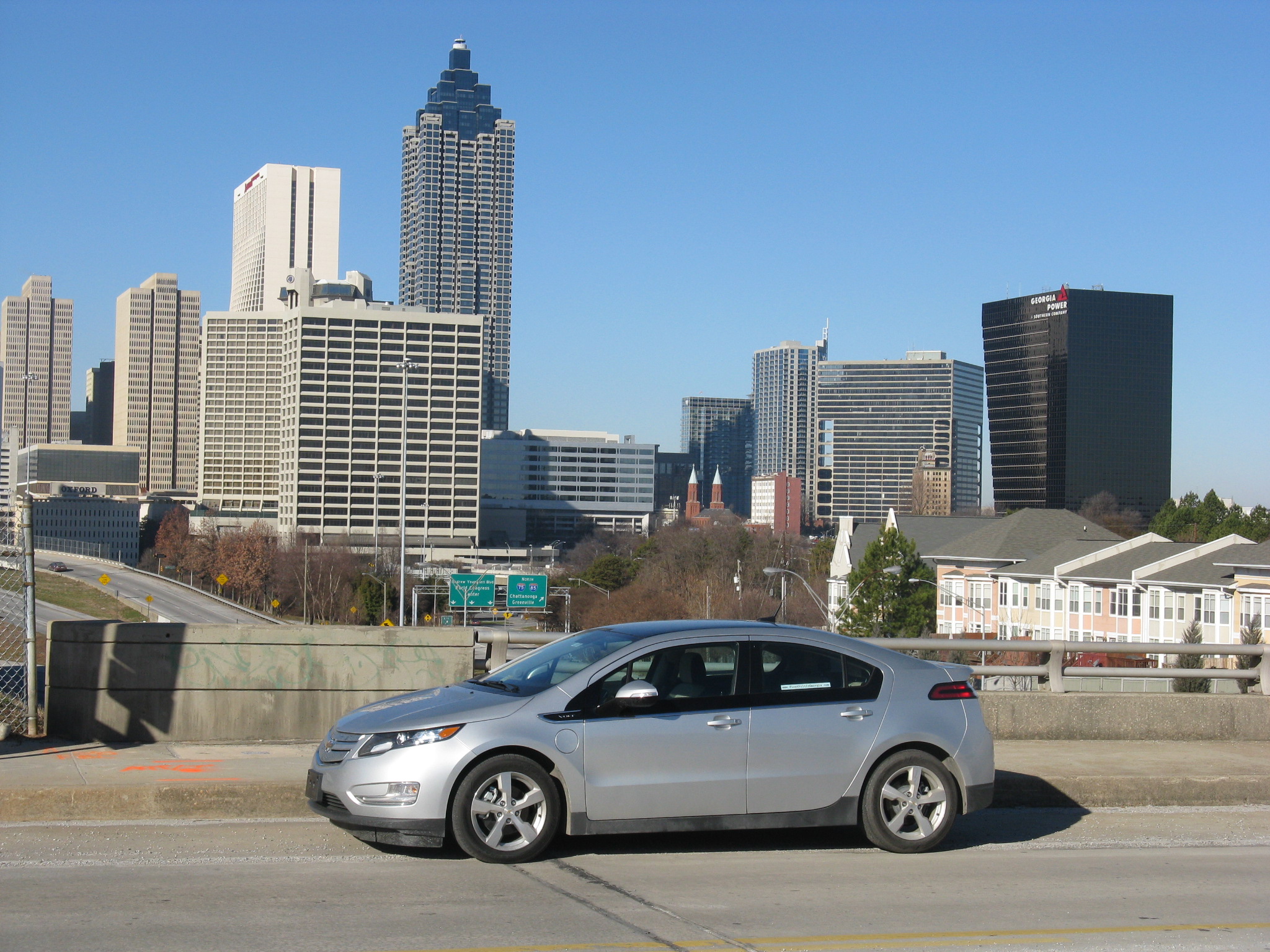
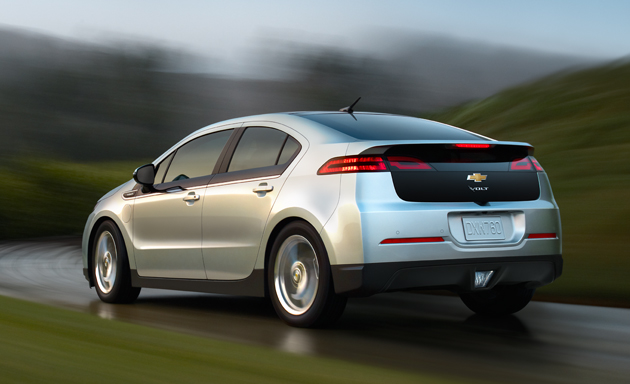
IMG_3368 I took delivery of my Chevy Volt (one of the first in the country!) on December 22nd, and it’s been performing beautifully ever since. It really is amazing that GM pulled this off and one of these is sitting in my driveway. I’m doing demo drives for friends and coworkers nearly every day, spreading the word and dispelling myths.
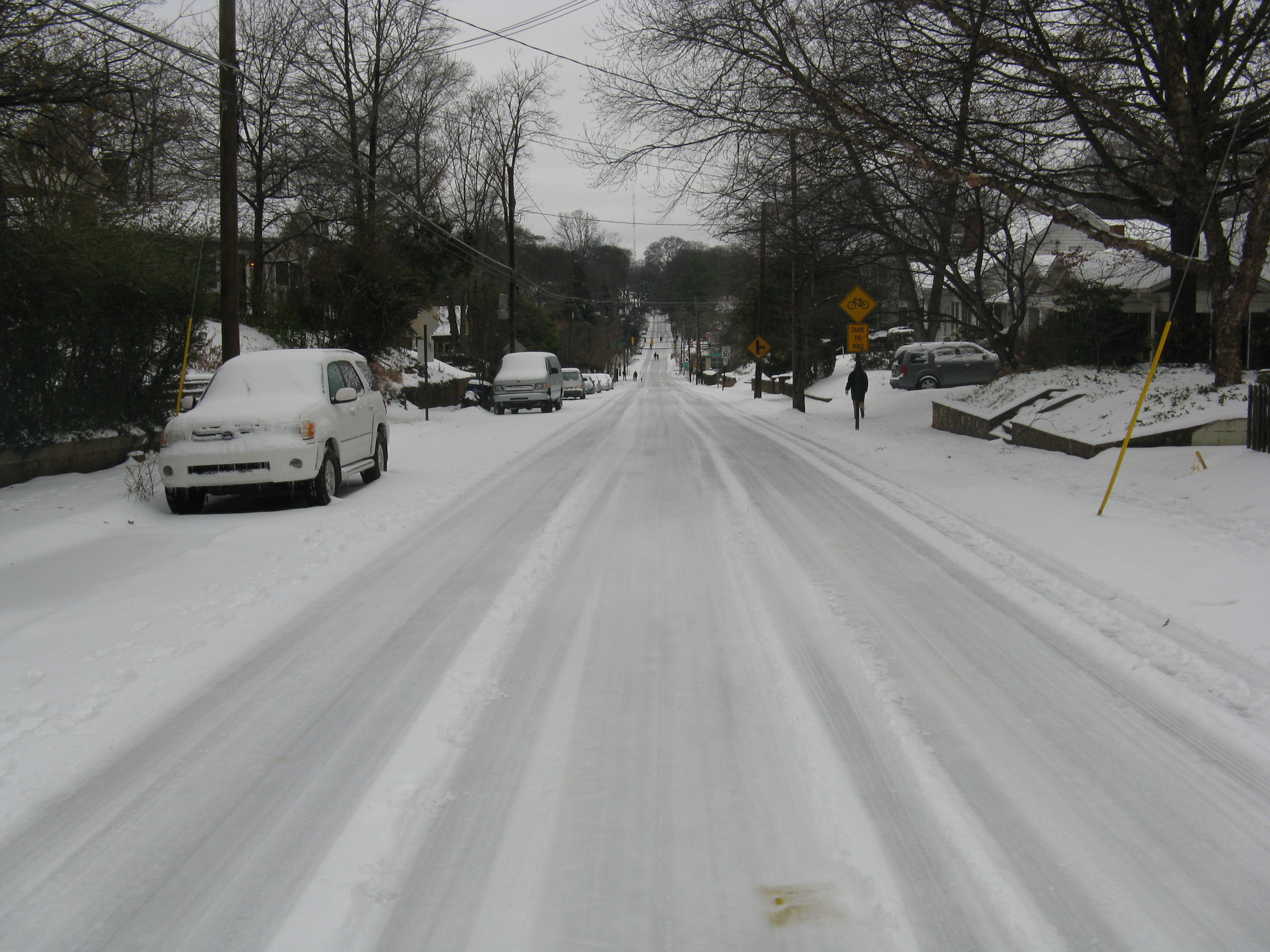
Since I got the Volt, I basically haven’t driven my old car at all (a decade-old Audi A4). I drove the Audi once during the ice storm, IMG_3343 when I thought it was safe enough to drive but didn’t want to risk it with my brand new Volt. Otherwise the only time I’ve driven the Audi was on two days to take it to and from the repair shop, where I had a few things fixed to get it ready for sale.

I’ve been driving the Volt for a month now, so I was eager to see how my old Audi felt in comparison. Fortunately I didn’t forget how to drive a manual transmission. I’ve already written at length about how I was going to miss driving a manual ttransmission car, but here are some more observations about the Volt vs. the Audi:

1. The Audi is definitely a quicker car. Of course, it’s a 2.8 liter V6, with 190 peak horsepower, but I still expected the Volt to keep up with it due to the electric motor’s full torque availability. But I think the Audi is way it out in front on this, especially in first or second gear when it just leaps off the line. Now, the tradeoff is that I do have to shift the Audi (and even if it had an automatic transmission it would still have to shift) whereas the Volt just keeps pulling continuously up to 100 MPH. It’s actually a little boring that I don’t have to shift gears in the Volt.

2. I do miss that blast of hot air that you can get in the cabin (if you want it) once the gas engine has warmed up. Gas engines produce enormous amounts of waste heat (due to basic thermodynamics) and so they have plenty of cabin heat ready whenever you want it. Electric cars don’t have waste heat (a side effect of their phenomenal efficiency) and so need to heat the cabin with electric heaters. And no electric heater is going to be able to produce the monster heat you can get from a gas engine. In the winter cold, the Volt never seems to really heat up the cabin, rather just seems to take the edge off. Of course, that’s why they offer electrically heated seats in the Volt, because it’s much more efficient to warm you up that way.

3. The Audi is a bit roomier, both up front and in the back. I didn’t really notice the Volt’s cockpit being smaller, but it actually is — the Audi’s dash is just a bit further out in front of me. And the Volt’s back seats are definitely more cramped, especially if you have a tall person (cough) sitting in front of you. The Volt is fundamentally a smaller car than the sports sedan that I’ve been driving for 10 years, and certainly smaller than just about any car you’d get for $41,000. There’s your bleeding edge technology for you …

4. The steering feel of the Audi is sooo much better than the Volt. It just feels like I’m really connected to the road. I can’t put my finger on the problem when I’m driving the Volt — I just know that when I’m in the Audi it’s different. Like I can really feel the car on the pavement, in a good way.

It’s possible that the Audi also feels more agile, although I don’t think I can really judge that yet. I haven’t been really throwing the Volt into turns like I would the Audi, for several reasons, including the fact that it’s a new car and I don’t want to crash it just yet.

If you are in Atlanta and haven’t heard from me yet about going out for a lunchtime drive, and want to, get in touch with me! I’m working my way down the list of coworkers and friends and will likely be able to meet up with you soon. Let’s do it!

W. Marshall Leach, 1940-2010

Dr. W. Marshall Leach died last weekend.

Dr. Leach was a beloved professor of electrical engineering at Georgia Tech. He specialized in analog electronics, which happens to be the area of electronics that is well suited for audio systems, and so he taught a course on audio systems design. Leachamp Of course sound systems are of great interest to college students of all stripes (matched only by the subject of cars), so that was a very popular course. His Leach Speaker design and Leach Amp design have taken on their own lives on the internet, and countless people have built their own. Seriously, talk to any audio electronics engineer in the country and they not only know who Dr. Leach is, they revere him.
I first met him through my involvement at WREK. I was an aerospace engineering student (at first) so didn’t have any classes with him; I probably met him at the station during one of his occasional visit to check out his gear. He had designed an audio compressor to be used in the WREK air chain (an absolutely critical component) and would come by to tweak it occasionally if he’d heard something offensive in our signal (no, not the programming, the actual quality of the audio signal).

When I returned to Georgia Tech to get my second degree, in electrical engineering, I pretty much made a beeline for Dr. Leach and signed up for his course. I did take the famed audio systems course, which actually spends most of the class time on speaker cabinet dynamics, because that’s where the rubber meets the road in audio systems and where systems usually squander their quality. But I also decided to make analog electronics my specialty (we had to pick one such specialty from a palette of about a dozen), mostly because it seemed like the “classic” EE field but also likely inspired by Dr. Leach.

I ended up taking a few courses taught by Dr. Leach, and I just loved his style. By this time I’d learned how to be a student (it only took me 3 years), meaning A) always show up for class, B) pay attention and C) ask questions if you don’t understand (which you can really only get away with if you do A and B). Dr. Leach was patient and always well-tempered, but I could see him quietly bristle when some idiot student would ask a stupid question. Or worse, a student trying to talk his way out of poor performance on an exam. He simply did not suffer fools when it came to exam time, and if you didn’t know what you were doing you’d get eviscerated on the exam scoring. But the thing is, if you did A/B/C above, the exams were easy! I remember turning one exam in after 30 minutes (in a 50 minute exam) and quietly asking him “this seems too easy, am I misunderstanding?” and he grinned and assured me that it was in fact an easy set of problems.

His handwritten lecture notes have to be worth their weight in gold. Having visited his office many times, I had seen the carefully assembled looseleaf notebooks that he had honed over decades of teaching his courses. And if you hung out long enough, he’d let you wander into his huge audio lab, reached exclusively via a side door in his office. Amazing.

But the best reason to visit Dr. Leach (and the door to his corner office was usually wide open) was his sense of humor. He was constantly chuckling at something, often Institute or ECE bureacratic nonsense. And who is going to poke fun at Dr. Brewer now?

I graduated with my EE degree in 1996, but I stayed in Atlanta, and whenever I visited the Georgia Tech campus and was passing near the EE building, I’d climb the stairs to the 3rd floor and stop by his office for a chat. Always the same mischievous grin, that flushed red face, the white shirt or sweater, the relaxed lean back in his desk chair.

Be sure to take a look at the guest book at Dr. Leach’s funeral home to get an idea of how beloved this man was. I recognize some of those names — they were WREK students in the 1960s and 1970s, and are now wildly successful electrical engineers, VPs, CEOs, entrepeneurs.

A couple years ago I wrote here on the passing of Bill Sayle, another EE prof. To be fair, I barely knew Dr. Sayle, although he did make a decision that had a critical effect on my life. Dr. Leach I knew far better, and I’m glad I did.

I will miss those campus detours to his office so much. RIP, Dr. Leach.

I asked a student once why he spent so much time with Dr. Leach and he told me he just felt better after talking to him. So did I.

– Tom Brewer

—-

A few links worth checking out:

Georgia Tech press release on the passing of Dr. Leach

details on the memorial event scheduled for December 16th

Dr. Leach’s collection of links on his home page at Georgia Tech, including the impossibly thorough and entertaining page of “audio related things“. See also the speaker and amp design pages linked above. His attention to detail yet easygoing manner courses through these documents.

Driving a manual

When I get my new electric car next month, for the first time in my life I will not be driving a car with a manual transmission.

There are a lot of things I will miss about driving a stick shift. Most importantly, with a manual transmission you have more control over the car and your right foot is connected more closely to the torque of the engine. Whenever I’ve had to drive an automatic (rentals, usually) it’s been a thoroughly disgusting experience. Fortunately with the electric car I won’t really be giving that fundamental control, because electric motors have impossibly wide torque curves, far better than internal combustion engines, meaning they don’t need transmissions at all and thus react perfectly to your right foot. Plus you don’t have the oddities of different valve timings and such coming it at different RPMs and making the engine surge.

I remember first learning to drive in my parents’ cars. We had a Volvo station wagon that I think I did most of my learning on. I clearly remember the first time I pulled away from a stop light, turning left, and managed to execute the first-to-second shift at the same time as I was doing the turn. I told my Dad “look what I did!” and he said “you’re supposed to do that.” That was my Dad’s way of saying that I’d done it the way an adult was supposed to and I was on my way to acquiring the skill. That kind of thing is second nature to me now, but then it was quite a thrill to pull off without putting the car over the opposing curb — or grinding the gears.

The hardest thing to do in a manual is launching forward from a stop while pointed uphill. There are three pedals involved and you only have two feet. So you let off the brake and try to quickly dance over to the clutch and gas with the right timing such that you A) do get moving forward without B) goofing up the pedal timing and stalling the engine or worse C) rolling back into the car behind you. If you manage to stall the car, you get another chance, but now you’re probably a couple feet further back and closer to the car behind you. Growing up in Martinsville, the real test for this was the intersection of Vosseler Avenue and Washington Valley Road. Vosseler climbed up to met WVR in a T-intersection, and you’d really have to jump on the pedals to get the car launched up onto WVR. I think my parents let me suffer through that a few times (it’s pretty much impossible for a greenhorn to pull it off) before showing me the handbrake tactic, where you use the handbrake to replace the footbrake function (holding the car from rolling back), thus freeing up your two feet for the clutch and the accelerator.

Things I will miss about driving a manual:

– The roar of the engine when you are driving agressively and using the higher RPMs. God that V6 sounds great.

– Dropping the clutch and smoking the tires! With my current Audi I can even chirp the tires in second gear. Maaaan I will miss that. The electric cars have more torque, but they have launch control feature that prevents you from spinning the wheels when taking off. Bah!

– Doing speed matching gear shifts, where you try to shift gears without using the clutch. This was totally easy to do with my Honda’s gearbox — you could feel the beat frequency in the stick. But I hardly ever can pull it off with the Audi.

– Slowing the car to a crawl while still in gear, watching the revs go down below 750 and causing the engine to strain at the leash, until you finally relieve it with the clutch.

– Starting off in second because you know the loser in the Camry in front of you is going to be slow to start anyway so who needs the torque of first?

– Downshifting in preparation for a pass, or just staying in a lower gear to run the revs higher and have a bushel more power available at a mere flinch of your right foot.

– Watching the tachometer in my peripheral vision while driving. I can see the needle rotating around past the top of the dial (4000 RPM) without actually looking at it. Also, the Audi has an elegant design feature where the literal position of both the tach and speedometer line up (point in the same direction) only when in fourth gear. When in third the tach is higher than the speedo, and in fifth it’s lower; at fourth they match. So I can glance at the dash to remind myself what gear I’m in, without looking at or feeling for the gear shifter.

What I won’t miss:

– Smoking the clutch when A) trying to pull another car out of the backyard or B) when impressing a friend by revving up a launch. Done both.

A lot of people say they don’t want a manual because of stop-and-go traffic, but I’ve never had much of a problem with it. Of course, I don’t actually sit in stop-and-go traffic much (that’s a suburban problem), and to be fair, the times that I have sit in it for a long time I have started to get tired with all the clutching in and out.

This seems as good a time as any to inventory the cars I’ve owned:

1986-1988: a used 1980 VW Rabbit Diesel, bright yellow. Bought from Dad (yes I paid $1000 for it). Four gears, 0-60 in about 30 seconds, typically tested on that straight stretch of Brookside Drive just off King George road, just before the twisty part HIT THE BRAKES! The front end would start to float at speeds over 75 MPH. 49 horsepower. Do you know how hard it is to drive at a decent speed through the rolling hills of the Carolinas when you only have 49 horsepower?

1988-2000: a new 1989 Honda Civic DX Hatchback. Bought new with help from Grandma, the biggest leg up on life I ever got besides my four years of college education from Mom and Dad. Five gears, great fun to drive, I loved to rev it up to the redline and I pretty much did so for every shift for twelve years. However, by 2000 the lack of airbags, cruise control and ABS was starting to bother me …

2000-2011: a new 2000 Audi A4 2.8. Finally got to splurge on a nice car. Bought the fastest A4 you could get, meaning the one with the 2.8 liter V6 engine but without the Quattro four wheel drive feature, because that would add 500 pounds. Sometime I wish I had the Quattro, but in addition to the weight it was an expensive option. Not as all-out fun to throw around like the Honda, heavier and more muscular. Certainly the engine feels different — more low end torque, but less willing to rev high. Longitudinally mounted so you could twist the car a bit by reving the engine.

So long, clutch, I’ll miss you.

Electric Vehicles, part 6: the waiting game

[see the bottom of this post for links to previous entries in my EV series]

Since I decided in late July to throw in with the Chevy Volt and placed my order with the DC-area dealer, it’s basically been a waiting game. There’s been a bit of drama here and there over the last 2-3 months, but in general the order has chugged along through the GM process. A couple weeks ago I got word from The Powers That Be that my car would be produced in mid-November, and so I’m hoping to have it in hand well before Christmas. December 1st seems to be the likely date that I get it and is what I’m telling everyone.

Meanwhile, on Sunday October 10th, GM lifted their press embargo on Volt test drive reports and there was a sudden crush of press coverage. A lot of it (on the internet, at least) focused on the “new” news, which had to do with how the mechanical transmission in the car actually works (which turned out was slightly different from how everyone thought it would work) and everyone went ballistic over that for about 48 hours. Eventually cooler heads prevailed, and everyone realizes now that we’re still talking about a fundamentally groundbreaking car, but to an extent some damage has been done because some terribly misleading headlines went out in the press during those 48 hours. I’ll say this: I know a hell of a lot more now about what a planetary gearset is and how it works.

Since that dust-up, though, the actual driving reviews have started to get published, and they are glowing. To tell the truth, I know what I know and poor reviews were not going to change my mind about this, but it’s nice to see my decision endorsed by the automotive press.

Here is a good overview of them — overwhelmingly positive.

Here are a few of my favorite specific reviews and quotes:

Seth Fletcher in Popular Science: “The car is so pleasant to drive that I can’t imagine finding early adopters to be a problem. But after that, I’d like to see the Volt become available to the rest of us. Which is why we should hope for a kind of EV arms race, for a significant drop in battery prices and a rapid expansion of plug-in infrastructure. Because after putting a couple dozen highway miles on a vehicle like the Volt, plenty of people simply won’t want to go back to a conventional car.”

Jonny Lieberman in Motor Trend: “At the end of the journey, we’d covered more than 120 miles. City, hard-core mountain roads and freeway — we even took the Volt up to its limited top speed of 101 mph. … Factoring in the mountainous part of our romp, where Frank and I acted like utter hooligans and neglected (on purpose) to put the Volt in Mountain Mode, we still averaged 74.6 miles per gallon over 122 miles. Sure, that’s less than the 126.7 mpg we got driving the car from the office to home, but it’s still pretty dang good. Also, remember that if we had simply stopped driving when the battery went dry, our mileage was infinity.”

Dan Neil in the Wall Street Journal: “I get it. A lot of people don’t like GM because: 1) the bailout, or 1a) Obama; or 2) the United Auto Workers; or 3) because some Monte Carlo or Cutlass Sierra or deuce-and-a-quarter left them walking a long time ago. That’s understandable. These are sour times. But for the moment, we should suspend our rancor and savor a little American pride. A bunch of Midwestern engineers in bad haircuts and cheap wristwatches just out-engineered every other car company on the planet. And they did it in 29 months while the company they worked for was falling apart around them. That was downright heroic. Somebody ought to make a movie.”

——————–

Coming up, I will have a test drive of the car on November 1st. That’s right, I put down money to buy the car before I had laid my own eyes on it, much less actually driven it. That’s how compelling this technology is, based on my exhaustive research and a few drives in electric vehicles over the last two years. That said, I do want to sit in the car and feel how it drives as soon as possible, before I travel to DC to receive my own car (I just wish it had been more than just a month prior). At the very least, it will calm my nerves a bit and ultimately ease the stress of the day when I go get my car.

In the meantime, I’m also still paying attention to the rest of the EV market. I’m only going to have the Volt for 3 years, you know,and then I’ll move on to another EV folly! IEEE Spectrum magazine (for us electrical engineering professionals) had an article recently about the coming wave of electric supercars. We’re talking nearly a thousand horsepower and a thousand foot-pounds of torque — obscenely high performance, and yet they are still far more efficient than even an econobox hybrid since they can be plugged in. Of course, these are still six-figure cars, and 2-3 years away, but it’s indicative of where the market is heading.

Exciting times. My one-man tech evangelism tour starts December 1st!

(I’ll update this post with info about the test drive after November 1st)

See also my previous entries about Electric Vehicles, as I have studied this technology for the last two years:

part 1 from Sept 2008: my first thoughts on EVs (though rather dated by now)

part 2 from April 2009: I test drive a Tesla Roadster!

part 3 from Jan 2010: the Nissan Leaf roadshow comes to Atlanta

part 4 from Mar 2010: grab bag of news and analysis

part 5: why I am buying a Volt

Electric Vehicles, part 5: why I am buying a Volt

Ladies and gentlemen, it’s official — I’m buying a Chevrolet Volt. The deposit is down, the order is in GM’s system, and come November or December, I’m getting one of the first Volts in the country.

Volt Two weeks ago, GM finally announced the sticker price of the Volt: $41,000. That’s a high number, even after the $7,500 federal tax credit, and it sent the fanboys into a tailspin of despair and vicious criticism of GM. There are lots of reasons why GM might have set that price point, which I won’t go into here. But what was really interesting was the second part of the announcement: the leasing terms. GM will lease the car for $350/month for 36 months, with $2500 down. Those are lease terms that you’d see for a much cheaper car, more like $20K-$25K, and show that GM is actually subsidizing and encouraging the lease. So that really got my attention, and within days I decided it was time to start contacting Chevy dealers.

Why I am buying a Volt

1. I’m uniquely qualified to get the word out on the electric car revolution. I am an electrical engineer, I’ve been into automotive technology since I was a kid, and I care about energy policy and the environment. It appears that it’s my job to get out in front on this one.

2. I want a choice. Pure battery electric vehicles (BEVs), which the Volt is not, have only an electric drivetrain and consume no gas ever. I do think think that they are the long-term future, but for the next few years they aren’t good enough to be your sole car, since they only go so far before you have to charge for many hours. Three years from now, public charging infrastructure (think fast charging stands at gas stations and shopping centers) will be far more widespread and that’s when a BEV will start to make sense as my sole car. But for now I still have to rely on that gas engine backup. The Volt gives me the flexibility of fueling either via gas station or plugging in at home. I’m paranoid about gas price shocks (and gas shortages, panic-induced or not), and the engineer in me wants desperately to protect against that single point of failure, and wants some redundancy via the two different energy ingest modes.

3. Performance. Electric vehicles go faster! This is less true for a more modest car like the Volt, but even this little car is going to change some minds simply by me stomping on the accelerator. A poor man’s Tesla! Wheeee!

4. Reduced maintenance. Electric motors aren’t just far more efficient than gas engines, they are far simpler and more reliable. The gas engine is simply not going to get used that much, except for long trips, and that translates to less maintenance requirements.

5. I’m buying American for the first time in my life. Heck, this is the first American car for anyone in my entire extended family (lots of VWs, some other Japanese and Germans cars). GM, this is your one chance to show me that you’re not still a bunch of knuckle-dragging scammers. And indeed GM has been doing far better in quality ratings in recent years, and they appear to be doing a stellar job engineering the Volt. Also note that the Volt is really being built in the US (at the Detroit Hamtramck plant), not an overseas rebadge (like the Pontiac G6) or a Chinese import (as they are rumored to be doing soon for another model).

6. GM made it an easy decision with their cheap lease terms. Now, I’m the last person you’d expect to see leasing a car. I’ve always bought my cars,and kept them for a decade minimum, long after they were paid off. Leases are stupid, right? But in this case, GM has decided to make the Volt lease a huge bargain. The $350/month rate got my attention, and made me realize that a three year lease is perfect for me right now. That’s because unlike my previous car purchases, I have no plans to keep this car for a decade. It’s just a short term (3 year) solution until there’s more electric cars on the market. And yes, all of the car makes are furiously working on them.

7. After the pricing announcement two weeks ago, I quickly realized that this car was going to sell out. And in fact, today, there are rumors that not only has the Volt’s 2011 model run sold out (before a single unit reaches any dealer showroom!), but now dealers are starting to take sales on the 2012 model run. My 10-year clock has run out on my current car and I don’t want to wait beyond the end of this year or early next year. So committing now puts me with the earliest of the early adopters, but ensures that I won’t be stuck waiting until late 2012.

8. This hedges my bet on the future electric car market. All of the manufacturers are working on their models, but it’s going to be another year or two (or three), and in some cases (like the Tesla Model S sedan) it might cost $75,000 and have extremely limited availability. This isn’t my ideal car, but this gives me some breathing room to let the market mature for three years.

9. I’m not made of money, but I’m doing well enough. The car I drive is pretty much the one thing I splurge on (as I did in 2000), and otherwise I’m pretty frugal. So let me spend some money on a new toy 🙂

And here come the political intangibles …

10. For a change the US is actually leading the world in technology policy when it comes to electric vehicles. We are ahead of Europe and Asia in encouraging the shift to electric cars, and I want to be on the front of that wave.

11. Energy independence, both national and personal.

12. Pollution and global warming. Only a fool still believes that anthropogenic global warming (AGW) is still a debatable matter in science. The data is in, it’s fact, move on, and you might want to start thinking critically about the “news” sources that are telling you it’s still a debate. Actually, I do think it’s too late (1992 and Kyoto was our last chance) and we’re well past the tipping point, but I’m going to hope and do what I can anyway.

13. Geopolitics. We need to stop sending tankers full of cash to oppressive governments of the Middle East. And where do you think the Taliban and Al Qaeda get their funding from?

Those are all the reasons why I am buying a Volt. However, there are also reasons …

Why I shouldn’t be buying a Volt

1. Atlanta is not one of the launch markets, and so I’m actually buying the car from a dealer in northern Virginia (Washington DC is a launch market) and taking it home. Yeah, a 9 hour drive. I am frankly taking a big risk in doing this, because for a long time yet there won’t be any Volt dealers in Atlanta that can service the car if anything goes wrong. That’s actually not strictly true, because GM says they will have dealers around the nation (not just in launch markets) that will be trained in Volt servicing. But, really, until they actually start selling the car in Atlanta, I’m jut not going to get decent service. I can look forward to a lot of blank stares from the local dealership, and in a worst case, I could be looking at having to flat-bed the car back to Virginia if something goes catastrophically wrong. Hey, I’m an engineer, I think up worst case scenarios for a living!

2. It’s a version 1.0 product. Never buy the first release of a product. And in this case, it’s a whole new class of product, so this is doubly true.

3. GM has done a fantastic job of being open about the entire development process of the car, but you could also see it as well regulated hype. This could be a colossal boondoggle on GM’s part, and I’m getting suckered into it. Oh well, I’ll have a lot of company, because this car is selling out before it’s even in the showrooms.

4. It’s a pretty small car. It officially only seats four (meaning you can not squeeze three into the backseat) which just belies the fact that it really is a little smaller than your typical compact sedan. On the other hand, it’s really loaded down with standard features, things like premium sound and OnStar connectivity that would otherwise put it more in the Cadillac class. Which leads me to …

5. I have not actually seen the car with my own two eyes! It’s nowhere to be seen, although any week now I expect the first production units to start appearing at various demo events around the country. So all I’ve done is a read about it for the last two years, especially the reviews of the last few months when GM had the press come out to various locations to see it and drive it. I am totally relying on those reviews.

I have this saying that engineers live three years in the future. At any given point, we are typically working on technology that will make it to widespread use in about three years. So, since 2007 I’ve been seeing a lot of activity in electric car development, and it’s finally starting to come to fruition with the first large-scale production cars coming to market this fall.

I really do believe that electric vehicles are critical to the future of automotive technology. But talk is cheap, and at some point you have to start putting asses in chairs and showing people what you’re talking about. So my mission is now to get people into the car, show them how this technology is different (and yet the same!) from all previous cars, and have lots of long talks debunking all of the myths that somehow have crept into people’s heads.

In all seriousness, most folks wouldn’t see this as a particularly noble move as it might appear I’m making it out to be. It’s not like I’m deciding to devote myself to working on third world infrastructure or lifting inner city children out of poverty. But it’s a critical incremental step that I think we need to make if we seriously want to stop screwing up the planet, both environmentally and politically, like we have been for the last century.

By December, I should have the car, and I’ll happily show it to whoever is interested. Lunch or dinner will be on me!

For now, Happy Birthday to me!

See also my previous entries about Electric Vehicles, as I have studied this technology for the last two years:

part 1 from Sept 2008: my first thoughts on EVs (though rather dated by now)

part 2 from April 2009: I test drive a Tesla Roadster!

part 3 from Jan 2010: the Nissan Leaf roadshow comes to Atlanta

part 4 from Mar 2010: grab bag of news and analysis